NASA’s SpaceX Crew-11 Safely Returns to Earth After Long-Duration Science Expedition on Space Station
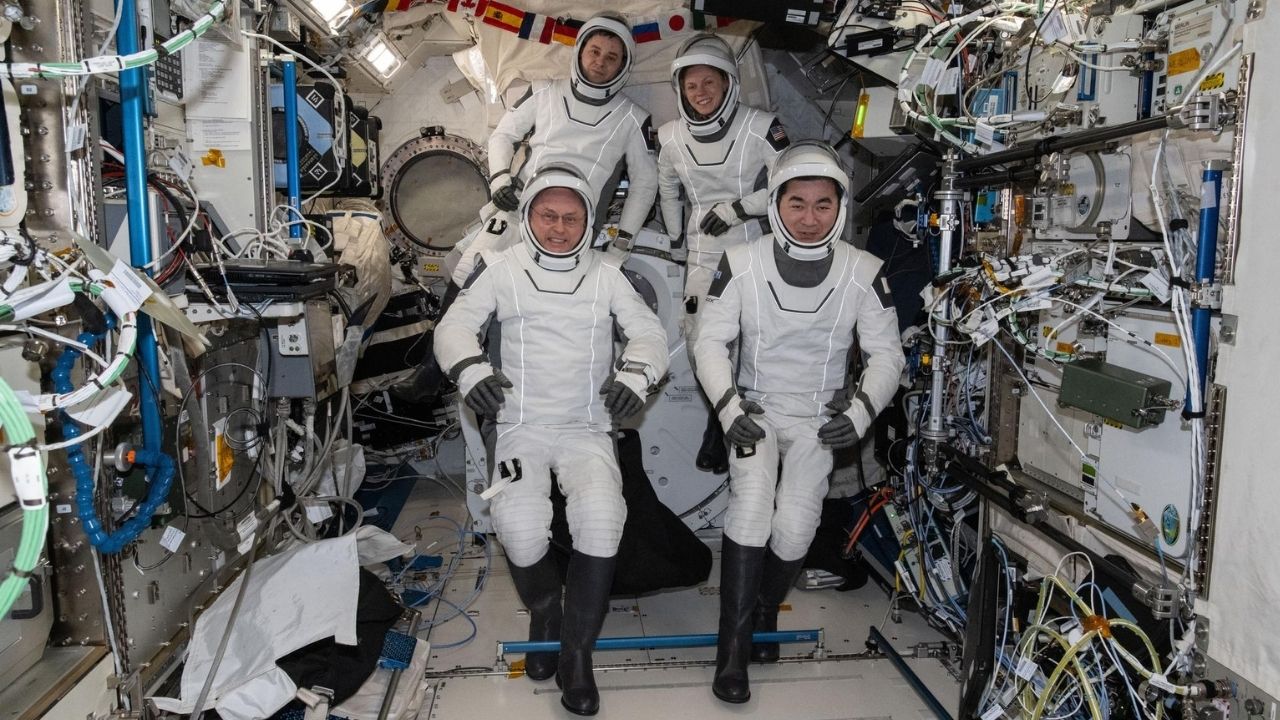
Four SpaceX Crew-11 members gather for a crew portrait.
Media Credit: NASA
Crew members supported dozens of ISS National Lab-sponsored projects to advance life and physical sciences research, technology demonstrations, student experiments, and more
January 15, 2026
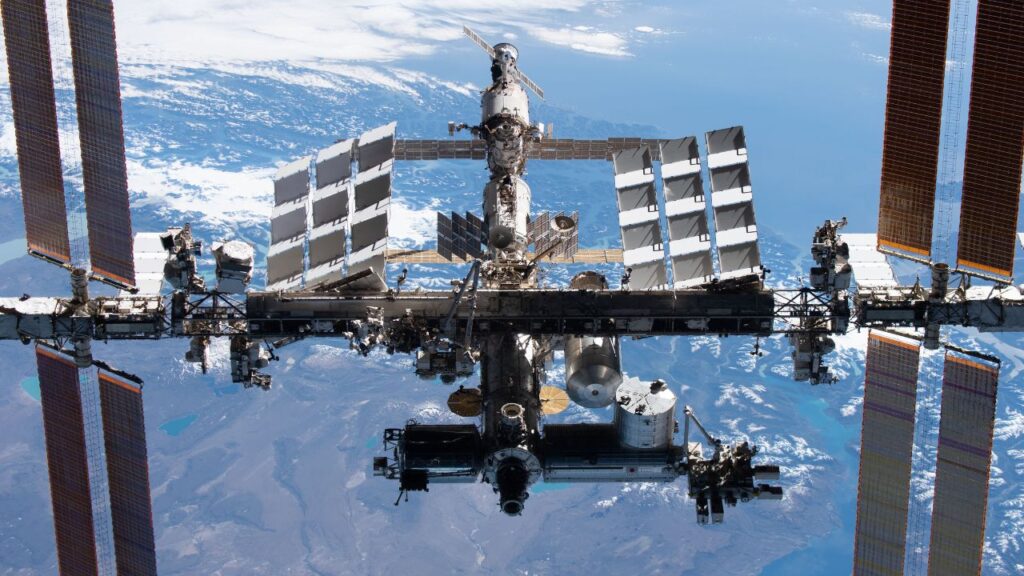
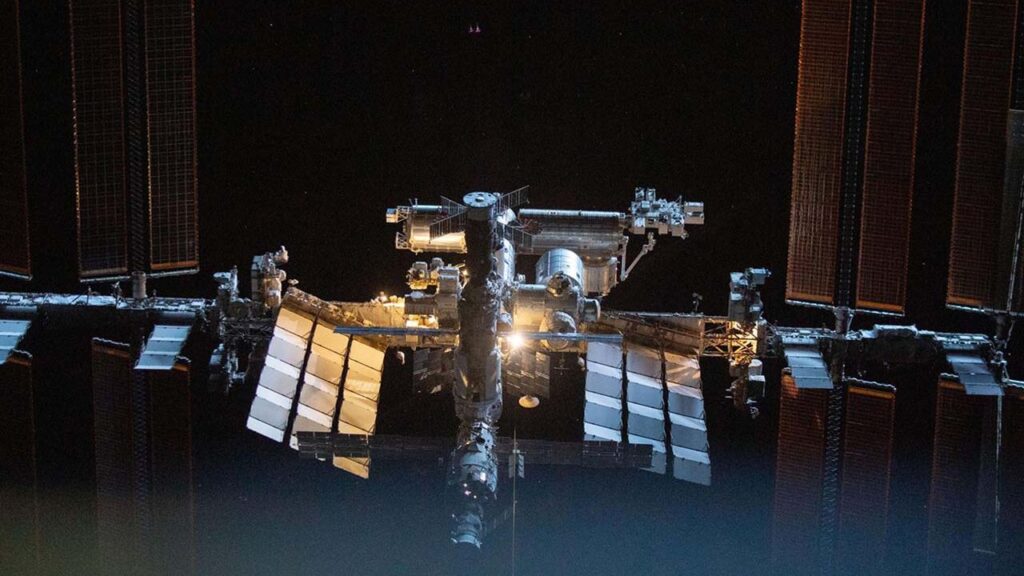
KENNEDY SPACE CENTER (FL), January 15, 2026 – NASA’s SpaceX Crew‑11 mission safely splashed down off the coast of California early Thursday morning, returning from a science expedition onboard the International Space Station (ISSInternational Space Station). The crew’s return concludes a mission dedicated to cutting‑edge research that advances humanity’s presence in space and benefits life on Earth.
NASANational Aeronautics and Space Administration astronauts Mike Fincke and Zena Cardman, Japan Aerospace Exploration Agency (JAXA) astronaut Kimiya Yui, and Roscosmos cosmonaut Oleg Platonov spent more than 165 days on the space station supporting hundreds of research investigations. These studies included biology and physical sciences research, in-space manufacturing, technology development, and student‑driven experiments.
Many of these investigations were sponsored by the ISS National Laboratory®, which leverages the unique space environment to advance scientific discoveries that benefit humanity, prepare the next generation, and cultivate a sustainable economy in low Earth orbit(Abbreviation: LEO) The orbit around the Earth that extends up to an altitude of 2,000 km (1,200 miles) from Earth’s surface. The International Space Station’s orbit is in LEO, at an altitude of approximately 250 miles. (LEO). Below are some of the projects the Crew-11 astronauts supported during their mission.
- The Wake Forest Institute for Regenerative Medicine studied engineered liver tissue containing blood vessels in microgravity. Originating from NASA’s Vascular Tissue Challenge, this project seeks to advance tissue engineering in space to support future organ replacement for patients on Earth and beyond.
- The Cedars-Sinai Medical Center evaluated whether induced pluripotent stem cells divide faster in space, which could accelerate regenerative medicine breakthroughs. Findings from this investigation, which builds on multiple past projects from this team, could further in-space manufacturing capabilities to produce stem cell-based therapies for heart disease, neurodegenerative conditions, and more.
- In collaboration with ISS National Lab Commercial Service ProviderImplementation Partners that own and operate commercial facilities for the support of research on the ISS or are developing future facilities. Axiom Space, open-source software leader Red Hat validated edge computing technologies on the ISS through the Red Hat Device Edge platform. Real-time data processing capabilities in orbit will be paramount to scaling R&D and manufacturing on future space platforms.
- TransAstra Corporation leveraged Voyager Technologies’ Bishop Airlock to test the deployment of an inflatable capture bag system, a simple and affordable solution to space debris collection. In a growing LEO economy, the ability to capture and control space debris will be crucial for keeping the orbit around Earth safe for astronauts, satellites, and spacecraft.
- A project from Arizona State University funded by the U.S. National Science Foundation examined how germicidal ultraviolet light affects the formation of biofilms in space-based water systems. Findings from this investigation, which was done in collaboration with BioServe Space Technologies, could lead to new ways to safeguard life-support systems and crew members in space and mitigate biofilm issues on Earth.
- Multiple student-led investigations served to inspire the next generation and prepare the future space workforce. One project was from Genes in Space™, an annual student research competition founded by Boeing and miniPCR and supported by the ISS National Lab and New England Biolabs. In the competition, students in grades 7-12 propose genetics-related investigations to be conducted on the space station. This year’s project explored the use of bacteriophages as therapeutic agents in space. Additionally, Higher Orbits Go For Launch! experiments from students in five states studied algae, green beans, silkworms, and slime mold in space.
For more information on ISS National Lab-sponsored research supported by crew members on the space station, visit our Missions & Launches page. To learn more about results from R&D conducted on station, subscribe to Upward, the official magazine of the ISS National Lab.
Download a high-resolution image for this release: Crew-11 Returns to Earth
# # #
About the International Space Station (ISS) National Laboratory:
The International Space Station (ISS) is a one-of-a-kind laboratory that enables research and technology development not possible on Earth. As a public service enterprise, the ISS National Laboratory® allows researchers to leverage this multiuser facility to improve quality of life on Earth, mature space-based business models, advance science literacy in the future workforce, and expand a sustainable and scalable market in low Earth orbit. Through this orbiting national laboratory, research resources on the ISS are available to support non-NASA science, technology, and education initiatives from U.S. government agencies, academic institutions, and the private sector. The Center for the Advancement of Science in Space® (CASIS®) manages the ISS National Lab, under a Cooperative AgreementA cooperative agreement is Federal assistance that establishes a relationship between the U.S. Government and a recipient in which the principal purpose of the relationship is to accomplish a public purpose of support or stimulation. Since 2011, the Center for the Advancement of Science in Space™ (CASIS™) has managed the National Laboratory® through a Cooperative Agreement with NASA. with NASA, facilitating access to its permanent microgravityThe condition of perceived weightlessness created when an object is in free fall, for example when an object is in orbital motion. Microgravity alters many observable phenomena within the physical and life sciences, allowing scientists to study things in ways not possible on Earth. The International Space Station provides access to a persistent microgravity environment. research environment, a powerful vantage point in low Earth orbit, and the extreme and varied conditions of space. To learn more about the ISS National Lab, visit our website.
As a 501(c)(3) nonprofit organization, CASIS(Abbreviation: CASIS™) The nonprofit organization that manages the ISS National Lab, which receives at least 50 percent of the U.S. research allocation on the International Space Station to facilitate research that benefits humanity (NASA manages the other 50% and focuses on research for space exploration purposes). accepts corporate and individual donations to help advance science in space for the benefit of humanity. For more information, visit our donations page.