Microbes Reveal Missing Link in Space Manufacturing
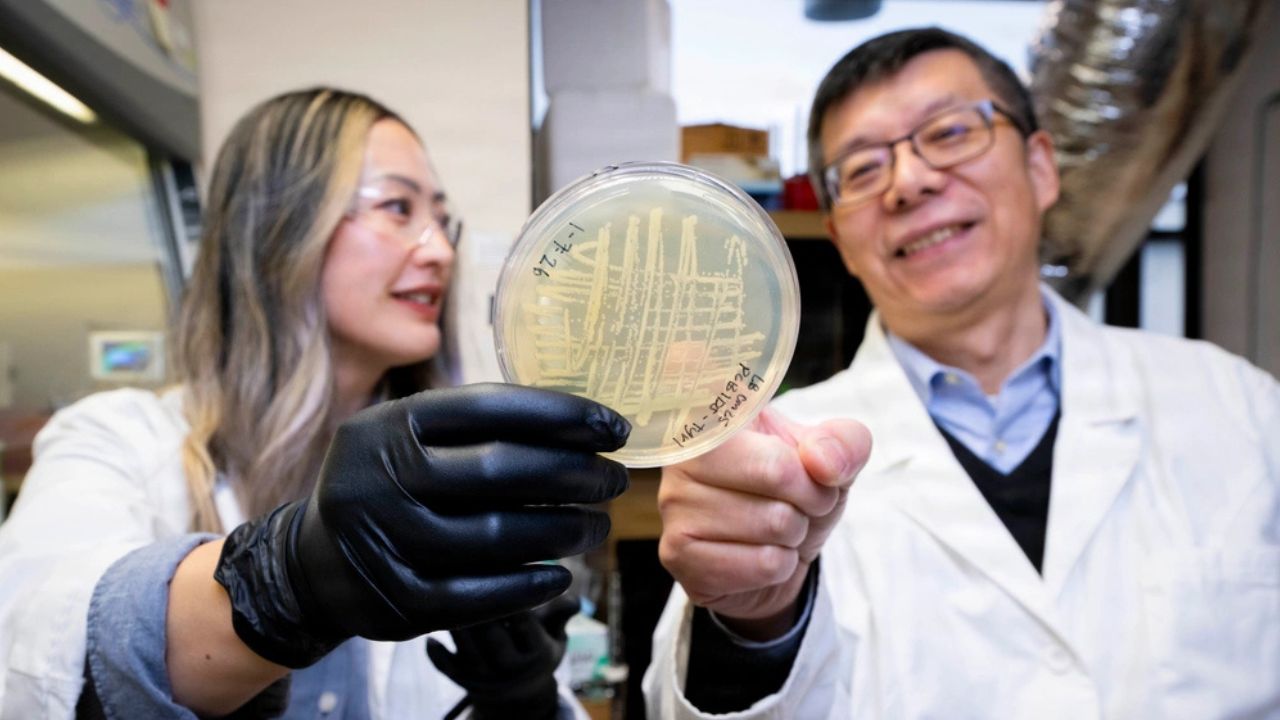
Tiffany Hennessa (left), U.S. Naval Research Laboratory (NRL) research biologist, and Zheng Wang, NRL research biologist, analyze a microbial sample in Washington, D.C. Scientists at NRL sent microbial samples to the ISS to investigate how microgravity affects microbial metabolism and biomaterial production.
Media Credit: U.S. Navy photo by Sarah Peterson
New research shows microbes can’t “eat” in space like they do on Earth—undermining material production but pointing to a fix
June 4, 2026
KENNEDY SPACE CENTER (FL), June 4, 2026 – Manufacturing materials in space may hinge on a simple problem: feeding microbes. New research sponsored by the International Space Station (ISSInternational Space Station) National Laboratory, published in npj Microgravity, shows that microgravityThe condition of perceived weightlessness created when an object is in free fall, for example when an object is in orbital motion. Microgravity alters many observable phenomena within the physical and life sciences, allowing scientists to study things in ways not possible on Earth. The International Space Station provides access to a persistent microgravity environment. disrupts how cells in engineered microbes absorb nutrients—limiting their ability to produce useful materials but also pointing to solutions.
Researchers at the U.S. Naval Research Laboratory (NRL) studied engineered Escherichia coli designed to produce melanin, a pigment that helps shield cells from radiation and other environmental stress. Materials like melanin could one day be manufactured in orbit to protect astronauts and spacecraft systems during long-duration missions. In addition to blocking radiation, melanin can neutralize harmful chemicals and remain stable under extreme conditions, making it a promising material for space applications.
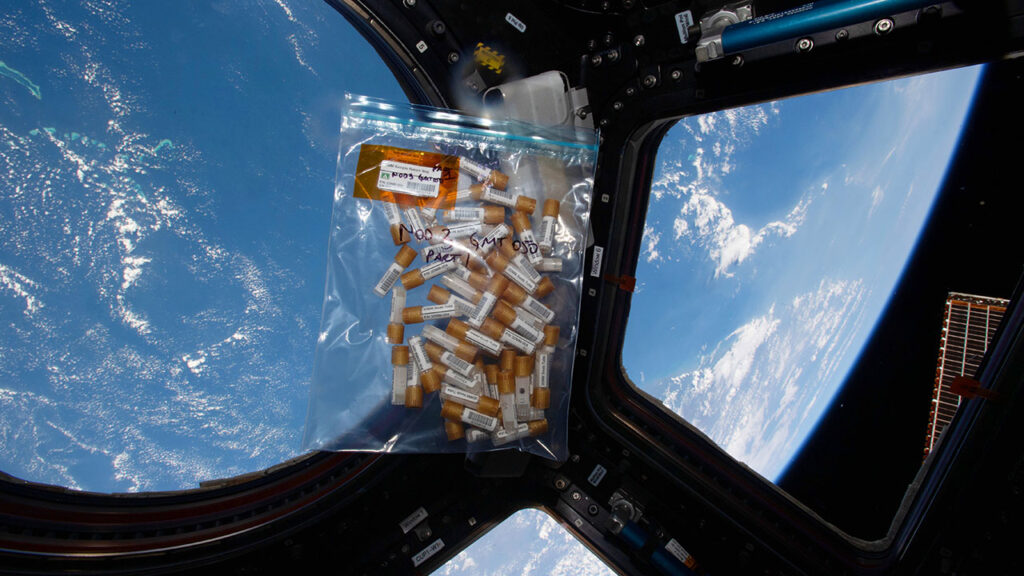
The project, Melanized Microbes for Multiple Uses in Space (MELSP), launched to the ISS in November 2023 to examine whether microbes could reliably produce protective biomaterials in microgravity. While the engineered bacteria expressed the genetic pathway for melanin synthesis, researchers found that microgravity altered how cells absorbed nutrients and responded to metabolic stress.
“The biggest takeaway is that if we want to manufacture materials using microbes in space, we have to solve the issue of how nutrients get into cells,” said Zheng Wang, principal investigator of MELSP and a research biologist at NRL, in the latest issue of Upward, the official magazine of the ISS National Lab.
Further analysis showed that much of a key nutrient was left unused after spaceflight, suggesting the bacteria couldn’t take in what they needed. Ground experiments using a NASA-developed Rotating Wall Vessel bioreactor, conducted by collaborator and microbiologist Cheryl Nickerson at Arizona State University, showed similar patterns, reinforcing that nutrient transport and fluid mixing are key challenges for microbial production in microgravity.
The investigation also included fungal strains known for their resilience in extreme environments. All fungal samples survived spaceflight and continued producing steady levels of melanin, suggesting fungi may be strong candidates for future space-based biomanufacturing.
Together, the findings help guide the design of next-generation biological production systems in space. Future efforts may focus on growth environments, such as bioreactors that actively circulate nutrients, manage cellular stress, and compensate for the absence of gravity, enabling microbes to manufacture protective materials, medicines, and other valuable compounds during long-duration space missions.
Read the full story in Upward. In your coverage, please link to the original story and credit the ISS National Laboratory® as the research sponsor to increase visibility of its role in enabling space-based research.
Download a high-resolution image for this release: USNRL Microbial Research
Media Contact: Amy Elkavich
Email: aelkavich@ISSNationalLab.org