
Unmasking a Hidden Enemy: How Tumor Organoids in Space Are Helping Defeat Cancer on Earth
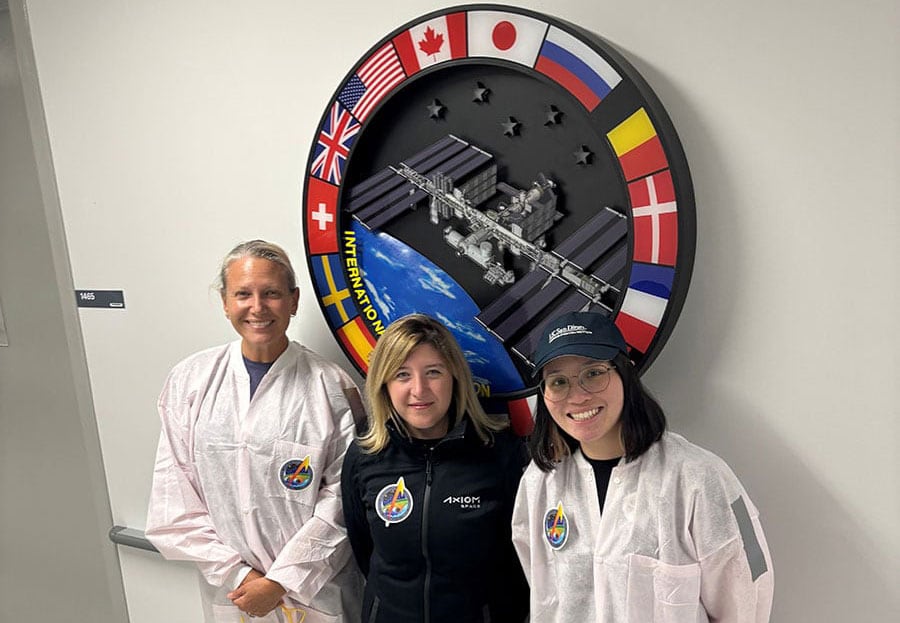
The Aspera, UCSD, and Axiom teams prepared their payload for the Ax-4 mission at Kennedy Space Center (left to right: Karla Mack, Aspera; Pinar Mesci, Axiom Space; and Jessica Pham, UCSD).
Media Credit: Axiom Space
November 19, 2026 • By Amelia Williamson Smith, Upward Managing Editor
Like an enemy lying in wait, cancer stem cells can remain dormant for long periods. They resist standard treatments like chemotherapy and radiation and are masters of immune system evasion. When stress triggers them, the cells tap into the “dark genome”—regions of DNA that are typically silenced—to unlock powerful capabilities that allow them to self-renew, regenerate tumors, and spread throughout the body. For many patients, they are a key reason cancer returns.
Researchers at the University of California San Diego (UCSD) and spinoff company Aspera Biomedicines are working to stop cancer stem cells in their tracks. The goal is to strip the cells of the mechanisms that enable their survival and self-renewal, cutting off the processes that drive recurrence and cancer spread.
But to defeat an enemy, you must first understand it, and studying cancer stem cells in action is notoriously difficult. Because they are activated only sporadically in response to stress, it is hard to keep the cells active long enough to observe their behavior and test therapies.
The team needed a way to induce sustained but survivable stress. Lead investigator Catriona Jamieson had an unexpected solution: send cancer stem cells to space.
“We’re looking at a fight-or-flight response that, interestingly, microgravityThe condition of perceived weightlessness created when an object is in free fall, for example when an object is in orbital motion. Microgravity alters many observable phenomena within the physical and life sciences, allowing scientists to study things in ways not possible on Earth. The International Space Station provides access to a persistent microgravity environment. allows us to recapitulate very predictably,” said Jamieson, director of the UCSD Sanford Stem Cell Institute and founder of Aspera. “We haven’t been able to study cancer stem cells predictably on Earth because these are episodic events, and space gives us a reliable, reproducible environment for inducing stress.”

Catriona Jamieson is professor of medicine at UC San Diego, director of the UC San Diego Sanford Stem Cell Institute, and founder of Aspera Biomedicines.
Media Credit: UC San Diego
Across multiple projects sponsored by the International Space Station (ISSInternational Space Station) National Laboratory and NASANational Aeronautics and Space Administration, Jamieson and her team studied cancer stem cells in space using three-dimensional tumor organoids, miniature models of tumors grown from patient-derived cancer cells. Spaceflight accelerated cancer progression in the organoids, allowing the researchers to observe cancer stem cell survival mechanisms in real time and rapidly evaluate a new cancer drug that recently advanced to clinical trials.
From Stem Cells to Organoids
Jamieson and her team began by studying healthy stem cells in space. In collaboration with ISS National Lab Commercial Service ProviderImplementation Partners that own and operate commercial facilities for the support of research on the ISS or are developing future facilities. Space Tango, the team conducted a series of experiments on stem cells that produce immune cells. The results, published in the high-impact journal Cell Stem Cell, showed that stress from spaceflight accelerated stem cell aging and exhausted the cells, reducing their ability to self-renew and replenish immune cells that detect and eliminate emerging cancers.
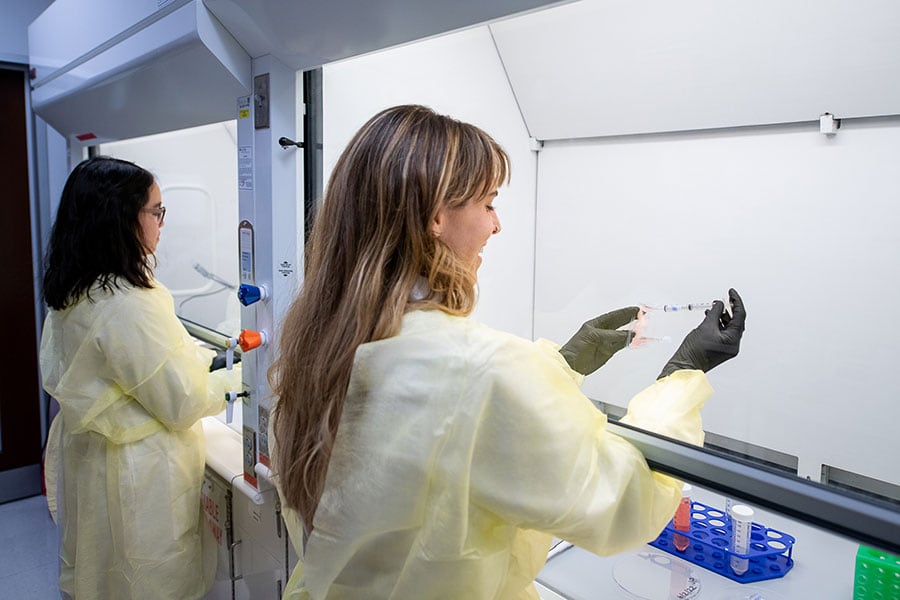
UCSD researchers prepare stem cells for launch to the ISS.
Media Credit: UC San Diego
In a second set of space-based experiments, Jamieson and her team began studying cancer stem cells in tumor organoids. To develop these investigations, the team worked closely with ISS National Lab Commercial Service Provider Axiom Space.
“Researchers shouldn’t have to figure out the hardware or how to adapt their research for spaceflight,” said Axiom Space Chief Scientist Lucie Low. “We have that expertise and serve as the pathway to space.”
The team’s first tumor organoid investigation launched on Axiom Space’s first private astronaut mission to the ISS, Axiom Mission 1. In space, the cancer organoids rapidly grew and began exhibiting characteristics associated with cancer progression, including molecular signatures linked to invasion and metastasis. Intestinal tumor organoids doubled or tripled in size within 10 days, allowing the researchers to observe cancer-related changes that can take years to develop in patients on Earth.
“We gained a really impeccable understanding of how cancer evolves from a pre-cancer to a full-blown cancer in real time, which is extremely valuable,” Jamieson said.
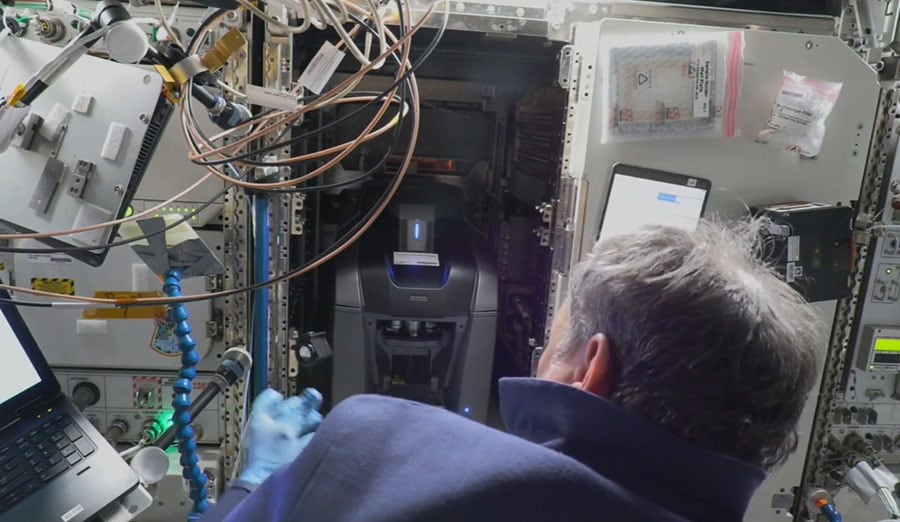
First use of the KERMIT microscope on the ISS by Commander Michael Lopez-Alegria during the Ax-1 mission to image the tumor organoids from Jamieson’s lab.
Media Credit: Axiom Space
The researchers also found that spaceflight did what they hoped: it activated cancer stem cells within the tumor organoids. The cells showed elevated levels of APOBEC enzymes and the ADAR1p150 protein, indicating they had entered a stress-response survival state. This “Bonnie and Clyde” duo, as Jamieson calls APOBEC and ADAR1p150, plays a key role in cancer stem cell survival.
Astronaut Studies
Jamieson and her team also studied blood samples from astronauts who flew on Axiom missions.
“We discovered that some astronauts mobilize a highly resilient, highly regenerative stem cell population in response to the stress of spaceflight, even just in anticipation of going to space, and that was a huge surprise,” Jamieson said.
The findings suggest that, under certain conditions, stress may activate regenerative stem cell programs that help protect the body. The researchers hope these insights could ultimately lead to new personalized medicine approaches for cancer and other diseases.
Defeating the Dark Side
When cancer stem cells are in survival mode, they turn to the dark genome. By accessing these normally silenced regions of DNA, they can activate genetic programs that increase levels of APOBEC and ADAR1p150. APOBEC helps cancer stem cells generate mutations that allow them to adapt and become more resilient, while ADAR1p150 helps the cells survive, tolerate stress, and, most critically, self-renew and spread.
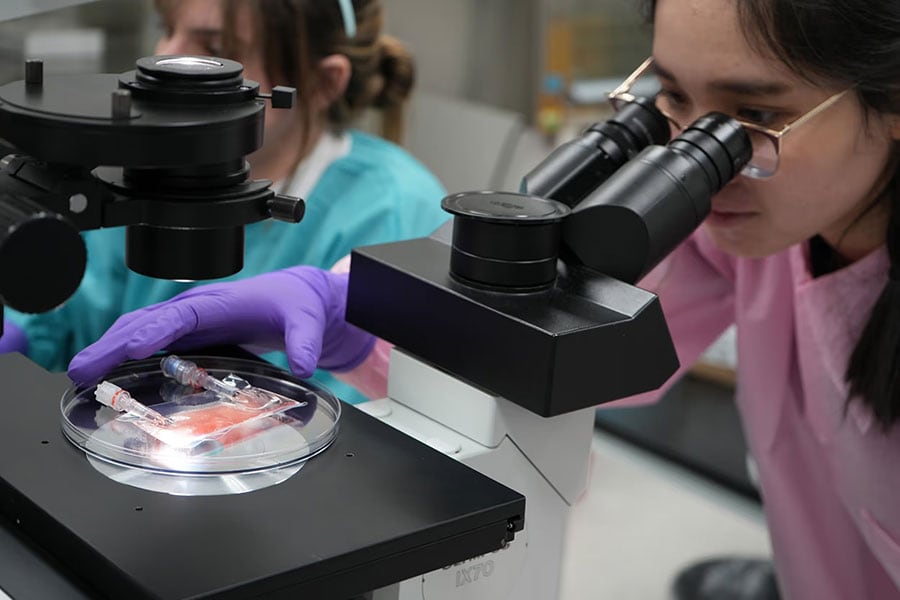
UC San Diego Sanford Stem Cell Institute researchers image the contents of a tumor organoid nanobioreactor system.
Media Credit: UC San Diego
Normally, activation of the dark genome can trigger innate immune defenses in our body that recognize and eliminate abnormal cells. But cancer stem cells have a way to hide. Overproduction of ADAR1p150 also allows the cells to cloak themselves from immune detection.
That is why Jamieson and her team zeroed in on ADAR1p150 as a key target for defeating cancer stem cells and why Aspera developed an experimental new drug called rebecsinib to block it.
“If you block ADAR1p150 with rebecsinib, you actually prevent cancer cells from cloaking themselves,” Jamieson said. “They’re suddenly visible to the immune system and can’t clone themselves.”
When the team saw that spaceflight reliably activated cancer stem cells and kept them in survival mode, they knew the ISS provided a valuable platform to test Aspera’s new drug. “That’s been the biggest opportunity for us on the ISS—to be able to see cancer evolve within a period of just 10 days and then intercept cancer growth with our therapeutic,” she said.
Improving Drug Manufacturing
Aspera is also working with ISS National Lab Commercial Service Provider Redwire Space on studies to crystallize the ADAR1p150 protein, both alone and bound to rebecsinib, which has proven difficult to do on Earth. Early results suggest that microgravity may improve crystallization, potentially providing a more detailed view of the protein’s structure and how rebecsinib interacts with it at the molecular level.
This knowledge could help Aspera optimize rebecsinib’s formulation and improve its complex manufacturing process, which currently takes more than a year. The research team hopes insights from the crystallization studies could lead to formulations that are easier and less expensive to produce.
Flipping the Cancer Kill Switch
To test rebecsinib, Jamieson and her team developed tumor organoids using cancer cells from patients with metastatic triple-negative breast cancer and launched the investigation on the Axiom-3 mission. On the ISS, the tumor organoids began to grow rapidly.
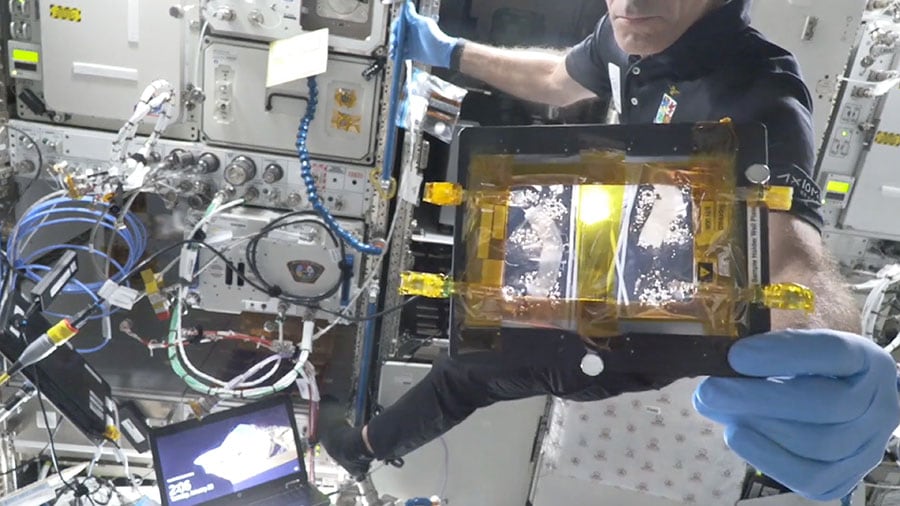
Ax-3 pilot Italian Air Force Col. Walter Villadei imaging nanobioreactors containing tumor organoids using the KERMIT microscope on the ISS.
Media Credit: Axiom Space
“If we can model accelerated cancer growth in space in a way that we can’t do on Earth and test different therapeutics in these accelerated disease models, then we have an unparalleled way of looking at very early biomarkers of cancer development and how treatments could affect it,” Low said.
Once the rebecsinib was added, the research team watched to see what would happen when ADAR1p150 was blocked. What they saw was astounding: the drug completely halted growth of the tumor organoids.
“When we saw that the metastatic breast cancer organoids just stopped growing with rebecsinib, we knew we had found a cancer kill switch,” Jamieson said. “We had seen it on the ground to some extent, but it wasn’t as robust or quick. In space the response was fast and very potent.”
For the team’s Axiom-4 mission, they sent patient-derived organoids of not just metastatic breast cancer but also ovarian cancer, glioblastoma multiforme (a type of brain cancer), and acute myeloid leukemia (AML). These cancers are aggressive and prone to recurrence.
The team's Ax-4 mission patch.
Media Credit: UC San Diego
Once again, rebecsinib arrested growth in all the tumor organoids. The effect was even faster and more robust in AML and glioblastoma, with growth stopping in just five days.
From a Lab in Space to Patients on Earth
The spaceflight results are directly informing rebecsinib clinical trials, said Raghu Saripalli, Aspera co-founder, CEO, and president. The drug entered a Phase 1a clinical trial in summer 2026, enrolling patients with two types of blood cancer, secondary AML and high-risk myelofibrosis. Based on findings from the team’s ISS research, Aspera plans to expand the subsequent Phase 1b clinical trial to incorporate additional cancer types, including solid tumors.
“The acceleration we see in space is invaluable,” Saripalli said. For drugs like rebecsinib, it is often difficult to know which cancers the drug will work best on. By leveraging the ISS, Aspera was able to rapidly evaluate multiple cancer types and identify the most promising targets for clinical trials.
“I’m so glad we did the space studies, because otherwise our Phase 1b trial design would have been delayed at least a year and rebecsinib would have had a much narrower indication,” Saripalli said. “It’s speeding up our time to market, which is just amazing.”
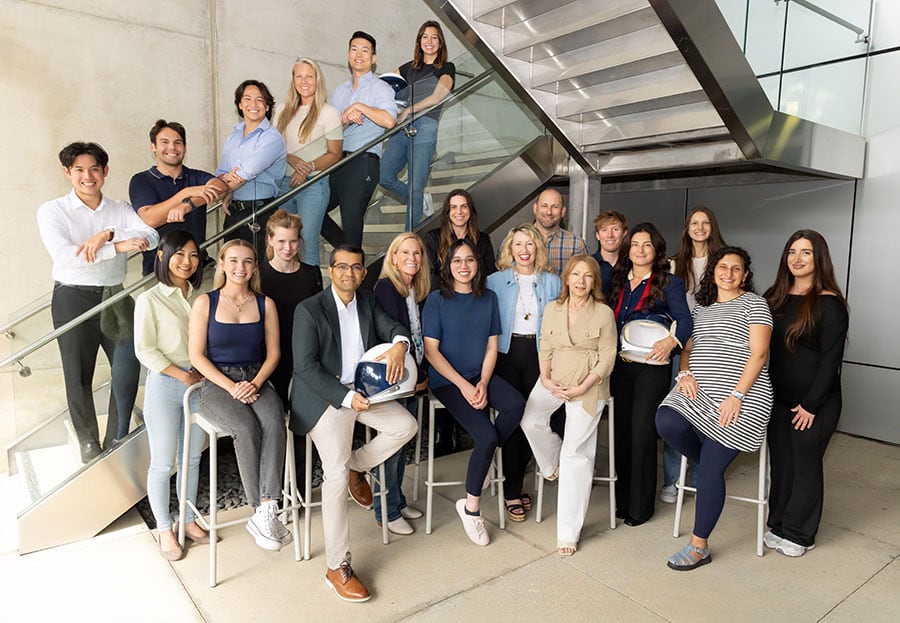
UC San Diego Sanford Stem Cell Institute Director Catriona Jamieson (center) with members of her lab.
Media Credit: UC San Diego
Now that the team has identified a way to uncloak cancer stem cells and make them visible to the immune system, the next step is to see which drugs rebecsinib could be combined with to boost immune response. Saripalli noted that rebecsinib could be given alongside drugs that help the immune system recognize and attack cancer cells, such as Merck’s Keytruda, which also benefited from ISS research.
In the end, time is what matters most to cancer patients, and that is Jamieson’s motivation. “Waiting is a luxury cancer patients can’t afford. We have to intervene as quickly as possible and develop the most effective therapy we can,” she said. “That’s why having access to the International Space Station is so important—because we can see things faster.”