
December 2025
Welcome to Space Station Spotlight, a monthly newsletter from the ISS National Laboratory®. Here’s where you can find all the latest R&D happenings on the space station, see what our partners are up to, and learn how to elevate your research to new heights by leveraging the unique space environment.

What’s new at the ISS National Lab?
The Center for the Advancement of Science in Space® (CASIS®) has served as manager of the ISS National Lab since 2011. Explore highlights from the past 14 years of enabling research that benefits humanity and helps establish a sustainable low Earth orbit economy.
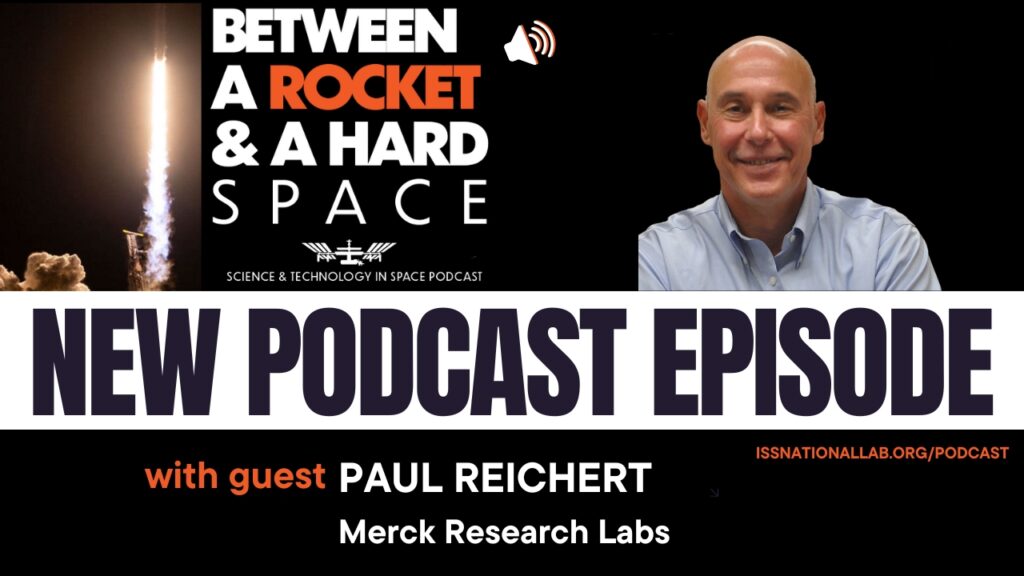
In this episode of Between a Rocket & a Hard Space, Reichert discusses how protein crystallization in space could support the development of new and improved drugs back on Earth. Hear about Reichert’s multiple spaceflight studies over the years and how his work has helped shape the field of space-based biomedical research.
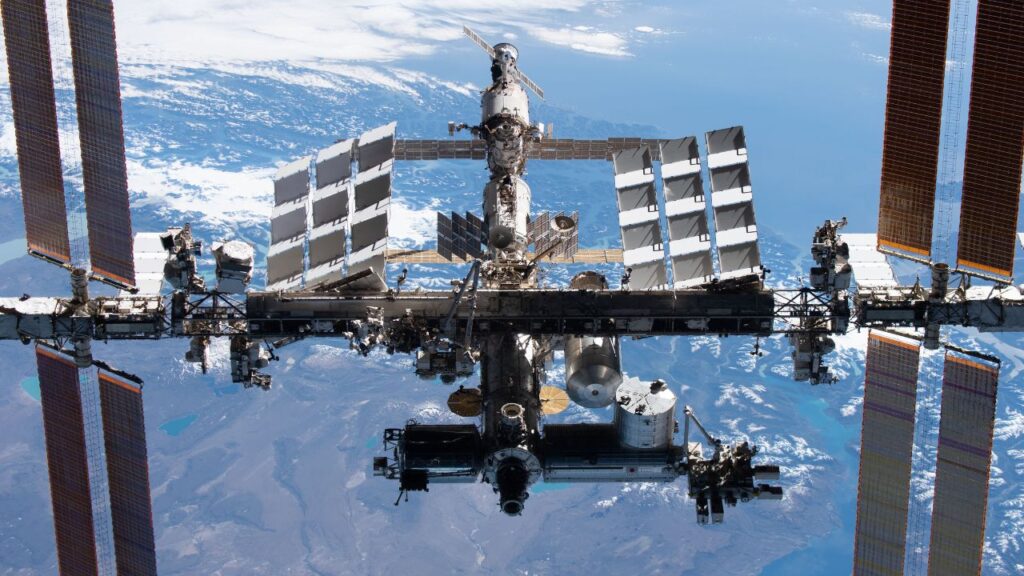
2025 comes to a close, the ISS National Lab reflects on the year’s many achievements—from launching a pioneering startup accelerator program to forging bold new partnerships and delivering a record number of payloads. Learn more about some of the key successes this year.
Partner News
For the first time, eight spacecraft were simultaneously docked to the ISS—filling all current docking ports. One was Russia’s Soyuz MS-28, which carried one NASA astronaut and two Roscosmos cosmonauts to station on Thanksgiving Day.
NASA is seeking industry input on in-space manufacturing technology. The agency is requesting ideas from companies for in-space manufacturing technologies—particularly those for metallic manufacturing—needed to support missions to LEO, the Moon, Mars, and beyond. The deadline to respond is January 16, 2026.
SpaceX and Blue Origin announced plans to develop AI data centers in space. AI systems use enormous amounts of power, and the rapid expanse of AI is creating an unsustainable demand for energy. Space-based data centers could significantly reduce energy costs and environmental impacts by utilizing the continuous solar power available in space and eliminating the need for energy-intensive cooling systems.
Startup Reditus Space announced it is developing a reusable reentry vehicle. Such a vehicle could enable quick-turnaround flights for space-based R&D and manufacturing. Reditus expects the spacecraft, named ENOS, to be completed and ready for its inaugural mission next summer.
Media reports revealed that SpaceX plans to go public in 2026. According to the reports, the company, which has been private since its founding in 2002, is seeking a $1.5 trillion valuation, which would make it one of the most valuable publicly traded companies worldwide.
Global financial leader Janus Henderson Group announced its decision to invest in Starlab Space. Starlab—a joint venture led by Voyager Technologies with partners Airbus, Mitsubishi Corporation, MDA Space, Palantir Technologies, and Space Applications Services—is developing an AI-enabled commercial space station.
Funding Opportunities
Media Credit: NASA
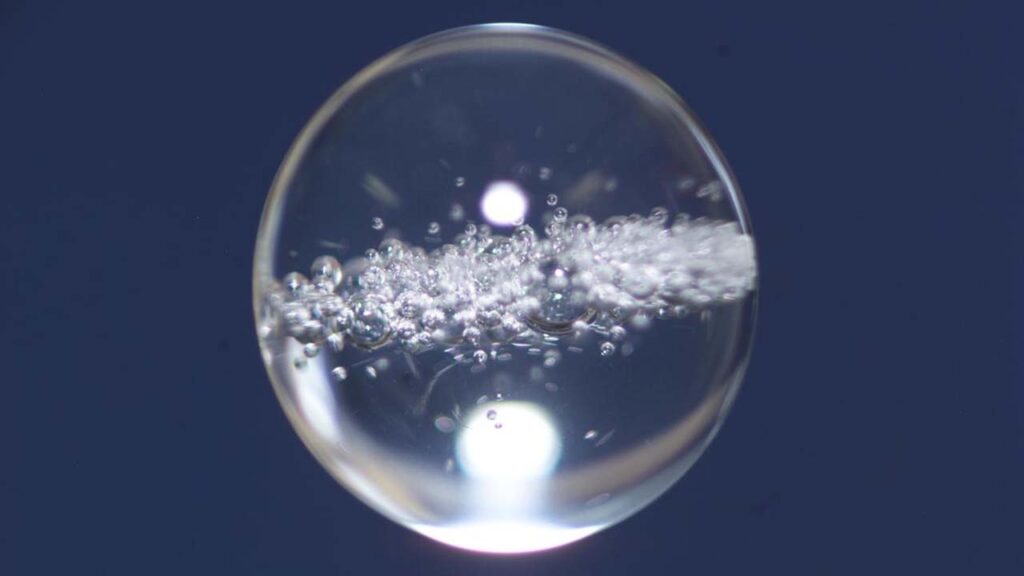
Don’t miss the January 12 deadline for an NSF-funded transport phenomena solicitation. Up to $3.6 million in total funding is available for projects that leverage the ISS National Lab to advance fundamental science related to fluid dynamics, thermal transport systems, combustion, nanoscale interactions, multiphase processes, and more. Find out how to submit a concept on our solicitation webpage
.
Results
The most recent issue of Upward, official magazine of the ISS National Lab, is online. Explore valuable findings from space-based R&D—download the current and past issues here.
The University of Florida is exploring how vibrating fluids could transform critical space technologies. Wave patterns that form when liquids are vibrated could be harnessed to improve heat-removal systems, which are essential for future Moon and Mars habitats. But scientists must first understand how surface tension affects fluid flow. On Earth, gravity masks these subtle effects, but in space, the problem of gravity disappears. Learn more in the Upward feature “Good Vibrations.”
Stanford researchers tested an AI-controlled space navigation system on the ISS. The team used NASA’s Astrobee free-flying robots to validate the machine learning-based system. The successful demonstration marks an important step toward autonomous navigation in space. Findings from this NASA-sponsored project were presented at the 2025 International Conference on Space Robotics. Read more.

STEM Education and Workforce Development
Media Credit: NASA
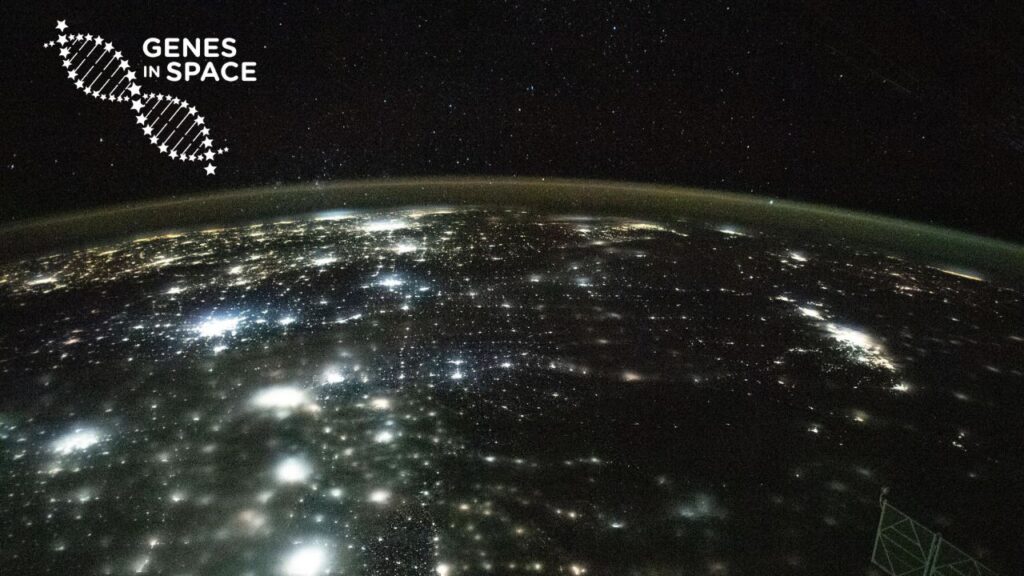
Forbes recognized two former Genes in Space students who launched projects to the ISS. Finsam Samson and Selin Kocalar, both past winners of the Genes in Space competition, were named to the 2026 Forbes 30 Under 30 list in the AI category. Through Genes in Space, students in grades 7-12 design space-based genetics experiments as part of the program’s mission to prepare the next generation of scientists. Learn more.
Higher Orbits and its Go For Launch! program are celebrating 10 years of inspiring students. As part of the program, middle and high school students design and build experiments that launch to the ISS. Higher Orbits aims to engage students who have never considered careers in STEM fields and help grow the future aerospace workforce.
Make a Stellar Impact With a Donation to the ISS National Lab
Want to make an impact and support science in space for the benefit of humanity? Click here to donate online, make a gift of crypto or stock, or contribute through your donor-advised fund.
