
April 2026
Welcome to Space Station Spotlight, the monthly newsletter of the ISS National Laboratory®.

What’s new at the ISS National Lab?
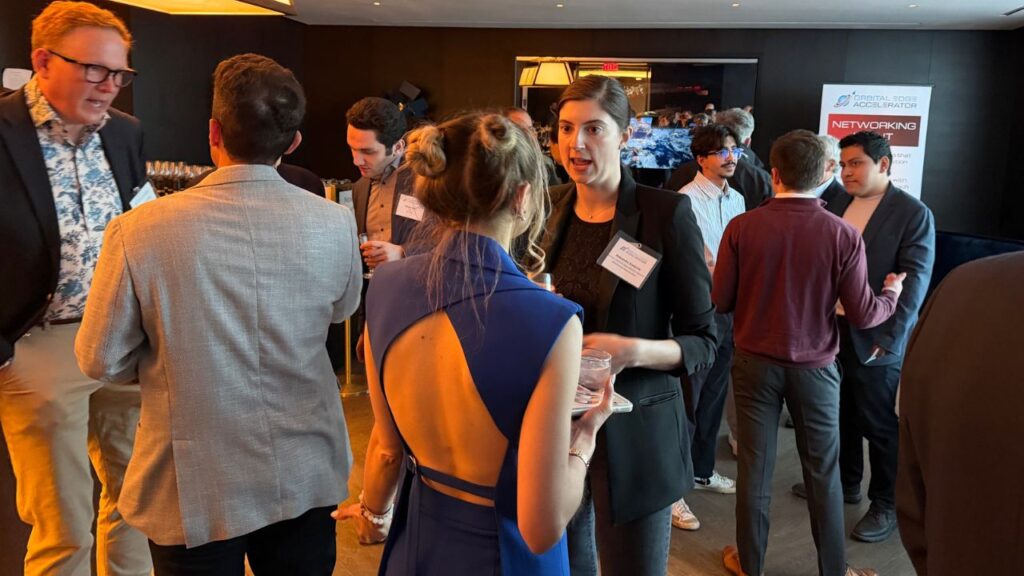
The event brought together startups, venture investors, and industry leaders to explore emerging commercial opportunities in LEO. A second networking reception will be held in San Mateo on May 7. Learn more and see how to register.
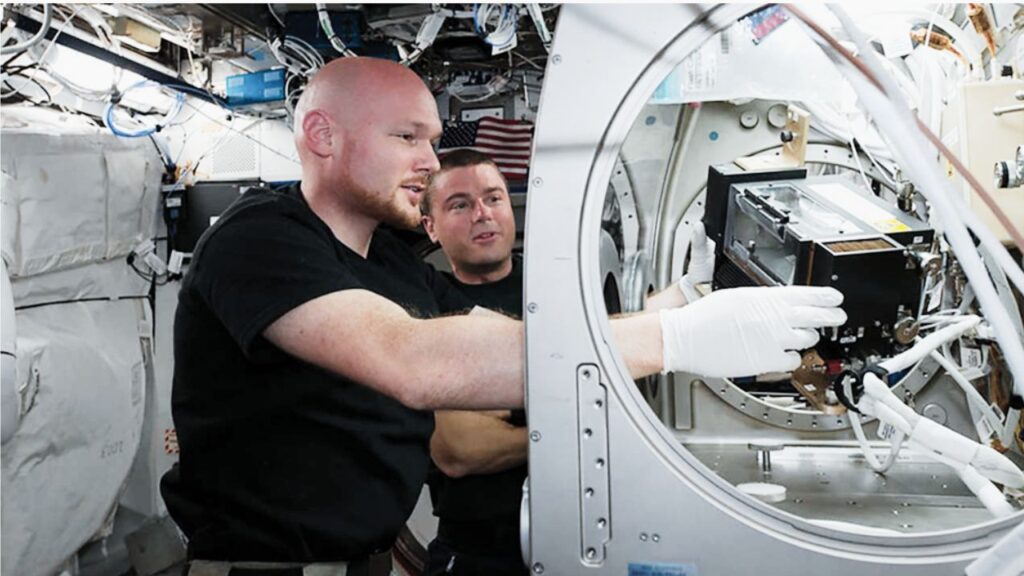
ISS National Lab Chief Scientific Officer Michael Roberts discusses how space-based R&D enabled by these collaborations delivers transformative knowledge and innovation. Read the piece to see how this approach helped build a powerful ecosystem in low Earth orbit.
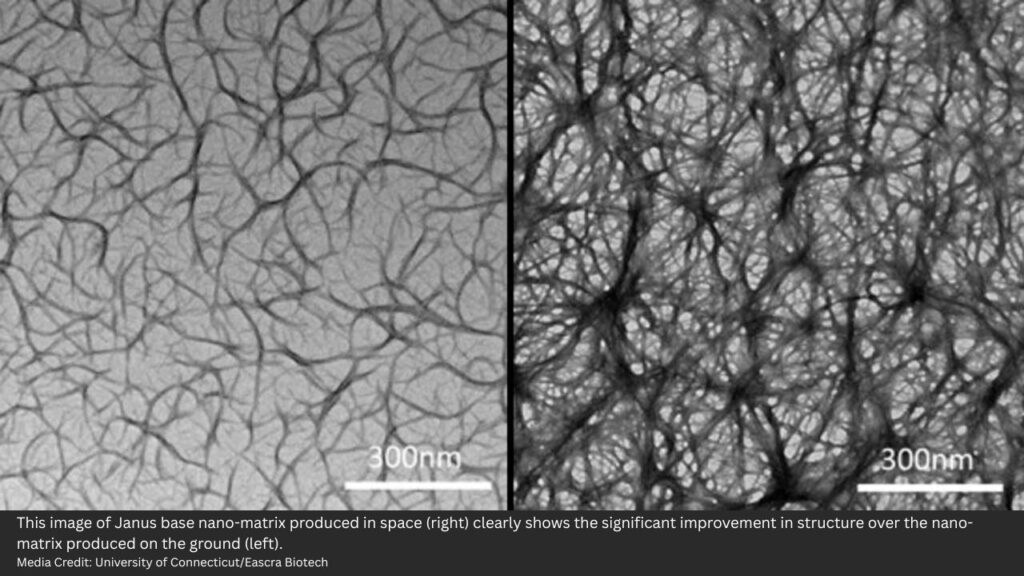
Eascra Biotech aims to advance targeted cancer treatments by developing of Janus base nanomaterials (JBNs), which enable direct drug delivery into some of the most difficult cancers to treat. Read more to see how microgravity improves JBN production.
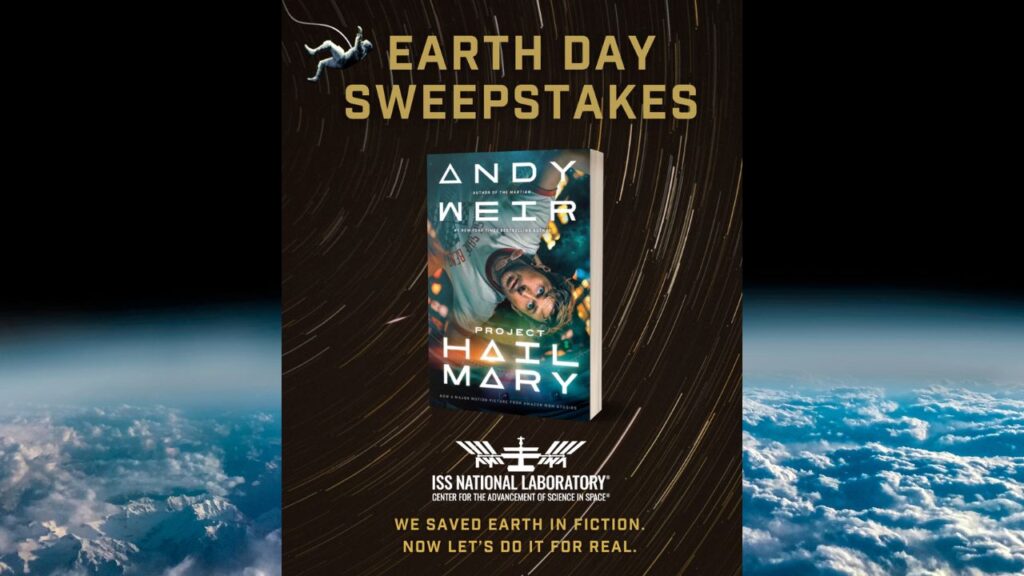
The ISS National Lab partnered with Penguin Random House, Ballantine Books, and #1 New York Times bestselling author Andy Weir (“The Martian,” “Project Hail Mary”) on an Earth Day post highlighting the intersection of imagination and discovery. Learn more.
Partner News
NASA proposed an alternate strategy for commercial space stations. Questioning the viability of the LEO economy, NASA suggested requiring companies to first dock their modules to a new core module that will be added to the ISS before separating as free-flying stations.
Commercial space station developers responded to NASA’s new strategy. Axiom Space, Vast, and Voyager Technologies countered NASA’s assertion that the LEO economy has not yet emerged and responded to the agency’s request for industry feedback.
Axiom Space will test its spacesuit for spacewalks and the lunar surface next year. NASA is not sure if the initial test will be done on Artemis III or the ISS, but the suit will eventually need to be tested in both environments.
Blue Origin’s New Glenn rocket was grounded after deploying a satellite in the wrong location. The launch initially went well, and the rocket’s first stage successfully landed on Blue Origin’s drone ship in the Atlantic Ocean. However, later in the mission, one of the upper stage’s two BE-3U engines did not produce enough thrust during a key burn, leading to the mishap.
Vast unveiled the flight suit astronauts will wear on its Haven-1 station and the ISS PAM mission. The suits, designed for function and flexibility, will be custom-tailored. Vast also announced the opening of a new office in Houston near NASA’s Johnson Space Center and appointed former NASA astronaut Sunita Williams as an Astronaut Advisor.
Voyager Technologies was awarded NASA’s seventh private astronaut mission to the ISS. The mission, Voyager’s first, will serve as a practice run for operations on the Starlab commercial space station. Voyager is also partnering with Icarus Robotics to test a new free-flying robotic platform on the ISS.
Voyager is expanding its VISTA science park. The company signed MOUs with Obuda University in Budapest, Hungary, and Yonsei University in Seoul, South Korea, bringing them into the Voyager Institute for Space, Technology and Advancement (VISTA) ecosystem. Voyager also appointed retired U.S. Air Force Lt. Gen. Joseph Guastella as executive VP of National Security.
Funding Opportunities
The 2026 Orbital Edge Accelerator program is now open for application submissions. The program, which provides access to LEO for R&D and $500K to $750K in private capital funding per startup, has two tracks: space technologies & dual-use applications and in-space manufacturing & space bio. Learn more and register for the webinar on May 5.
.
Results
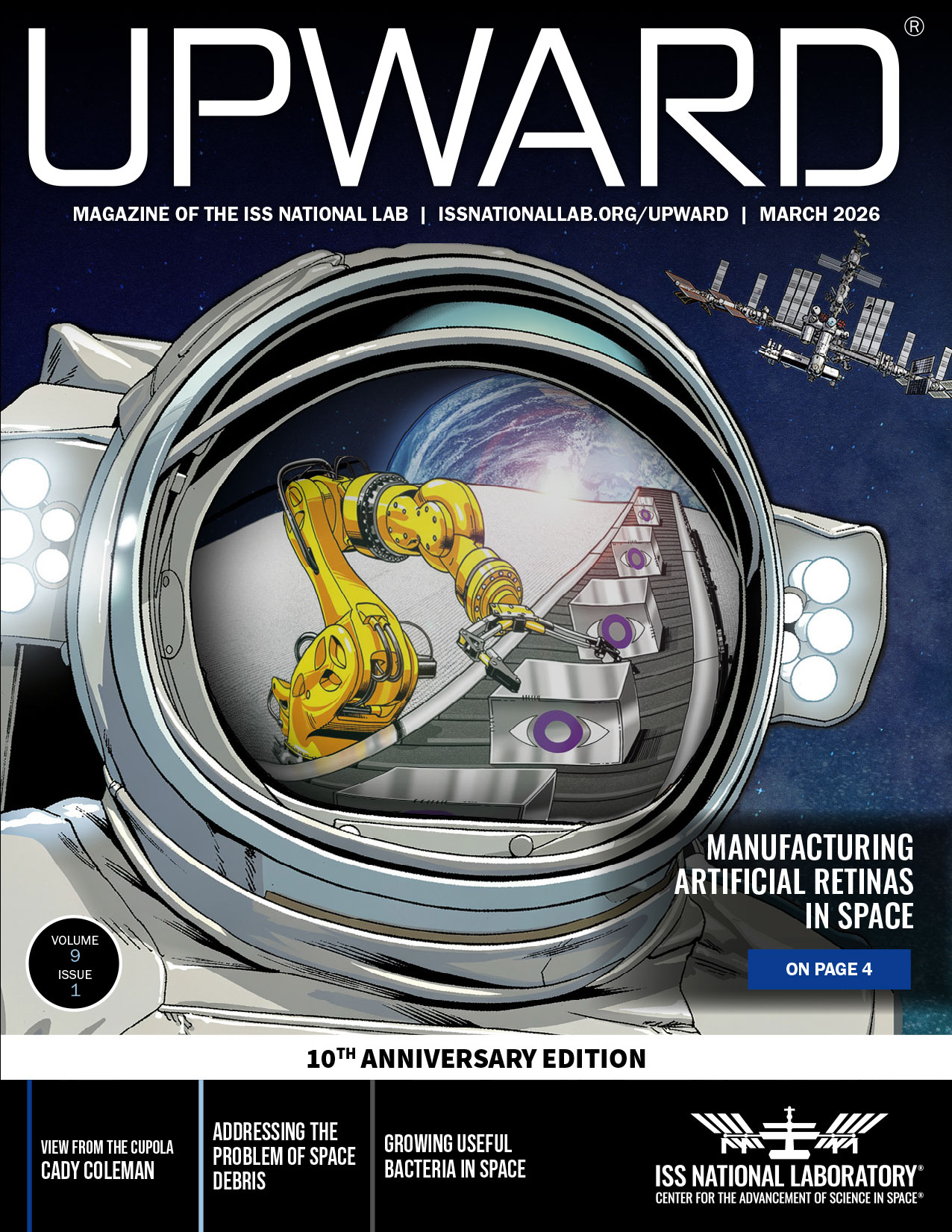
The most recent issue of Upward, official magazine of the ISS National Lab, is online. Explore valuable findings from space-based R&D—download the current and past issues here.
ISS testing validated a new system to safely relocate objects in Earth’s orbit. Kall Morris Inc’s REACCH system deploys tentacle-like arms to capture free-floating objects, gripping them with gecko-inspired adhesion. Read the Upward feature to see how REACCH could become a critical technology for keeping Earth’s orbit clear and safe.
Tissue chip research from Oregon State University was published in a top-tier journal. The study, published in RSC Advances, used a 3D tissue chip to see how human nerve cells respond to gamma radiation. Results highlighted the long‑term risks radiation exposure may pose to human brain health.
LEO Market Update
Media Credit: NASA
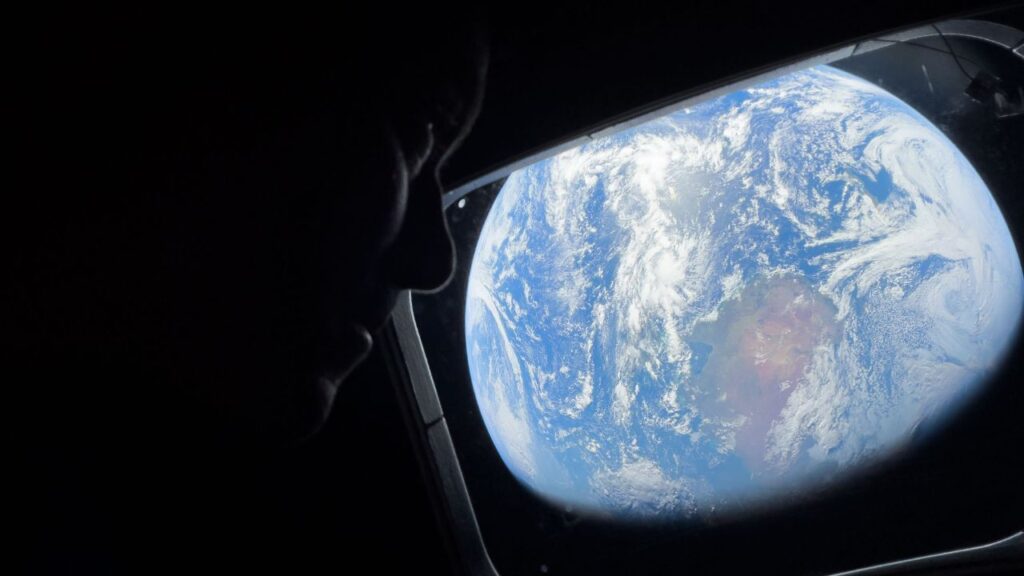
The LEO market remains welcoming with mostly positive demand signals and favorable investor sentiment. ISS National Lab Chief Economist Sven Eenmaa discusses the current capital market environment and provides a space investment outlook in his latest investment perspective. Full details here.