Investment Perspectives: Strike While Space is Hot
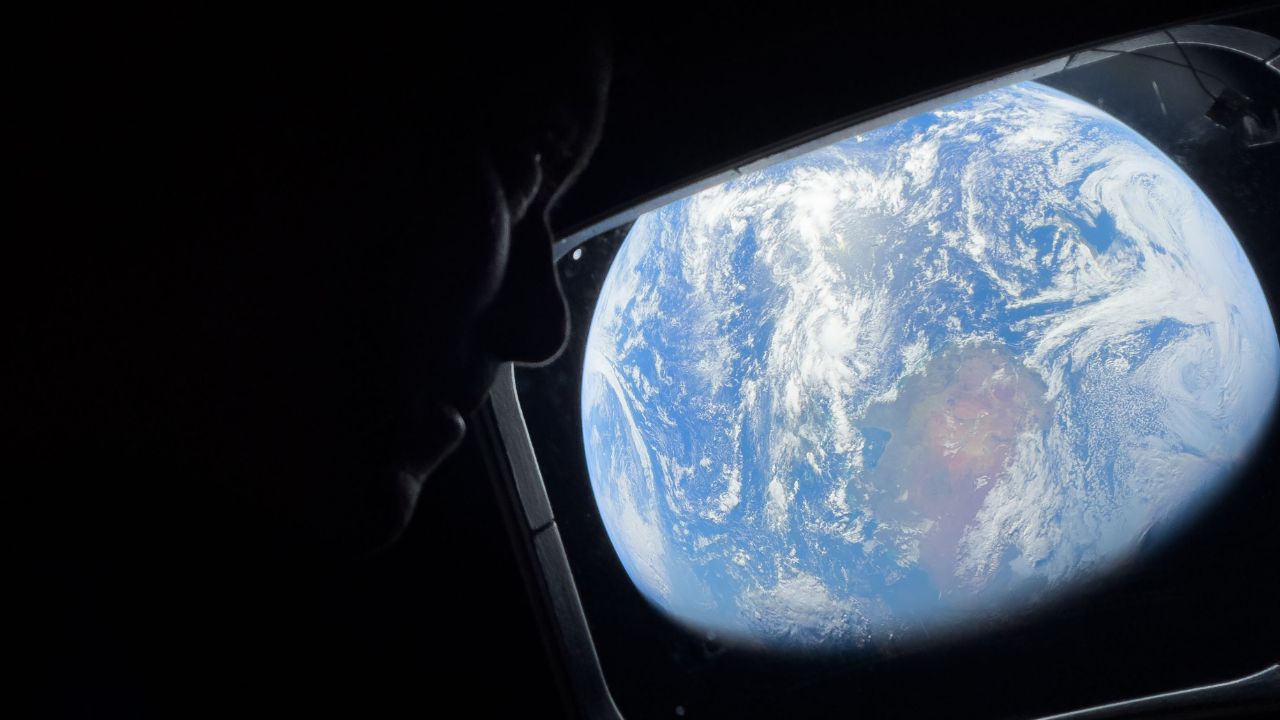
NASA astronaut and Artemis II Commander Reid Wiseman peers out of one of the Orion spacecraft's main cabin windows, looking back at Earth, as the crew travels towards the Moon.
Media Credit: NASA
April 28, 2026 • By Sven Eenmaa, ISS National Lab Chief Economist
With the first third of 2026 almost behind us and financial markets hanging on despite geopolitics, the environment for space entrepreneurs remains welcoming with mostly positive demand signals and favorable investor sentiment. We have highlighted some of the relevant dynamics below. Raising the right capital, hiring the right people, and securing timely access to space is never an easy task, so leveraging windows of opportunity is important. We expect our one-of-a-kind Orbital Edge Accelerator program, with closely coupled venture capital (VC) funding and spaceflight access, to add to the opportunity set available for ambitious founders.
SpaceX IPO and Artemis II provide a boost
Undoubtedly, the expected SpaceX initial public offering (IPO) is the funding event to watch in the space industry in 2026. SpaceX, which recently merged with xAI, has filed confidentially for an IPO and has been educating the financial community. This IPO is expected to be one of the largest on record. Leveraging the enthusiasm toward this massive offering, we would expect to see active public market capital raising activity across the new space industry. Illustrative of sentiment lift in the industry, the S&P Kensho Space Index, which includes equally weighted performance of 33 companies, is up 30% year-to-date in 2026 vs. the S&P 500 Index and NASDAQ, up 5% and 7% respectively. The recent successful Artemis II mission is clearly positive for the investor sentiment across the board as well.
When it comes to private capital access, the first quarter of 2026 data from Space Capital and Seraphim cite new quarterly funding records. Even stripping out only partially relevant AI funding events, the space industry picture looks very healthy across sectors ranging from launch providers to satellite manufacturing, PNT services, space habitats, national security applications, and ground infrastructure providers. Announcements such as Lockheed Martin upsizing its venture fund to $1 billion and Amazon acquiring Globalstar add to the momentum.
Government demand signals
As evident from the recent 41st Space Symposium, defense demand remains the key driver in the space industry. Geopolitics continues to increasingly evolve toward a multipolar world, resulting in demand for regional capabilities and supply chains. In the U.S., we have all seen the Pentagon’s $1.5 trillion budget plan—the largest in history—that includes $71 billion for the Space Force, more than double its budget from the prior year. The budget plan seeks to increase investment in a range of areas from communications to missile warning, missile tracking, space control systems, and cyber warfare operations, and includes about $17 billion for the Golden Dome. In fact, per commentary from the Space Symposium, the question is whether the Space Force service and needed industrial capabilities can now scale quickly enough.
Outside of the defense budget news, the President’s Budget Request (PBR) for FY 27, with its proposed 23% cuts to NASANational Aeronautics and Space Administration (from amounts appropriated by Congress for FY 26), has already drawn adverse lawmaker reaction. One should expect more push-back to the proposed cuts as the federal budgetary process continues and midterms approach. It is important to note that NASA’s recent Ignition event did provide a positive demand signal for entrepreneurs looking to address lunar and exploration opportunities. However, at the same time, the announcement raised questions on how all these initiatives will be funded under the PBR.
At the Ignition event, NASA also communicated yet another commercial LEO(Abbreviation: LEO) The orbit around the Earth that extends up to an altitude of 2,000 km (1,200 miles) from Earth’s surface. The International Space Station’s orbit is in LEO, at an altitude of approximately 250 miles. destination (CLD(Abbreviation: CLD) CLDs are commercially owned and operated platforms in low Earth orbit as part of the NASA CLD Program. NASA intends for there to be a continuity of space-based research from the International Space Station to these new commercial platforms as they are ready.) strategy change, creating turbulence in the commercial space station segment. NASA’s recent RFI on this topic appears to have triggered substantial responses from the industry, and it remains to be seen what the new procurement objectives and approach will be (an RFP is expected this summer). From the perspective of any enterprise building a business in space that requires access to such infrastructure, this recent strategy shift clearly highlights a need to develop multi-platform compatibility and avoid single provider dependency.
Tailwinds from AI
Let’s face it, AI will be everywhere. The ISSInternational Space Station National Laboratory has enabled the testing of data processing technologies in orbit for some time. However, exponential advancements in AI models along with use cases and the resulting massive data infrastructure needs have brought the orbital data center concept into the limelight. With positive commentary from the Elon Musk, Jeff Bezos, and Sundar Pichai combined with increasing concerns around terrestrial power generation, grid constraints, and “not in my backyard” sentiments, the expectations toward this potentially massive space industry growth opportunity run increasingly hot.
Sizeable orbital constellation plans have been reported in the media. However, there are several questions being raised around the path and timeline to achieve economic feasibility and scale of relevance, all of which is heavily dependent on additional technology innovation in power and thermal management systems, development of viable orbital technology upgrade approaches, and further reduction in launch costs. As reflected in the current industry funding statistics, we are seeing investors taking the “glass half full” approach here and leaning into the future innovation curve.
Where will we be in 12 months?
“Those who have knowledge don’t predict. Those who predict don’t have knowledge.”
—Lao Tzu
From a startup perspective, this is obviously a question of how to take best advantage of the current environment. With what appears now to be the fourth continuous year of a bull market, the probabilities are increasing that startups currently in pre-seed or seed stages will see meaningful financial market volatility before reaching their growth-stage years. At the same time, several of the government drivers listed above are multi-year efforts.
The near-term opportunity is to lock in resources, not just funding, but also scarce flight access and operational capabilities, so companies can keep building and iterating though whatever financial market cyclicality will be in store. Platforms such as the Orbital Edge Accelerator program provide funding and spaceflight access to advance initial R&D, derisk technologies, and gain maturity and customer validation. This forward momentum is vital before capital availability and cost change and before technology upgrades and more risk-forward procurement decisions are affected by volatility in broader economic growth prospects.