New Space Biomedical Institutes Are Using ISS Research to Advance Human Health
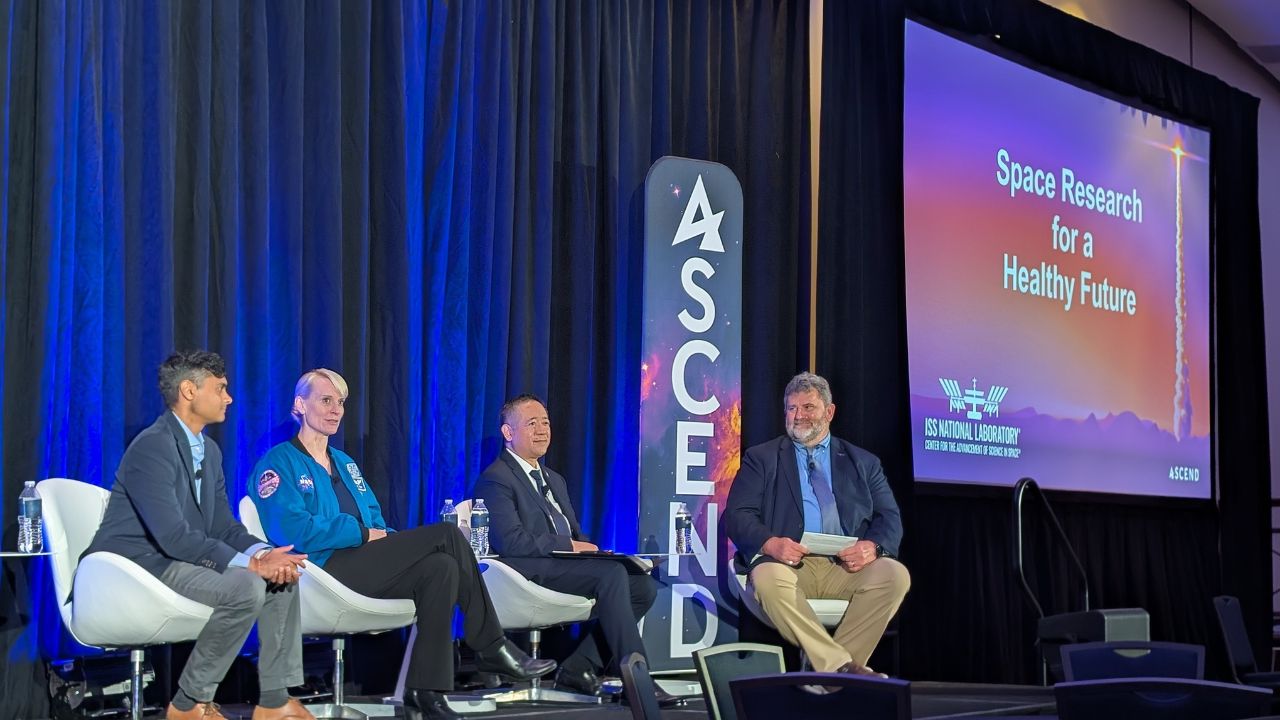
ISS National Lab panel, "Space Research for a Healthy Future," at ASCEND 2026 in Washington, D.C., May 19.
June 12, 2026 • By Amelia Williamson Smith, Sr. Manager, Scientific Communications & Content
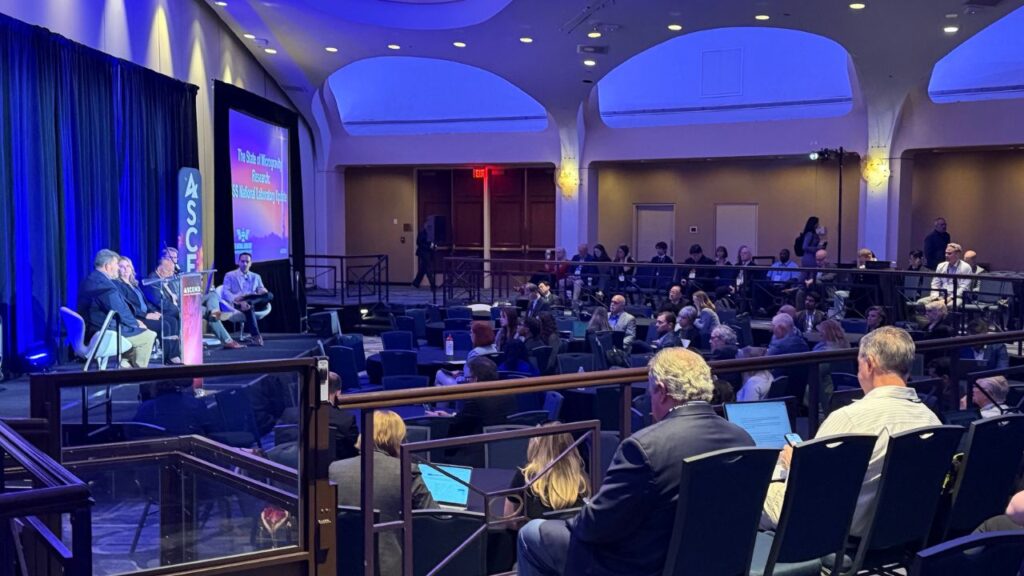
This article is part of a series highlighting sessions from the ISSInternational Space Station National Lab track at the 2026 ASCEND conference in Washington, D.C. The ISS National Lab hosted a full day of programming highlighting advances in space-based R&D, how the ISS National Lab enables innovation in orbit, and the growing low Earth orbit(Abbreviation: LEO) The orbit around the Earth that extends up to an altitude of 2,000 km (1,200 miles) from Earth’s surface. The International Space Station’s orbit is in LEO, at an altitude of approximately 250 miles. economy.
Research conducted in space is opening new avenues for understanding disease, developing therapeutics, and improving patient care on Earth. Decades of exploratory studies on the International Space Station (ISS) have led to the creation of dedicated institutional centers focused on translating space-based discoveries into real-world medical applications. During a session at the 2026 ASCEND conference, leaders from three newly established institutes discussed how findings from ISS research are helping shape the growing field of space medicine.
“There are things we can learn by exposing biology to the space environment that inform us about new cures, new therapies, and new ways to approach aging and disease here on Earth,” said ISS National Lab Chief Scientific Officer Michael Roberts, who led the discussion. “[These research centers] see space as a leverage point to increase their knowledge about human physiology…and to help treat disease.”
Earlier this year, Kenneth Mayuga established the Space Health Center at Cleveland Clinic, which focuses on understanding and mitigating the effects of spaceflight on human health. “I work with a fantastic group of physician scientists…at the top of their fields, so [I thought] why not tap into that breadth and depth of knowledge and experience and use that to tackle space health challenges that arise.”
Mayuga said that as a physician, he has an ethical mandate to help others and alleviate suffering, and the center is aimed at doing just that. “There are specific challenges in space and if they’re overcome, it can have a very real benefit to patients here on Earth. So my hope, my goal is just to continue that process.”
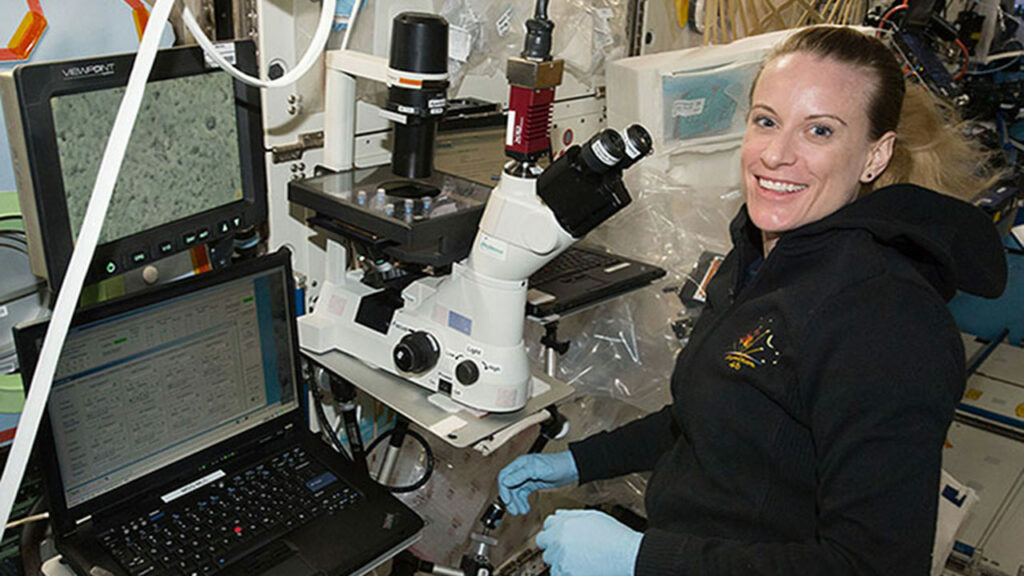
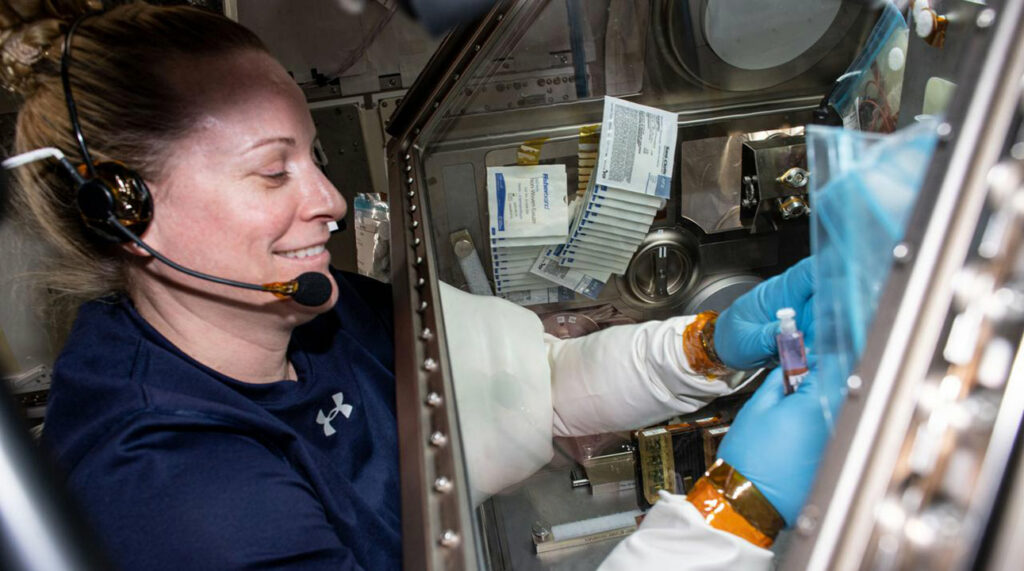
Retired NASANational Aeronautics and Space Administration astronaut Kate Rubins is the founding director of the Trivedi Institute for Space and Global Biomedicine at the University of Pittsburgh, which was established in early 2026. “When I left NASA last year, I wanted to build an institute that would fill what I saw was a gap in terms of being able to translate these amazing discoveries that we’re making…and all of this fantastic work the ISS National Lab is doing, and to really think about how that would affect human populations on Earth.”
Rubins said the institute’s goal is to advance foundational science that others can turn into commercial applications. “How do you translate [space research] to a commercial market on the ground? We want to partner with people that are excited to take these discoveries forward and develop commercial ventures for them.”
Arun Sharma, who has conducted 10 years of ISS studies exploring microgravity’s effects on heart function, is director of the Center for Space Medicine Research at Cedars-Sinai. The center, established in 2025, is leveraging microgravityThe condition of perceived weightlessness created when an object is in free fall, for example when an object is in orbital motion. Microgravity alters many observable phenomena within the physical and life sciences, allowing scientists to study things in ways not possible on Earth. The International Space Station provides access to a persistent microgravity environment. for important applications in stem cell biology. “We may be able to harness low gravity to make stem-cell-derived products…that may not be possible on the ground,” he said.
Sharma explained that the center aims to continue space-based studies focused on cell-based biomanufacturing that could lead to new therapies. He added that Cedars-Sinai also has an on-campus biomanufacturing center, “So the things we discover on the basic science level can be immediately translated within the scope of our own institution.”
The group discussed how results from research done on the ISS laid the foundation for the centers and demonstrated the value of space as a powerful platform for R&D. “The world is really waking up to the potential that we see in space, and a lot of this has been driven by foundational work [on the ISS],” Rubins said. “There have been a number of high-profile publications that I think have opened the eyes of the scientific community.”
Sharma highlighted how far space-based science has come in the field of stem cell biology over the past decade, reflecting on his early conference presentations as a graduate student. Once considered on the fringes, stem cell research in space now holds a much more prominent position at scientific conferences. “It’s no longer just one crazy grad student doing a project, it’s multiple teams of stem cell researchers across different disciplines…and not just here in the United States but across the world,” he said. “That tells us this field has rapidly grown, and [the scientific community] is taking it seriously.”
To keep up with this rapid growth, the panelists stressed the importance of strengthening the future space medicine workforce, which will require professionals not just in science and engineering but also in areas like business and communications. All three institutes have focused workforce development efforts aimed at attracting students and young professionals to this burgeoning field.
Mayuga talked about a new space medicine course he developed through an ISS National Lab grant. Working with International Space University, he created a one-week course for Ph.D. students in the biological sciences, medical students, and postdoctoral researchers to learn about spaceflight’s effects on the cardiovascular system and health issues astronauts may face when returning to Earth. “With the course, we hope to stimulate their interest, stimulate their motivation, and potentially shift some of their focus into addressing [space] health challenges,” he said.
Rubins sees the various space medicine centers less through the lens of competition and more as a cooperative effort to move the field forward. She underscored the continued need for a government-led institution to serve as an honest broker beyond the ISS to ensure the success of future commercial space stations. Having a central body to coordinate efforts and assist in infrastructure development and standardization will be key, she said. “All of this sounds like something that should be government-supported and should be a neutral party because you’ve got government, academia, and commercial.”
As more institutions recognize the value of space-based research to improve human health, panelists agreed that continued cross-sector collaboration will be essential to advancing the next generation of biomedical innovation.