Case Study
Improving Heat-Removal Systems in Space
ISS research on vibrating liquids could transform cooling technologies for Moon and Mars missions
CHALLENGE
On Earth, it is difficult to study how surface tension affects fluid flow because gravity dominates and masks its effects.
Wave patterns that form when liquids are vibrated could be harnessed to improve heat-removal systems, which are essential for future Moon and Mars habitats. When a liquid is vibrated at a certain frequency, its surface becomes unstable and forms a pattern of standing waves, a phenomenon called resonance. The waves create a fluid flow that can be used to carry heat in liquid cooling systems. But to do this, scientists must understand how surface tension affects the fluid flow—something hard to study on Earth because of the overpowering force of gravity. The researchers needed an environment without gravity, where the subtle effects of surface tension could be observed.
Industries:
Energy, Computing,
Manufacturing, Aerospace
Strategic Focus Area:
Fundamental Science
Research Area:
Fluid Dynamics
Institution:
University of Florida
ISS NATIONAL LAB SOLUTION AND IMPACTFUL OUTCOME
In microgravityThe condition of perceived weightlessness created when an object is in free fall, for example when an object is in orbital motion. Microgravity alters many observable phenomena within the physical and life sciences, allowing scientists to study things in ways not possible on Earth. The International Space Station provides access to a persistent microgravity environment., researchers were able to isolate the effects of surface tension on fluid flow, gaining valuable insights.
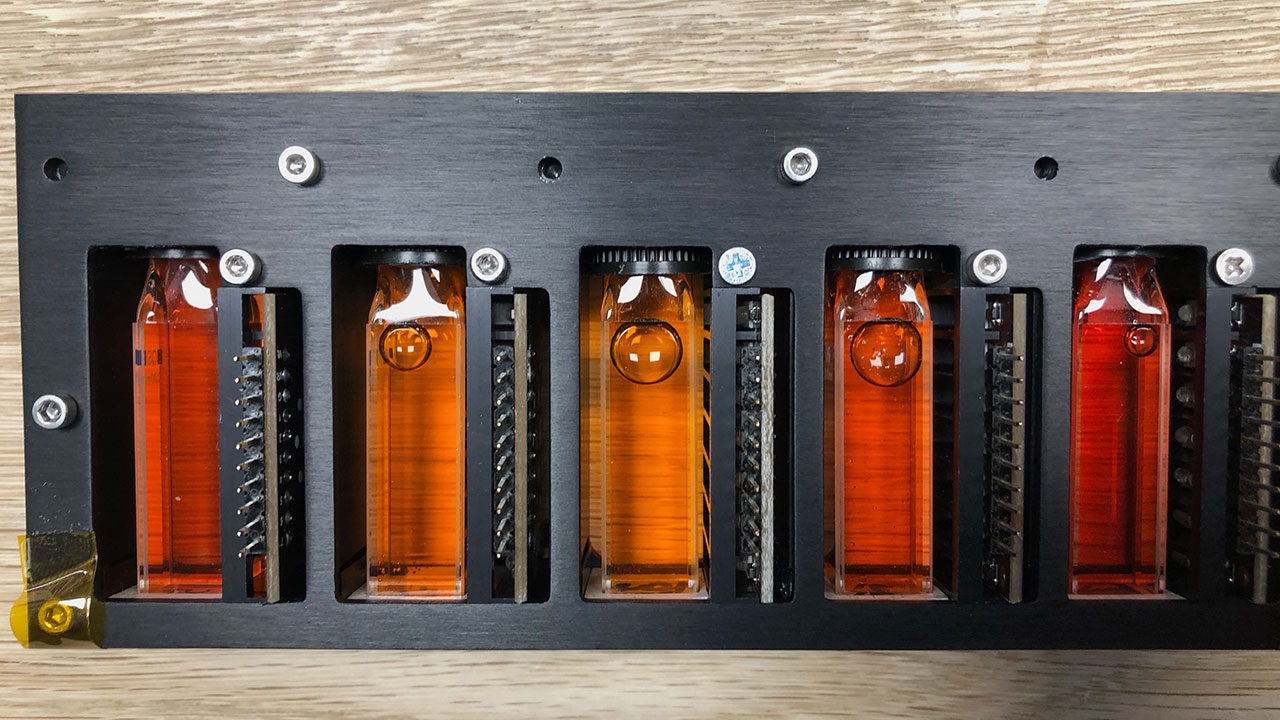
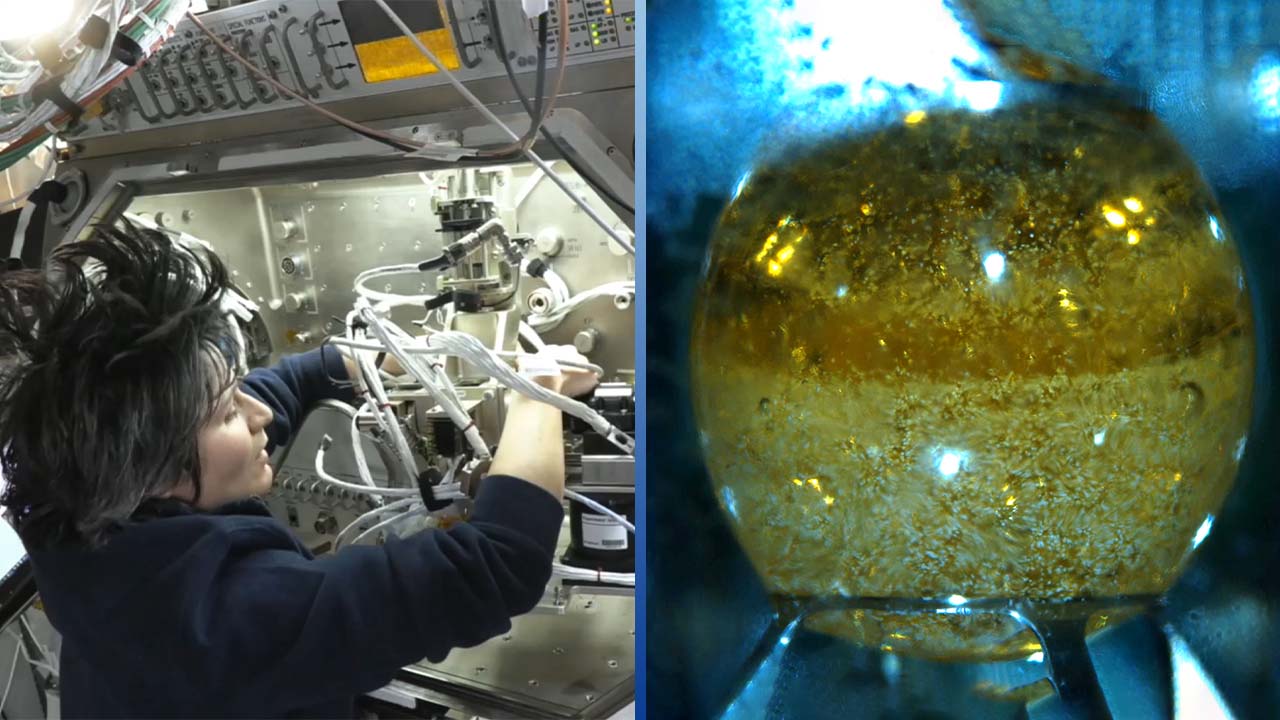
In an ISSInternational Space Station experiment, the researchers vibrated containers holding two liquids that do not mix. They wanted to see what happens at the line where the liquids meet, called the interface. Without gravity, the team was able to observe how surface tension affects fluid flow. The research team also made a surprising discovery. On Earth, when non-mixable liquids are vigorously vibrated, the interface forms a wave pattern but then breaks, and one fluid disperses into the other. But in space, something surprising happened—the interface did not break. This means the standing wave pattern could be sustained, an important finding for heat-removal applications. The next step is to test how well the fluid flow moves heat in microgravity, which the team will examine in an upcoming ISS National Lab-sponsored investigation.

INVESTIGATOR
Ranga Narayanan
Distinguished Professor, University of Florida
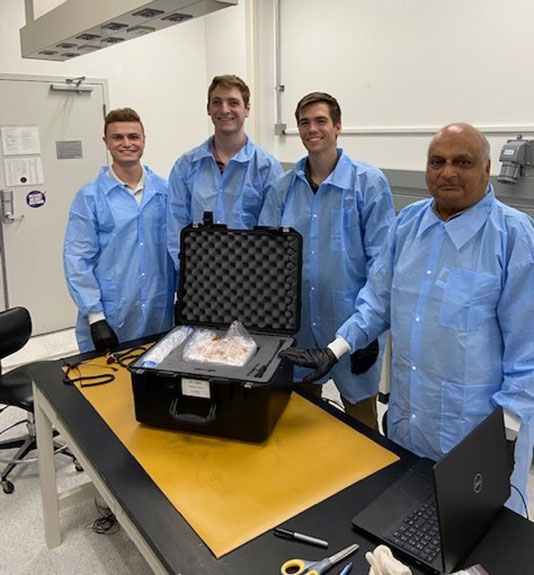
The University of Florida team at Kennedy Space Center preparing its ISS National Lab-sponsored and NSF-funded investigation for launch. (left to right: Craig Singiser, Zach Karpinski, Jason Livesay, Ranga Narayanan)
Media Credit: Aerospace Applications North America
We can now say we understand the science of this fluid motion. We know we can use the flow to enhance heat transfer for thermal management in space and want to come up with a device based on this.
– Ranga Narayanan, University of Florida

APPLICATION
This research will inform the development of critical cooling technologies for missions to the Moon, Mars, and beyond.
In future settlements on the Moon and Mars, astronauts will need a way to quickly remove heat from energy systems like nuclear reactors. On Earth, passive liquid cooling relies on gravity-driven convection—in which warm fluid rises and cooler fluid sinks—to pull heat away from systems. But in space, where gravity is significantly reduced, fluids do not circulate naturally. This makes it challenging to design cooling technology for space-based systems. By harnessing resonance, researchers can induce fluid flow, overcoming that limitation.
This content is abridged from an article originally published in Upward,
official magazine of the ISS National Lab.