July 2026
Welcome to Space Station Spotlight, the monthly newsletter of the ISS National Laboratory®.

What’s new at the ISS National Lab?
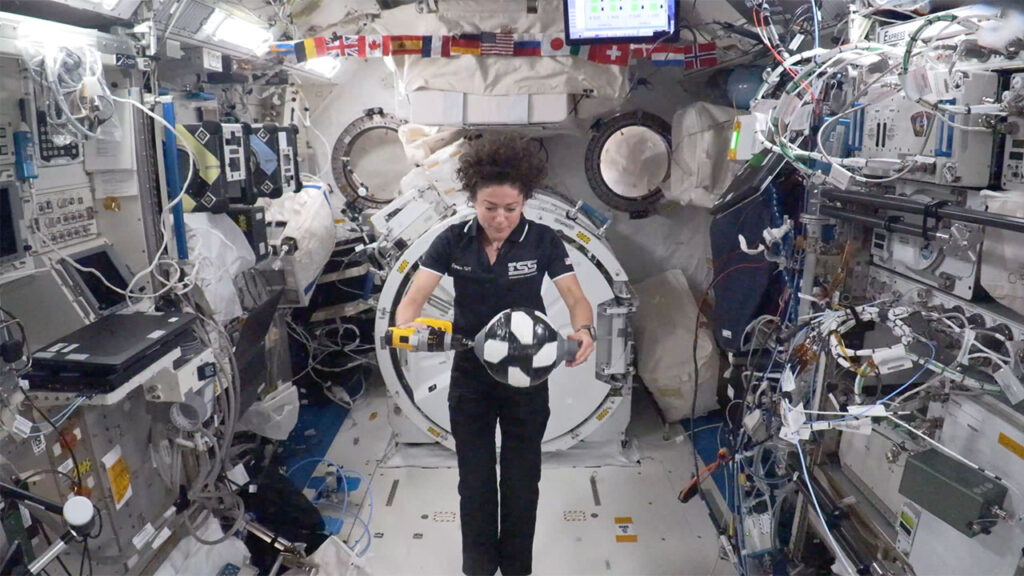
In 2019, adidas studied the rotational stability of soccer balls on the ISS and observed an unexpected physics phenomenon called a “spin flip.” Insight gained from the experiment supported the development of adidas’ 2026 World Cup ball. Read more.
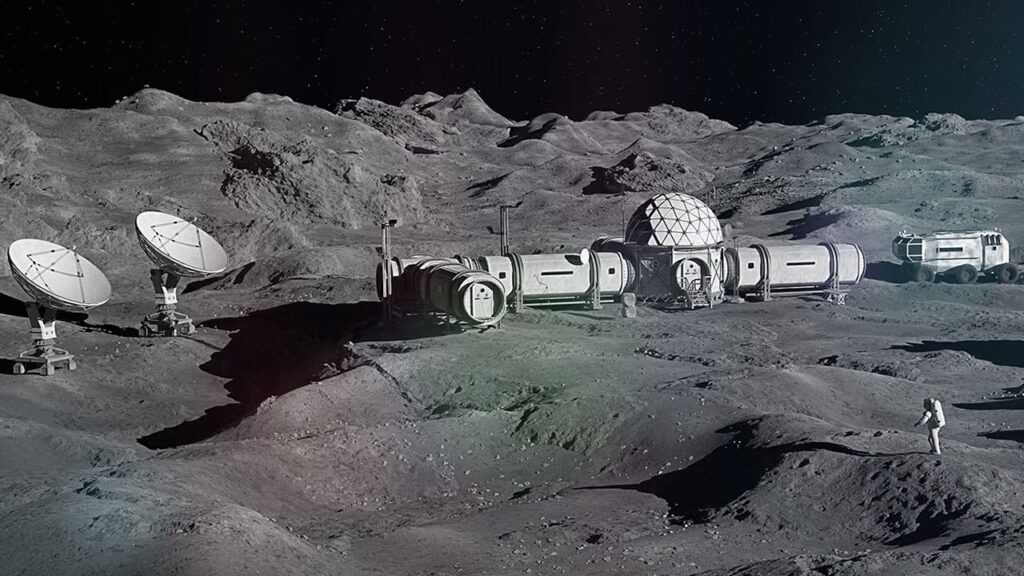
University of Florida researchers studied the waves created by vibrating liquids in microgravity. These waves could carry heat away in liquid cooling systems that will be critical for future space habitats. Learn more.
Startups that applied to the Orbital Edge Accelerator program and were invited to the pitch phase presented to a panel of experts and investors. From this group, a cohort will be selected for each of the two accelerator tracks. Learn more.
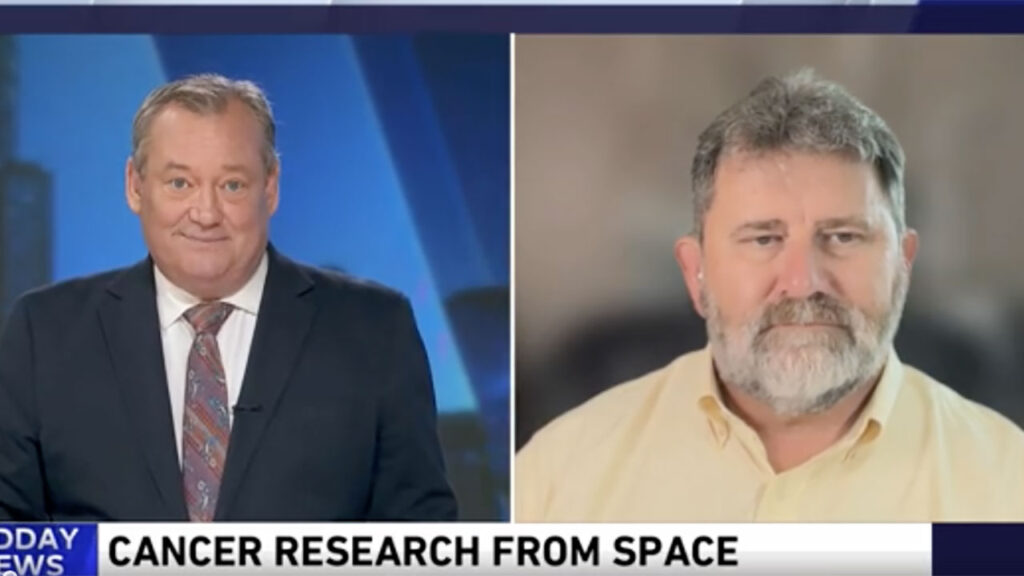
The segment featured ISS National Lab Chief Scientist Michael Roberts, who discussed the benefits of doing cancer research in space and the advances made through ISS National Lab-sponsored cancer studies. Watch the segment.
Partner News
ISS crew members repaired the Canadarm2 robotic arm during a spacewalk. NASA astronauts Chris Williams and Jessica Meir completed the spacewalk to remove and replace a wrist joint on Canadarm2.
NASA released its draft RFP for the next phase of the CLD program. The agency intends to award firm-fixed-price, multi-award contracts to support the development, certification, and services of a CLD. The solicitation indicates awarded companies should be ready to support a crewed flight test in 2029.
Should the ISS be extended beyond 2030? Lawmakers, researchers, and a former astronaut weighed in on whether ISS operations should be extended. Their responses were “yes” and “maybe.”
The U.S. Government Accountability Office issued a report on NASA’s plans to transition from the ISS to commercial space stations. The report highlights key decisions NASA will need to make and discusses how a gap in U.S. presence in LEO could impact the LEO economy.
Redwire opened a new research and microgravity payload development facility in Georgetown, Indiana. The 30,000-square-foot facility features advanced engineering and scientific laboratories and a Payload Operations Control Center to oversee real-time research operations on the ISS. It also serves as a key operational site for Space MD.
Redwire announced two new strategic advisers for its biotech venture company SpaceMD. The company appointedPaul Reichert, former principal investigator at Merck Research Laboratories, and Niki Werkheiser, former director of technology maturation at NASA’s Space Technology Mission Directorate.
Vast appointed a new advisor and a new Senior Vice President of Special Programs. Steve Isakowitz, former President and CEO of The Aerospace Corporation and NASA executive, will serve as an advisor. Melanie Stricklan, co-founder and former CEO of Slingshot Aerospace and a 21-year U.S. Air Force veteran, will serve as Senior Vice President of Special Programs.
Sandia National Laboratories contracted Voyager for an ISS technology demonstration. The payload will use an external platform on Voyager’s Bishop Airlock. Voyager is also partnering with Reditus Space to provide end-to-end microgravity mission services on Reditus’ ENOS reusable reentry vehicle.
Penn State and Pennsylvania health system Geisinger signed MOUs with Voyager to join VISTA. Voyager will collaborate with Penn State and Geisinger, its first major clinical and life sciences partner, on joint space research programs through VISTA, which has expanded rapidly over the past year.
Results
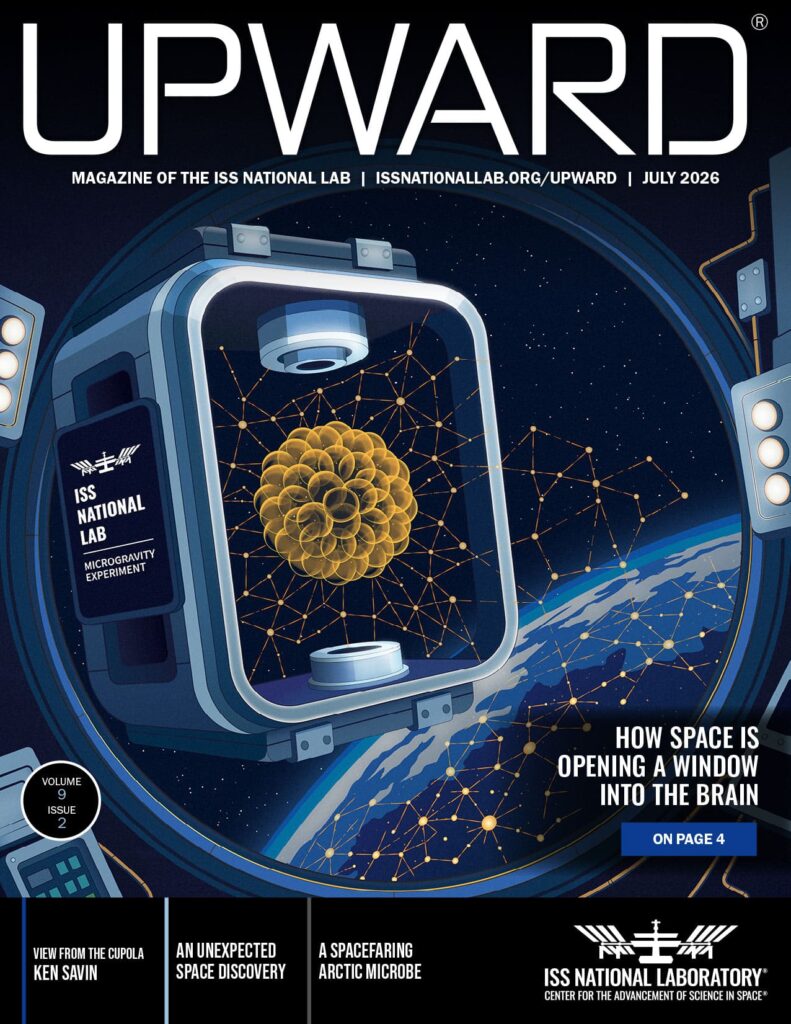
The most recent issue of Upward, official magazine of the ISS National Lab, is online. Explore valuable findings from space-based R&D—download the current and past issues here.
What happens when human brain organoids spend a month onboard the ISS? Read the latest Upward cover story to discover how scientists are using microgravity to study hidden signs of neurological disease—and explore whether these mysterious models of the human brain could speed the search for treatments. Read the full story.
A publication in the top-tier journal Physical Review Letters analyzed 13.5 years of data from the Alpha Magnetic Spectrometer. The analysis included more than 1 million detections of heavy cosmic-ray particles. These findings provide insight into how elements are formed in stars and how cosmic rays travel through space.
RevBio published results from ISS research that could lead to new osteoarthritis treatments. The study, published in the top-tier journal Advanced Science, identified a protein called NOX4 as a key driver of cartilage damage during spaceflight. The researchers also found that the natural plant compound kaempferol helped protect cartilage.
Results published in a high-impact journal describe a new biosensor developed by Virginia Polytechnic Institute and State University. The sensor, which measures how living cells change the mechanical behavior of 3D tissue-like materials, could help scientists better study disease progression, test drugs, and advance regenerative medicine.
Florida International University published results in the journal Physical Review Research. The publication describes a new method to keep tiny self-propelled particles moving freely in 3D space, making it easier to understand and use these particles in applications such as microrobotics, medical technologies, and advanced materials.