
« Back to Annual Report for Fiscal Year 2025
Outreach and Stakeholder Engagement
In FY25, the ISSInternational Space Station National Lab expanded communication and engagement efforts to bolster support for space-based research and increase awareness of the groundbreaking results from R&D in LEO. These efforts reached diverse stakeholder groups spanning industry, academia, government, and education. However, overall visibility and website pageviews declined over the course of the year due to a mid-year pause in paid advertising, reduced communications staffing, and the cancellation of key in-person events. Robust engagement growth during the first half of the fiscal year partially offset this reduction, resulting in higher overall interaction totals year-to-year, but trends in the latter half of FY25 reflected the expected impact of reduced promotional capacity.
Digital engagement grew across multiple channels, demonstrating both strong audience interest and the effectiveness of content distribution strategies. Notably, content engagement increased even as paid advertising and impressions decreased, indicating the high quality of the content and a more targeted audience.
- Key outreach and engagement metrics for FY25 include:
- 275% increase in social media engagement
- 25% increase in press release pickups
- 60% increase in email click-throughs
- 62% increase in ad click-throughs
- 80% increase in overall engagement
- 15% decrease in website pageviews
- 76% decrease in impressions
- High-visibility media mentions this year include:
- The Wall Street Journal highlighted microbial research on the ISS.
- The Associated Press distributed a release tied to an Upward® feature on the AstroRad radiation shielding vest.
- Space.com covered testing of a new 3D microscope to study life in extreme environments.
- Astrobiology Magazine featured a Genes in Space™ student experiment.
“AIAA was honored to work with the CASIS(Abbreviation: CASIS™) The nonprofit organization that manages the ISS National Lab, which receives at least 50 percent of the U.S. research allocation on the International Space Station to facilitate research that benefits humanity (NASA manages the other 50% and focuses on research for space exploration purposes). team to showcase compelling programming at this year’s ASCEND conference. We benefited from learning about the work taking place on the ISS, which has been continuously operating for 25 years in low Earth orbit(Abbreviation: LEO) The orbit around the Earth that extends up to an altitude of 2,000 km (1,200 miles) from Earth’s surface. The International Space Station’s orbit is in LEO, at an altitude of approximately 250 miles.. Looking ahead to ASCEND in 2026, AIAA and CASIS will continue to collaborate, communicating the value of this pivotal research outpost that’s advancing space-based R&D while driving a robust and sustainable space economy.”
– Clay Mowry, CEO of AIAA
A notable change in FY25 was the cancellation of the International Space Station Research and Development Conference (ISSRDC(Abbreviation: ISSRDC) The only conference dedicated exclusively to showcasing how the International Space Station is advancing science and technology and enabling a robust and sustainable market in LEO. This annual conference brings together leaders from the commercial sector, U.S. government agencies, and academic communities to foster innovation and discovery onboard the space station. ISSRDC is hosted by the Center for the Advancement of Science in Space, manager of the ISS National Lab; NASA; and the American Astronautical Society.). For the last 13 years, ISSRDC has played a pivotal role in gathering leaders from the research, technology, industry, and government communities to advance the LEO economy. Although NASANational Aeronautics and Space Administration and the ISS National Lab determined that the regulatory and budgetary environment did not support holding the in-person event, the ISS National Lab continued to share information about its role in enabling groundbreaking space-based research and building a robust LEO economy.
- CASIS partnered with the American Institute of Aeronautics and Astronautics (AIAA) to expand programming for its ASCEND 2025 conference in Las Vegas and the upcoming ASCEND 2026 in Washington, D.C., to highlight the ISS National Lab’s vital role in advancing R&D in LEO.
- In partnership with NASA and the American Astronautical Society, the ISS National Lab hosted three days of virtual ISSRDC technical sessions. Nearly 60 research teams presented findings from space-based R&D, drawing more than 730 registrants from across industry, government, and academia.
Through both digital and print media, the ISS National Lab amplified the impact of space-based research and highlighted advances within the commercial space ecosystem. Across publications, podcasts, and social platforms, the organization continued to engage audiences and demonstrate the growing interest in space-enabled innovation.
- Upward®, the ISS National Lab’s flagship publication, continued to elevate R&D outcomes and showcase commercial and scientific achievements in LEO. The magazine’s subscribers grew to nearly 10,000, up from 7,700 in FY24, and the Upward website received nearly 90,000 pageviews this year.
- The monthly Space Station SpotlightThe monthly newsletter from the ISS National Laboratory® providing information on the latest space station research, updates from ISS National Lab partners, exciting results from space-based research, and important funding opportunities. newsletter, which provides ISS National Lab updates and timely industry insights, expanded significantly, with more than 2,700 subscribers—a 68% jump from last year.
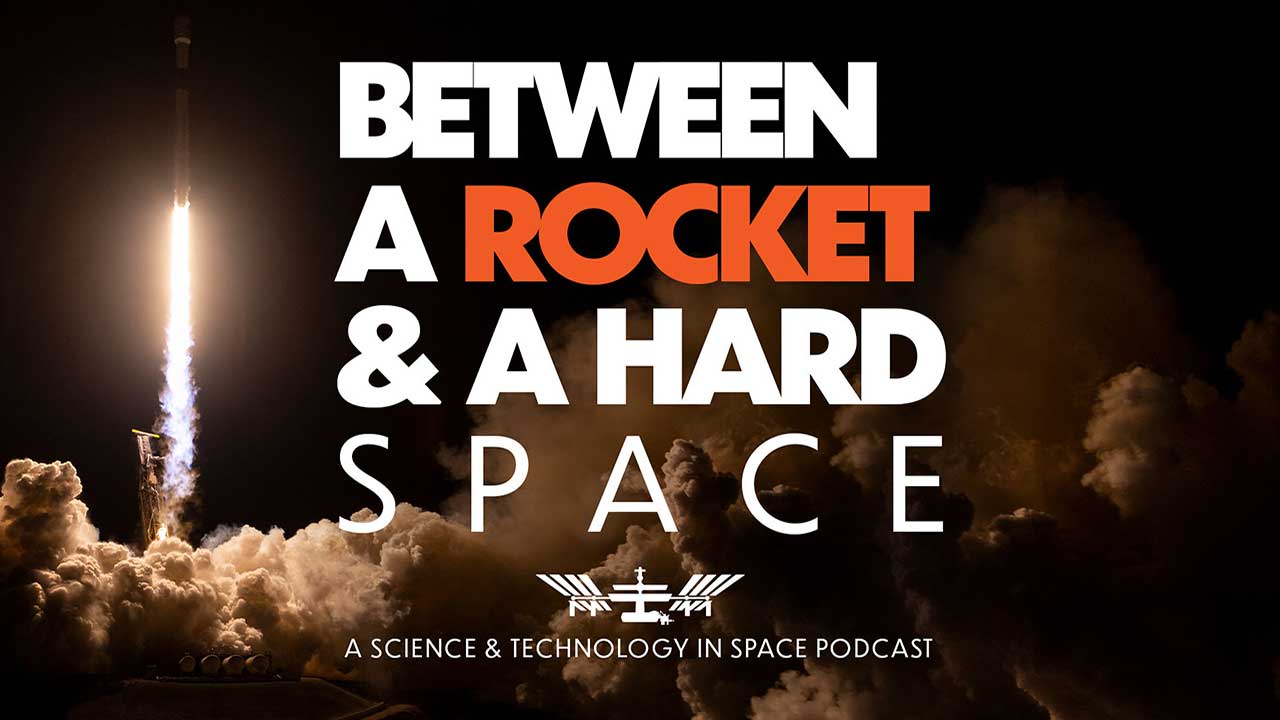
- The ISS National Lab launched its first podcast Between a Rocket & a Hard Space, creating a new avenue for communicating about science in space and engaging with stakeholders. The podcast achieved more than 2,000 downloads across seven episodes and garnered international attention, expanding the visibility of space-based research. High-profile guests included:
- Jackie Wattles (CNN), Raphael Roettgen (E2MC Ventures), Arun Sharma (Cedars-Sinai), Yupeng Chen (University of Connecticut), ISS National Lab Chief Scientific Officer Michael Roberts, ISS National Lab User Advisory Committee(Abbreviation: UAC) A committee that provides CASIS with user input and perspective about the management of ISS National Lab resources. Chair Mark Gittleman, and NASA astronauts Jonny Kim, Mike Fincke, and Zena Cardman.
- The ISS National Lab published eight new articles as part of its “Forging the Path” series, in which CASIS experts and partners share knowledge and insights on managing a national lab in space and the increasing importance of R&D in LEO.
ISS National Lab staff represented the organization at 23 speaking engagements, including:
- Co-chaired the 2025 SelectBIO Space Summit
- Participated in panel sessions at the Space Symposium
- Presented at the M. Keck Observatory in Hawaii, the Sanford Stem Cell Institute’s Global Astrobiotechnology Hub, the 2024 Annual Symposium, and the NSF Directorate for Technology, Innovation and Partnerships (TIP) meeting