
An Unexpected Space Discovery May Improve Vaccines for Older Adults
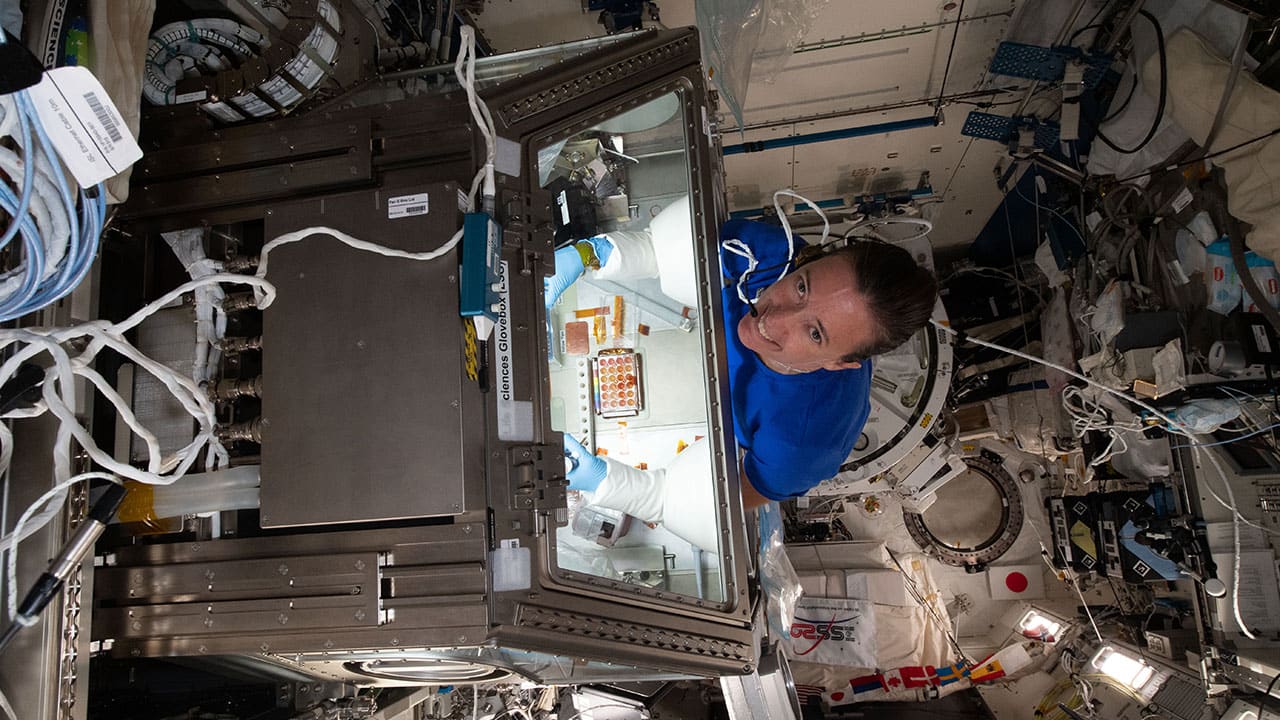
NASA astronaut Megan McArthur samples donor cells inside the Life Sciences Glovebox on the ISS for Sanofi's Celestial Immunity experiment.
Media Credit: NASA
July 28, 2026 • By Amelia Williamson Smith, Upward Managing Editor
Some of the most exciting science happens when an experiment doesn’t reveal what you thought it would. When the data you collect supports your hypothesis, it confirms what you already suspected. But when the data surprises you, it can open a door you didn’t even know was there.
For a team of researchers at the global pharmaceutical company Sanofi, unexpected findings from research on the International Space Station (ISSInternational Space Station) may help scientists develop more effective vaccines, particularly in a key population: older adults.
“A lot of times, it’s the things you don’t expect that have a big impact,” said BioOrbit chief scientific officer Ken Savin, who worked with the Sanofi team on the project while serving as a senior program scientist at the ISS National Laboratory®. “When an experiment doesn’t go as planned, it forces you to pause and question your assumptions—what did we think we understood and didn’t, and what does that mean?”
Sanofi is known for supporting bold, exploratory studies in nontraditional research environments. So, when the company was presented with an opportunity to take its research to space through the ISS National Lab, it jumped at the chance.
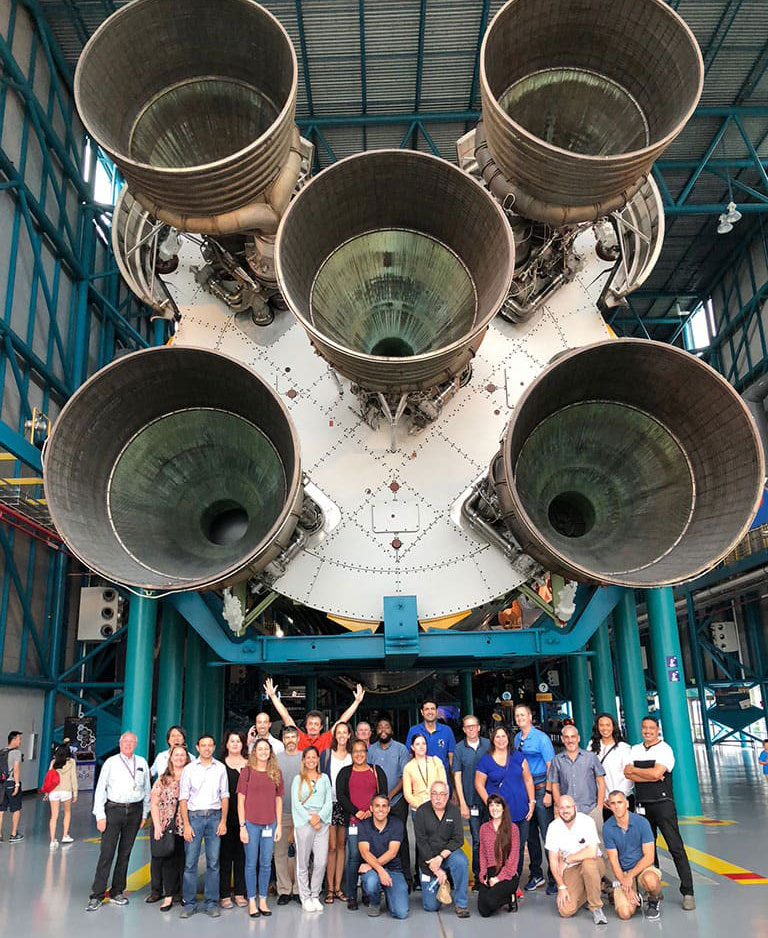
The Sanofi team visiting Kennedy Space Center ahead of the launch of their Celestial Immunity project.
Media Credit: Brian Schanen
“MicrogravityThe condition of perceived weightlessness created when an object is in free fall, for example when an object is in orbital motion. Microgravity alters many observable phenomena within the physical and life sciences, allowing scientists to study things in ways not possible on Earth. The International Space Station provides access to a persistent microgravity environment. provides a unique, unexplored variable that few biopharmaceutical researchers have leveraged or considered,” said Brian Schanen, Sanofi’s global head of biomarkers. “What it could bring to our research and next-generation products is incredibly exciting, but you have to think a little orthogonally for that to occur, and it takes leadership that’s willing to embrace that mindset and take those leaps.”
As we age, our immune system declines, and Schanen and his colleagues are trying to understand why. But studying immune aging is difficult because it unfolds over decades. To address this issue, the team was looking for a way to rapidly age young immune cells, and space research caught their attention.
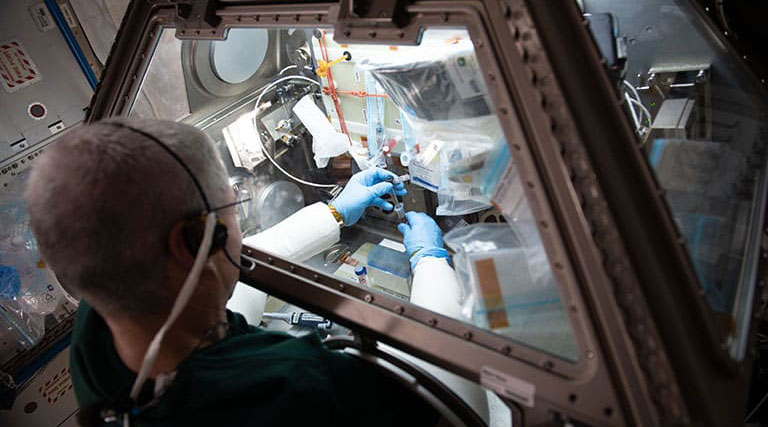
NASANational Aeronautics and Space Administration astronaut Mark Vande Hei works on the Celestial Immunity project in the Life Sciences Glovebox on the ISS.
Media Credit: NASA
Previous studies found that microgravity disrupts immune function, potentially providing an accelerated model of immune aging. So, when the Sanofi team sent immune cells to the ISS, they expected to see a steady deterioration in immune performance. Instead, they saw the opposite. The team’s surprising findings led them in a whole new direction, one that could pave the way for better vaccines.
Breaking Through Immune Baggage
Unlocking better vaccines requires overcoming a fundamental tenet of immunology: your immune system’s effectiveness against future biological threats is shaped by past experiences. Did you know that your first flu infection left a lasting imprint on your immune system? It’s true—that initial infection strongly influences how the immune system recognizes and responds to influenza infections later in life.
When you come into contact with a virus, your immune system is activated to fight the threat. It develops antibodies that will recognize the virus in the future to quickly neutralize it. Vaccines work in a similar way. They contain parts of a virus that allow your immune system to develop antibodies to the virus without making you sick. Whether by exposure to a virus or to parts of the virus in a vaccine, the body builds immunity to what it encounters.
Over time, this immunity is why you usually don’t get as sick from the same virus more than once. However, viruses like the flu are escape artists that like to mutate, creating different strains. The immune system needs to adapt and develop slightly different tools to fight each one.
However, when you encounter a new flu strain, your immune system may default back to the response from its “memory” of that original virus, even when it’s not the best match for the new strain. This immune baggage can make it harder to fight novel infections. Vaccines can give your immune system the tools to put up a better fight, “but we have to break through this imprinting where your body preferentially wants to recall that preexisting immune response,” explained Schanen.

Sanofi researcher Brian Schanen and his team conducted research through the ISS National Lab that could help improve vaccine response in older adults.
Media Credit: Sanofi Pasteur
How do you break through? One way is to use adjuvants. Derived from a Latin word meaning “to aid,” adjuvants help grab the immune system’s attention and steer it toward a productive response. As people age, however, some immune pathways become harder to activate. This helps explain why older adults often do not respond as well to vaccines. If researchers could uncover the fundamental drivers of immune aging, also known as immunosenescence, they may be able to design adjuvants that work around them.
The problem is that immune cells from people in their sixties and seventies carry decades of immune baggage—from childhood illnesses to viruses encountered in adulthood and everything in between. This clouds the picture and makes it hard to identify the pathways tied to immune aging. To overcome this challenge, the researchers turned to space.
“If putting young immune cells in microgravity can induce key functional features associated with immunosenescence, it could allow us to study age-related immune dysfunction in an accelerated way,” Schanen said. This would allow researchers to study immune aging without all the baggage.
The Bold Move to Space
In 2021, Sanofi’s project launched to the ISS on NASA’s SpaceX Crew-2 mission. “It was the nexus between biology from the laboratory and the raw engineering of a rocket,” Schanen said. “There are few times in your scientific career that you get the hair standing up on the back of your neck, but everyone watching the launch had that sensation.”
For their experiment, the team isolated immune cells in blood samples collected from two groups: 12 young adults (ages 19-35) and 12 older adults (ages 65-79). To adapt their research for the microgravity environment, the team partnered with ISS National Lab Commercial Service ProviderImplementation Partners that own and operate commercial facilities for the support of research on the ISS or are developing future facilities. BioServe Space Technologies.
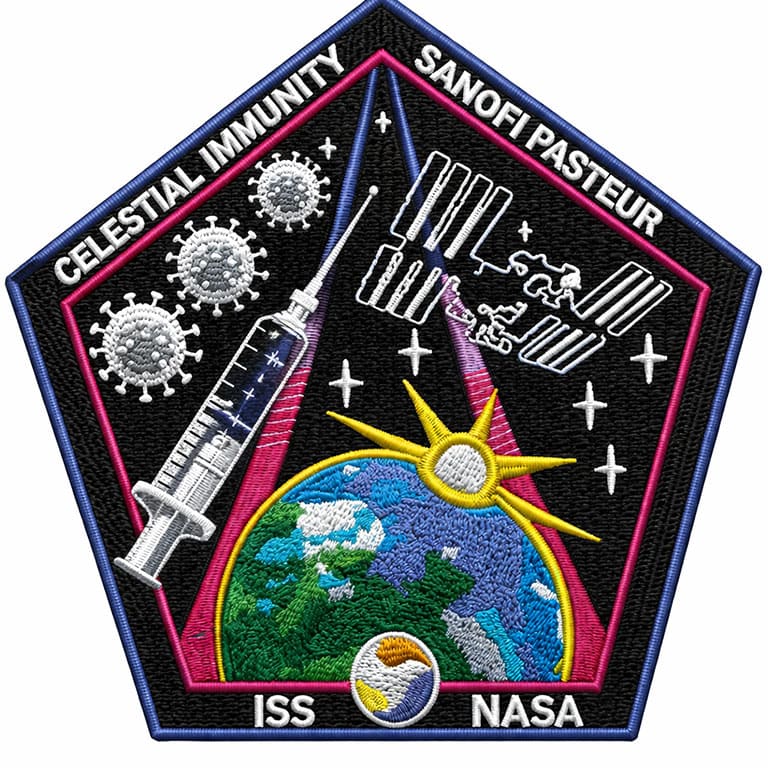
The mission patch for Sanofi's Celestial Immunity experiment sponsored by the ISS National Lab.
Media Credit: Sanofi Pasteur
“We worked with Sanofi to develop a method to take the procedures from their lab on the ground and make them work on the space station,” said BioServe CEO Stefanie Countryman. “It sounds simple, but it took months to really figure out the fluid handling and how to keep the fluids contained in orbit while maintaining sterility.”
Once on the ISS, the immune cells were cultured for five days. In parallel, an identical experiment was conducted on the ground using the same cells, equipment, and procedures to serve as a control. To simulate infection, the team introduced stimulants designed to trigger an immune response. The researchers also added various adjuvants to assess their effectiveness in enhancing the response. At defined time points, the team analyzed the cells using two approaches: cytokine measurement and RNA sequencing.
Cytokines are proteins produced when immune-related genes are expressed. They activate immune cells and other body systems to fight infection or heal injury. By examining the types and amounts of cytokines produced, scientists can gauge how the immune system is responding. Some cytokine patterns are associated with productive immune responses that lead to durable immunity, while others are associated with short-lived immune responses that cause inflammation without providing lasting protection.
How Gene Expression Drives Immune Action
- DNA is transcribed into mRNA
- The mRNA is translated to produce proteins like cytokines
- Proteins have different functions that drive actions
“We use cytokines as a readout to understand what direction the cells are headed to see if it’s a productive response,” Schanen said. Through decades of research, scientists have identified roughly 50 cytokines that help interpret immune behavior, but the story is far from simple. “It’s quite complicated and still very much an active area of study, trying to understand what some of these complicated signatures mean.”
Although examining cytokines is useful, it provides only a partial view, and cytokines alone do not fully predict the durability of immunity, Schanen explained. Another issue is timing. Cytokines are produced continuously, but researchers can only measure them at specific sampling points that serve as snapshots. To capture a more complete view, scientists use RNA sequencing. This method provides a detailed map of gene activity, revealing which genes are over- or under-expressed during an immune response.
To collect samples for analysis, the astronauts carefully moved the cells from the incubator to the Life Sciences Glovebox on the ISS. Countryman recalls the suspense of waiting to see the cells.
“We did a lot of work to successfully implement the experiment, but you never really know until you see it,” she said. When the plate came into view—displaying bright shades of red, orange, and yellow—it was clear the cells were alive and metabolizing nutrients. “Seeing those colors, we knew the cells were growing, and that was incredibly exciting.”
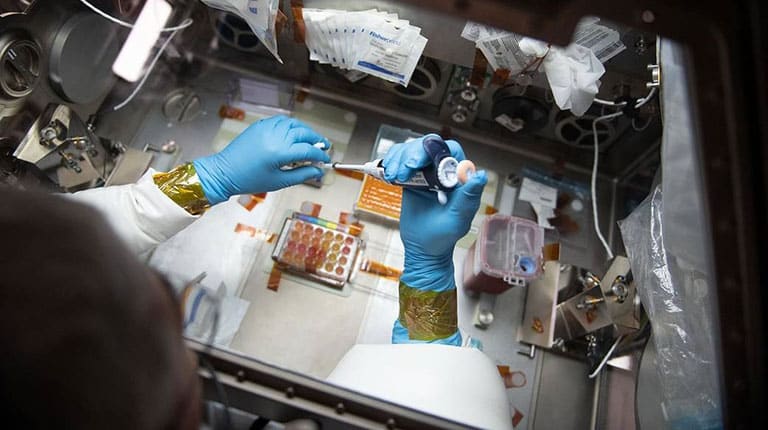
NASA astronaut Mark Vande Hei works on Sanofi's investigation studying how microgravity affects immune response.
Media Credit: NASA
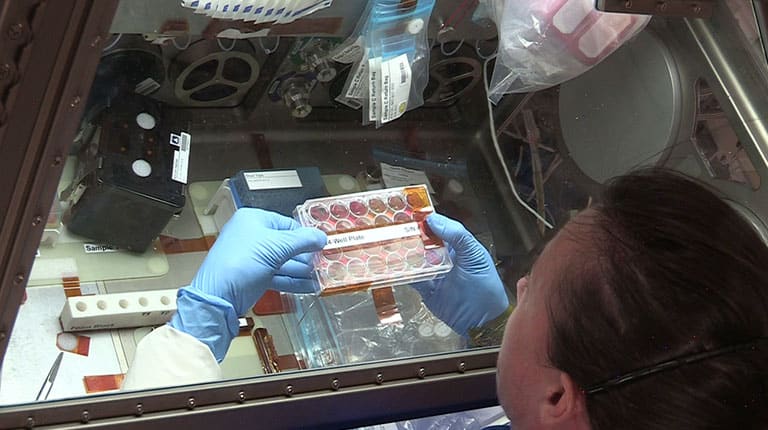
NASA astronaut Megan McArthur works on Sanofi's Celestial Immunity project on the ISS.
Media Credit: NASA
A Surprising Twist
Sanofi’s bold decision to take its research to space paid off in an unexpected way. When the team analyzed the cells from the ISS, they were shocked. Instead of seeing the steady immune decline they expected, they found just the opposite—microgravity triggered a strong boost in immune function.
Even more striking, Schanen says, was that the immune cells were activated before any treatments were added. “It was startling that just going to space and being in microgravity had an effect on the cells. This early activation may reflect a stress response induced by spaceflight.”
After introducing stimulants and adjuvants, the response was even more pronounced. Cytokine analysis revealed a markedly stronger pro-inflammatory response in the spaceflight cells, which was confirmed by RNA sequencing. This is key because controlled inflammatory signaling plays a critical role in activating the adaptive immune system, which establishes durable immunity.
“Again, this wasn’t expected because we thought that being in space would suppress immune function,” Schanen said. “Instead, we had microgravity leading us down a path where there’s the potential to boost a pro-inflammatory response.”
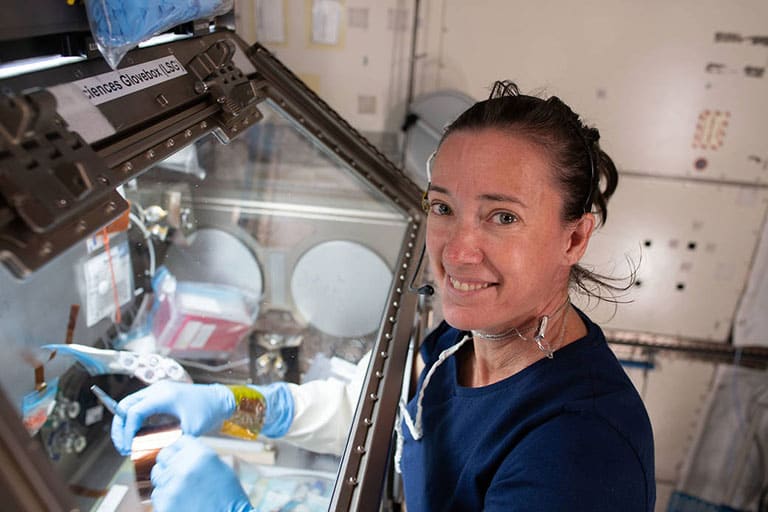
NASA astronaut Megan McArthur services donor cells for Sanofi's Celestial Immunity study on the ISS.
Media Credit: NASA
Perhaps the most important finding was that some immune pathways showed similar activation patterns in both younger and older donor cells, suggesting shared immune or stress-response mechanisms—a result that could prove transformative for vaccine development. Designing adjuvants that target these shared pathways may help improve vaccine responses across age groups, particularly among older adults, whose immune responses to vaccination are typically weaker.
“Observing this early immune spike and identifying pathways that are highly reactive and more universal between younger and older cells could be valuable from a drug development perspective,” Schanen said. “If microgravity gives us a place to study immune function differently, it could lead to important future directions, not just for us but the industry in general.”
Based on these results, the team formed a new hypothesis: the stress of microgravity may initially trigger a heightened immune response that, if sustained, could contribute to cellular exhaustion-like states that resemble aspects of immunosenescence.
Enabling researchers to explore the unknown—where unexpected results can lead to breakthroughs—is what it’s all about, Countryman said. “We fly experiments to reveal effects you can’t see on Earth so teams can learn something new or find something surprising.”