Case Study
Advancing Technology for Clean Energy
ISS Advances Research Using Light to Steer Bubbles and Rethink Energy Systems
ISS NATIONAL LAB OPPORTUNITY
The ISSInternational Space Station provides a persistent microgravityThe condition of perceived weightlessness created when an object is in free fall, for example when an object is in orbital motion. Microgravity alters many observable phenomena within the physical and life sciences, allowing scientists to study things in ways not possible on Earth. The International Space Station provides access to a persistent microgravity environment. environment to study fluid behavior, where buoyancy that drives boiling and cooling on Earth is largely absent.
Researchers from the University of California, Santa Barbara, set out to find a new way to control fluid motion without relying on pumps, high voltages, or complex surface engineering. Leveraging the ISS National Lab, the team tested whether specially designed light-responsive molecules could steer bubbles in microgravity using only beams of light. In space, bubbles do not rise and detach as they do on Earth. Instead, they cling to hot surfaces, forming insulating layers that block heat transfer and reduce system efficiency. By finding a way to actively move or remove these bubbles, the researchers aimed to improve thermal management for spacecraft and enable more efficient cooling and energy systems in space.
Industries:
Aerospace, Energy,
Advanced Manufacturing
Strategic Focus Area:
Fundamental Science
Research Area:
Fluid Physics,
Thermal Management
Institution:
University of California,
Santa Barbara
IMPACTFUL OUTCOME
The ISS experiment demonstrated the first successful use of light-responsive compounds that alter surface tension to actively drive bubble motion in microgravity.
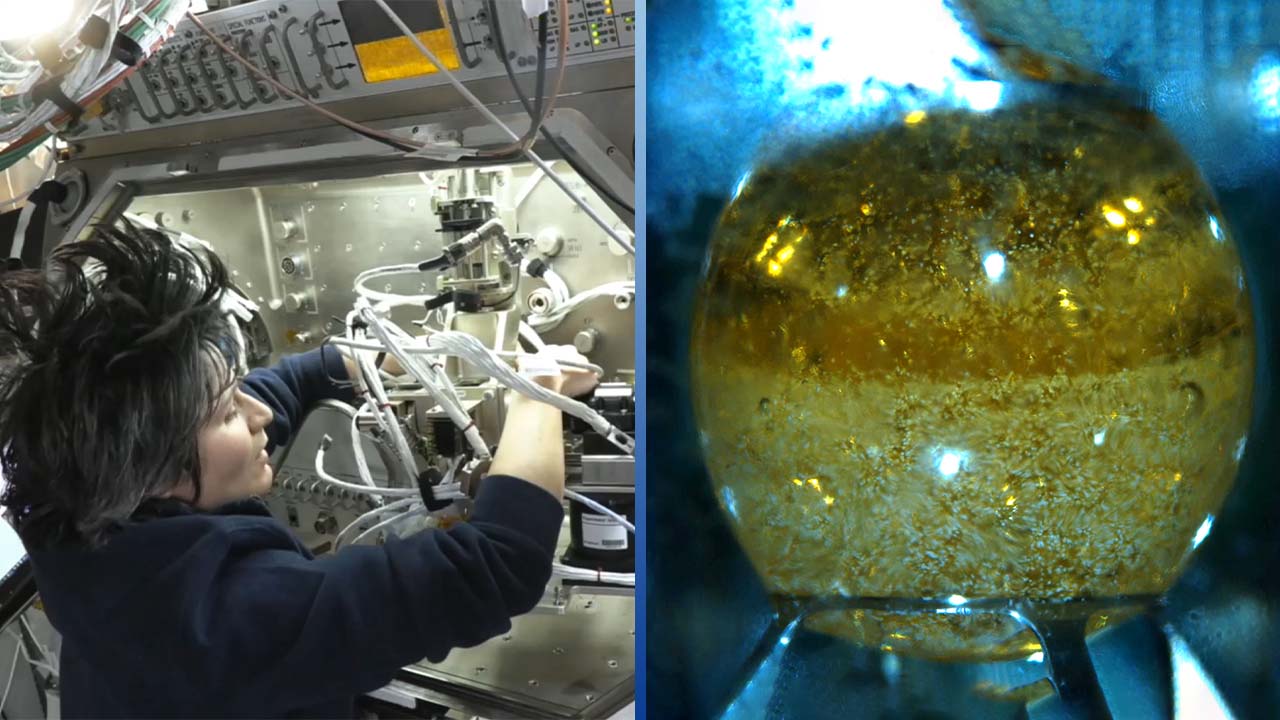
During the investigation, floating bubbles inside a fluid-filled chamber moved toward illuminated regions, allowing researchers to remotely guide fluid behavior with light. This demonstrated that fluid motion in space can be precisely controlled without mechanical systems. The breakthrough opens the door to enhancing heat transfer during boiling and improving thermal management in both space and terrestrial systems. By enabling more efficient heat movement, the approach could support cleaner power generation technologies and reduce energy losses in cooling systems.

INVESTIGATORS
Yangying Zhu
Mechanical Engineering Professor, University of California, Santa Barbara
Paolo Luzzatto-Fegiz
Mechanical Engineering Professor, University of California, Santa Barbara

Yangying Zhu, principle investigator and a mechanical engineering professor at University of California, Santa Barbara.
We hope that the knowledge we learn from this ISS experiment will contribute to enhancing boiling heat transfer, both on Earth and in microgravity, enabling more efficient power generation.
– Yangying Zhu, University of California, Santa Barbara
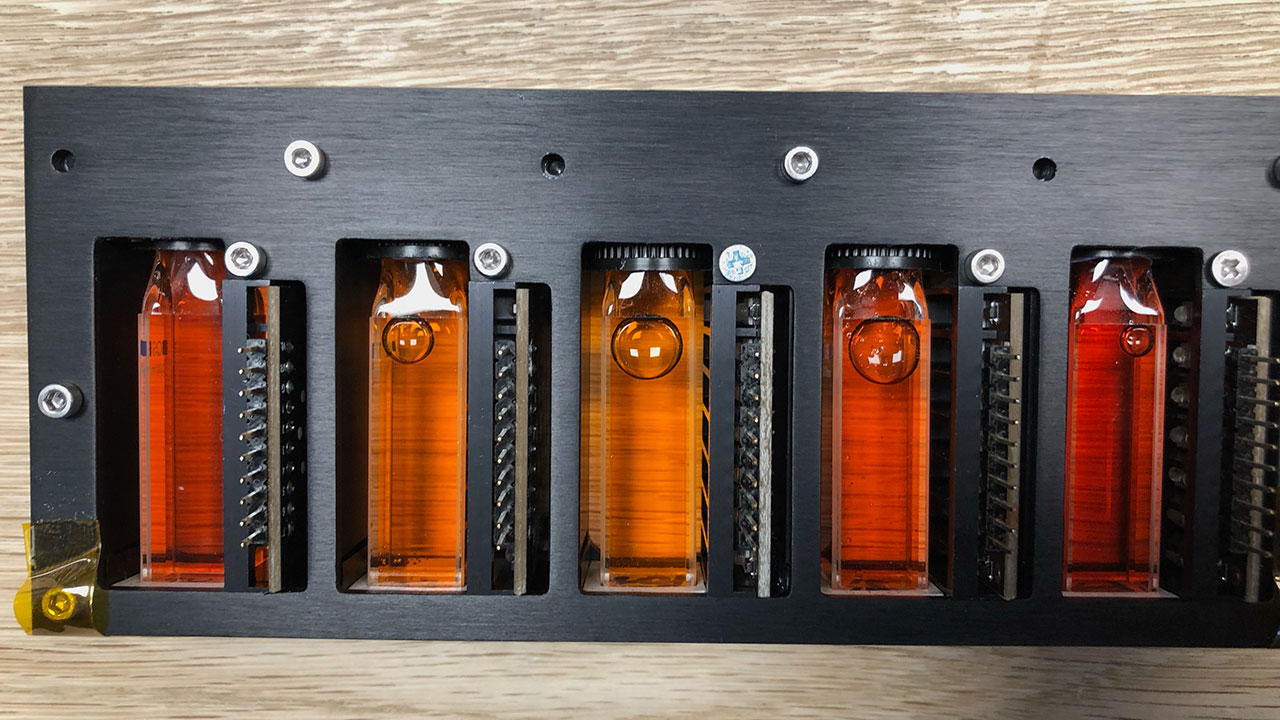
Five fluid-filled cuvettes prepared for launch to the ISS as part of the investigation.
Media Credit: Yangying Zhu
APPLICATION
The research team aims to translate light-driven fluid control into next-generation energy and cooling technologies on Earth.
Potential applications include lighter, more efficient spacecraft cooling systems, advanced heat exchangers, and energy systems that move fluids without pumps. The same principles could also inform smart surface coatings that switch between sticky and slippery states with a flash of light, helping systems shed buildup or self-clean. Over time, this fundamental science could contribute to more efficient power plants, improved data center cooling, and other clean-energy innovations that reduce energy consumption while improving performance.
This content is abridged from an article originally published in Upward,
official magazine of the ISS National Lab.