May 2026
Welcome to Space Station Spotlight, the monthly newsletter of the ISS National Laboratory®.

What’s new at the ISS National Lab?
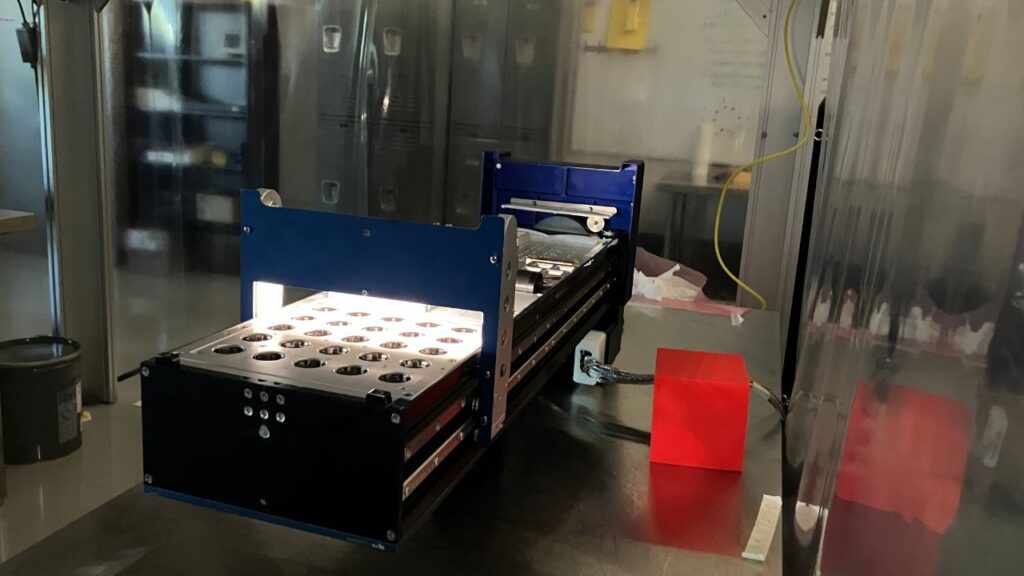
Through exposure to harsh conditions outside the ISS, the team will identify biological traits linked to radiation resistance and stress survival. The findings could lead to more resilient biological systems and advances in pharmaceuticals and other industries. Learn more.
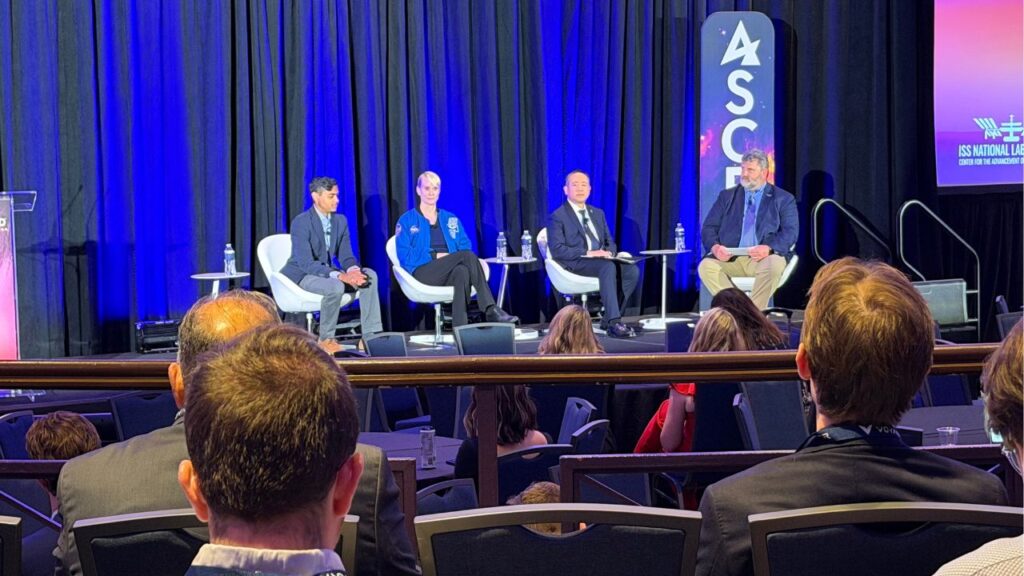
Sessions discussed the state of microgravity research, how ISS studies inspired the creation of space medicine centers across the U.S., the role of the Orbital Edge Accelerator in expanding innovation in space, and what comes next in the post-ISS era. Read more.
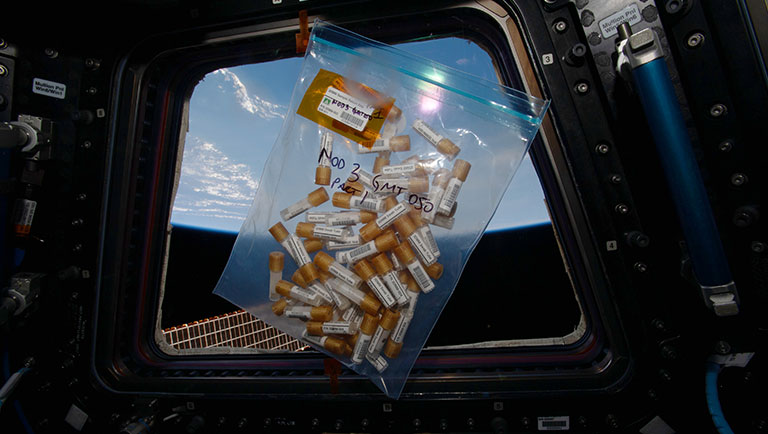
Insights gained could help engineers build habitats that better support astronaut health and inform microbial management strategies in hospitals, submarines, and other closed environments on Earth. Read more.
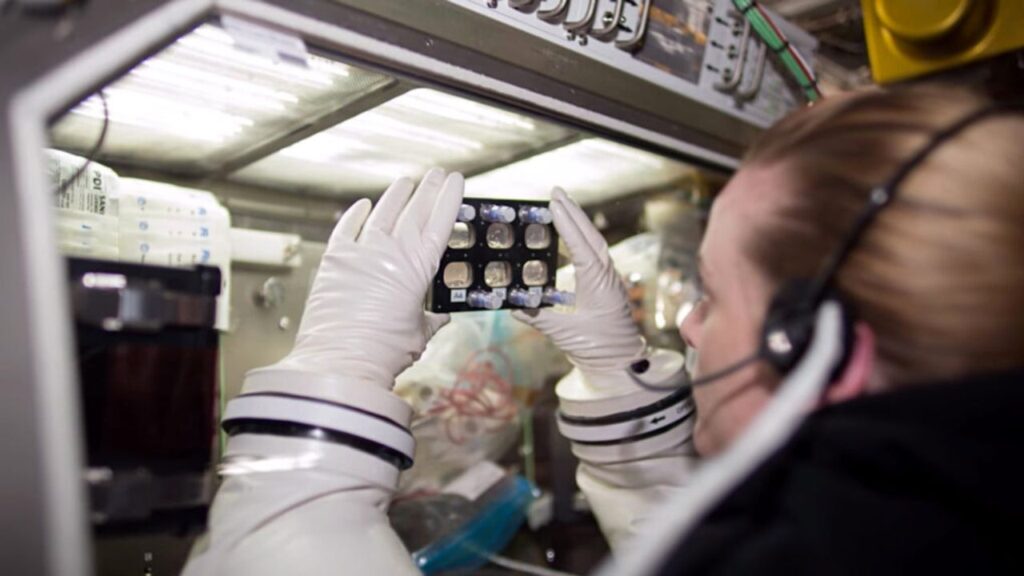
In the radio station’s “Science Friday” segment, Catriona Jamieson from the University of California, San Diego, and Meenal Datta from Notre Dame talked about space as the new frontier for cancer research. Listen to the segment.
Partner News
The House Appropriations Committee approved a bill rejecting the deep cuts to NASA proposed by the White House. The NASA budget was set at $24.4 billion, the same amount the agency received in FY2026. However, the bill prioritizes human spaceflight and cuts NASA science funding by $1.3 billion.
Starlab’s commercial space station program secured a strategic investment from 1789 Capital. The announcement signals growing investor confidence in the LEO economy and underscores the view that private space stations can support long-term demand for research, manufacturing, and in-orbit services.
Vast announced a new satellite bus business line. The company said most of its satellite bus technology has already been integrated into the Haven-1 space station program and was flown on the Haven Demo mission last year.
Vast signed an agreement with Innovation Agency Lithuania to support future space research. Through the partnership, the two will explore opportunities for joint research through the ISS National Lab or on Haven-1, which is scheduled to launch in 2027.
Voyager Technologies is partnering with Exobiosphere to fly an automated, miniaturized lab to the ISS. By removing the need for astronaut interaction, the technology aims to increase the number of experiments that can be done and speed up the delivery of results.
Voyager and Red Hat deployed Red Hat Enterprise Linux on the ISS. The space-based micro datacenter provides cloud-like infrastructure in orbit, allowing researchers to process data directly in space, which reduces latency and costs while improving security for space-based operations.
Funding Opportunities
The Orbital Edge Accelerator program application deadline was extended to June 4. The program, which provides access to LEO for R&D and $500K to $750K in private capital funding per startup, has two tracks: space technologies & dual-use applications and in-space manufacturing & space bio. Learn more and apply.
Results
The most recent issue of Upward, official magazine of the ISS National Lab, is online. Explore valuable findings from space-based R&D—download the current and past issues here.
Scientists are exploring whether microbes could act as tiny factories to produce materials and medicines in space. New research shows that engineered bacteria behave differently in microgravity than on Earth. Read the Upward feature to see how this research is helping to improve biological production systems both in space and on the ground.
University of Florida researchers published results from muscle tissue chip research in iScience. The team found that extracellular vesicles (EVs) released by muscle cells carry signals of stress and adaptation in microgravity, with younger and older muscle responding differently. This suggests EVs could serve as biomarkers of muscle health in space.
LambdaVision is partnering with Helogen Corporation on a joint orbital manufacturing mission later this year. LambdaVision will use Helogen’s fully autonomous manufacturing platform in LEO to produce protein films for its artificial retinas. Building on the startup’s nine ISS projects over the past decade, this will be LambdaVision’s first non-ISS flight.
The AMS-02 particle physics detector on the ISS produces valuable data on space radiation for astronaut health. A new publication discusses how AMS-02, which began operations in 2011, is more than just a physics experiment and serves as research infrastructure that provides critical data on space radiation.