Case Study
Designing Safer Space Habitats
ISS Microbial Mapping guides the design of space habitats that better support astronaut health
ISS NATIONAL LAB OPPORTUNITY
The ISSInternational Space Station provides a uniquely closed environment to study how humans shape microbial ecosystems in space.
To better understand how microbes and chemical traces accumulate in human dwellings in space, an investigation led by researchers at NASA’s Jet Propulsion Laboratory and the University of California, San Diego expanded a decade-long microbial survey of the ISS. Astronauts swabbed 803 surfaces across nine space station modules, allowing scientists to build the first three-dimensional microbial and chemical map of the U.S. Orbital Segment.
Industries:
Biotechnology, Aerospace,
Environmental Monitoring
Strategic Focus Area:
Fundamental Science
Research Area:
Microbiology and
Built Environments
Institution:
NASANational Aeronautics and Space Administration Jet Propulsion
Laboratory;
University of California,
San Diego
IMPACTFUL OUTCOME
The investigation revealed that the ISS functions as a dynamic microbial ecosystem shaped largely by its human occupants.
Using advanced genetic and chemical profiling, the team found that microbes and molecules on the ISS do not distribute randomly but instead form location-specific patterns shaped by crew activities, similar to those seen in buildings on Earth. Astronauts proved to be the primary microbial source, with human skin accounting for about 80 percent of microbes detected on surfaces. Chemical signatures mirrored daily life, with food residues concentrated in the galley and human metabolites in the restroom. The analysis even uncovered previously unknown microbial species, some carrying unusually high levels of antibiotic-resistance genes. Many chemical signals remain unidentified, highlighting how much of the space station’s microscopic environment is still unexplored.

INVESTIGATORS
Kasthuri Venkateswaran
Senior Research Scientist, NASA Jet Propulsion Laboratory
Nina Zhao
Postdoctoral Scientist, University of California, San Diego
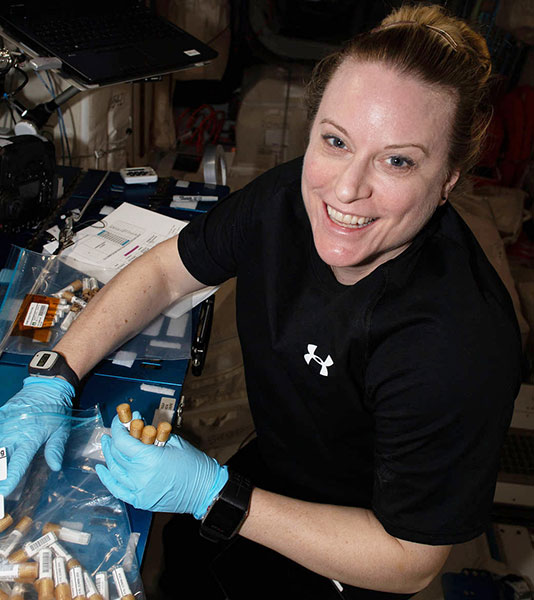
NASA astronaut Kate Rubins prepares surface-sampling kits for the most detailed microbial and chemical map of the ISS to date.
Media Credit: NASA
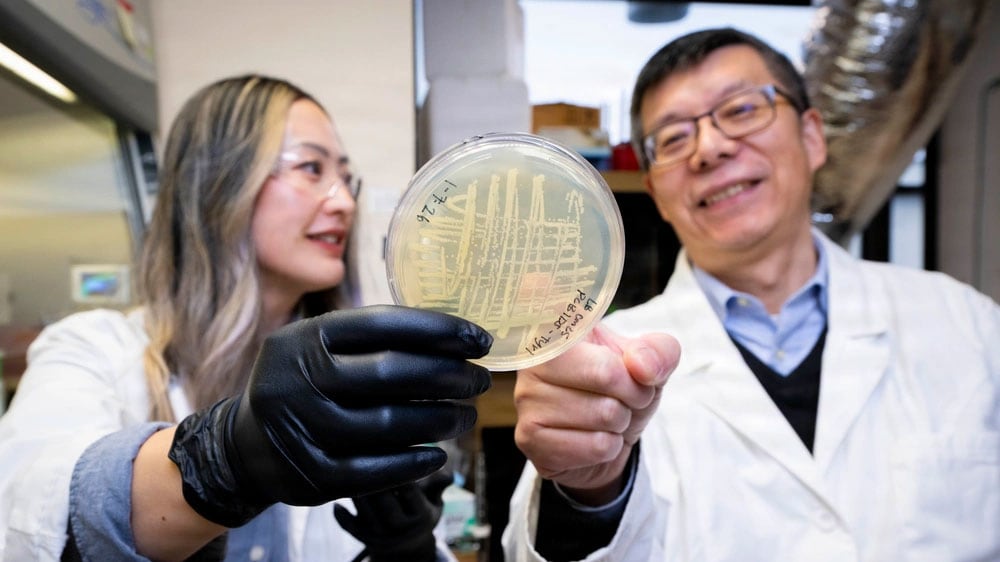
We were still able to see the impact of human activity on the surface chemistry of the space station, even under the zero gravity conditions. It’s an incredible example of the resiliency and complexity of microbial life.
– Nina Zhao, University of California, San Diego
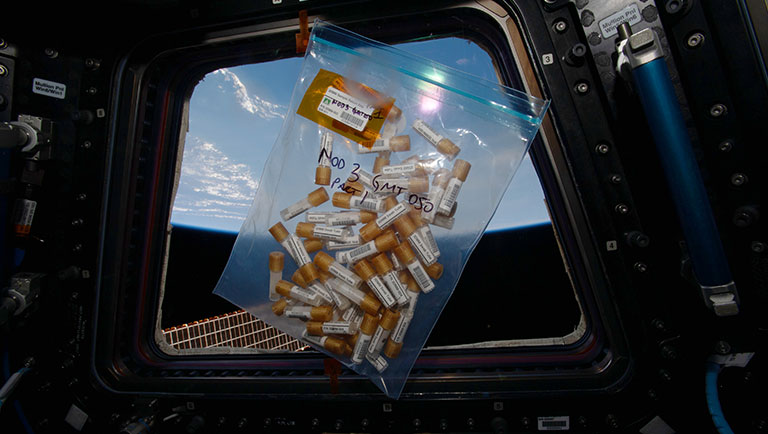
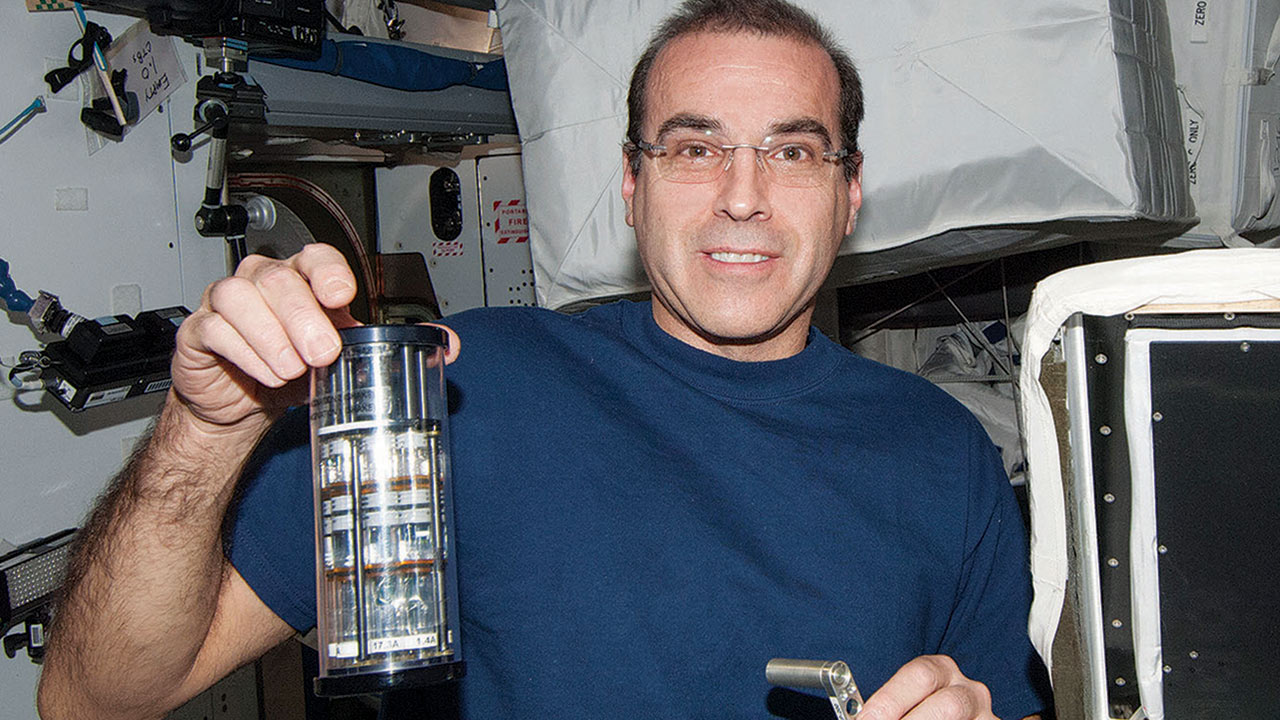
The sampling tools used to swab surfaces across the ISS for the study.
Media Credit: NASA
APPLICATION
Researchers can use microbial mapping to guide the design of healthier space habitats and tightly controlled environments on Earth.
The resulting microbial atlas provides a foundation for monitoring crew health, managing contamination risks, and designing safer long-duration habitats. Insights into how microbes accumulate and persist could help engineers build future Moon and Mars habitats that better support astronaut health while informing microbial management strategies in hospitals, submarines, and other closed environments on Earth. As missions grow longer and crews travel farther from Earth, the ability to monitor and intentionally shape onboard microbial ecosystems may become essential to sustainable human spaceflight.
This content is abridged from an article originally published in Upward,
official magazine of the ISS National Lab.