August 2026
Welcome to Space Station Spotlight, the monthly newsletter of the ISS National Laboratory®.

What’s new at the ISS National Lab?
Now in its second year, the accelerator will provide each startup with access to LEO for research and technology development and $500,000 to $750,000 in private capital funding. Learn about the selected startups.
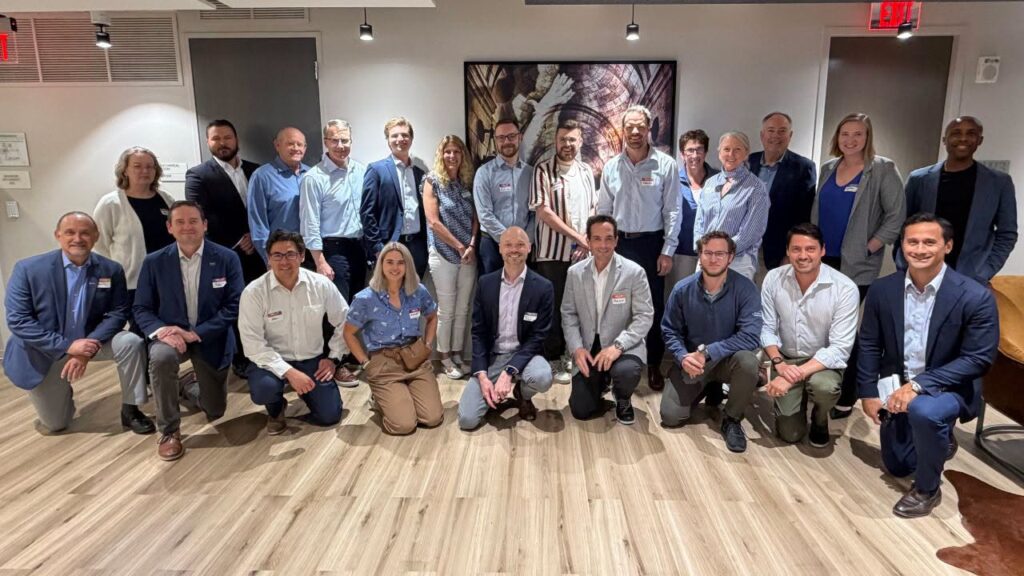
A Houston session was held for the Disrupt Track (focused on in-space manufacturing and space biomedicine), and a D.C. session was held for the Sentinel Track (focused on space technologies and dual-use applications). Learn more.
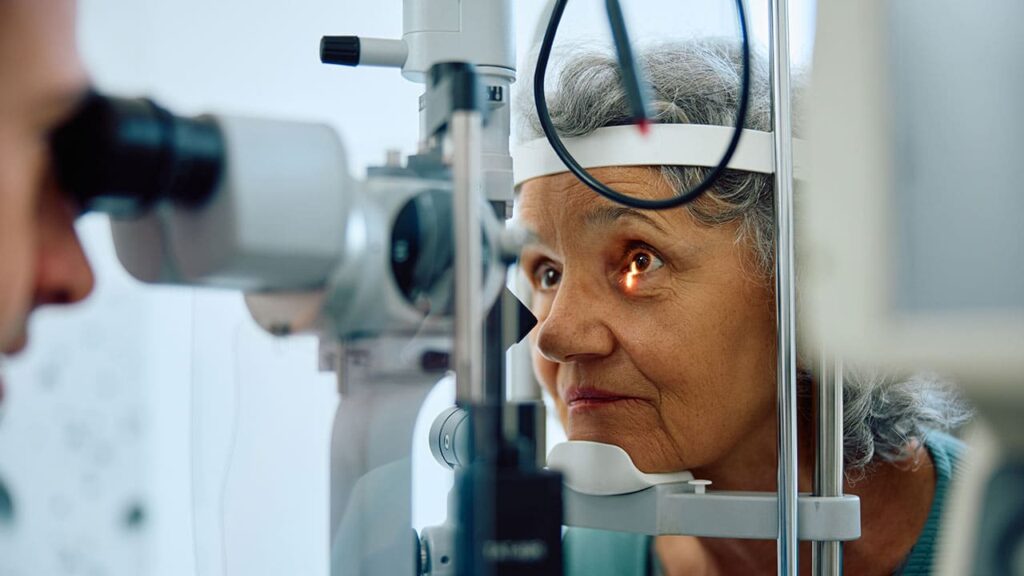
LambdaVision’s artificial retinas are designed to restore vision in patients with blindness from macular degeneration. In space, the artificial retinas can be produced with much more uniform protein layers, improving quality and reducing waste. Read more.
To celebrate the 15-year anniversary of CASIS managing the ISS National Lab, the episode featured Public Affairs and Outreach Lead Patrick O’Neill, who discussed the ISS National Lab’s role in advancing R&D, forging partnerships, and enabling innovation. Learn more.
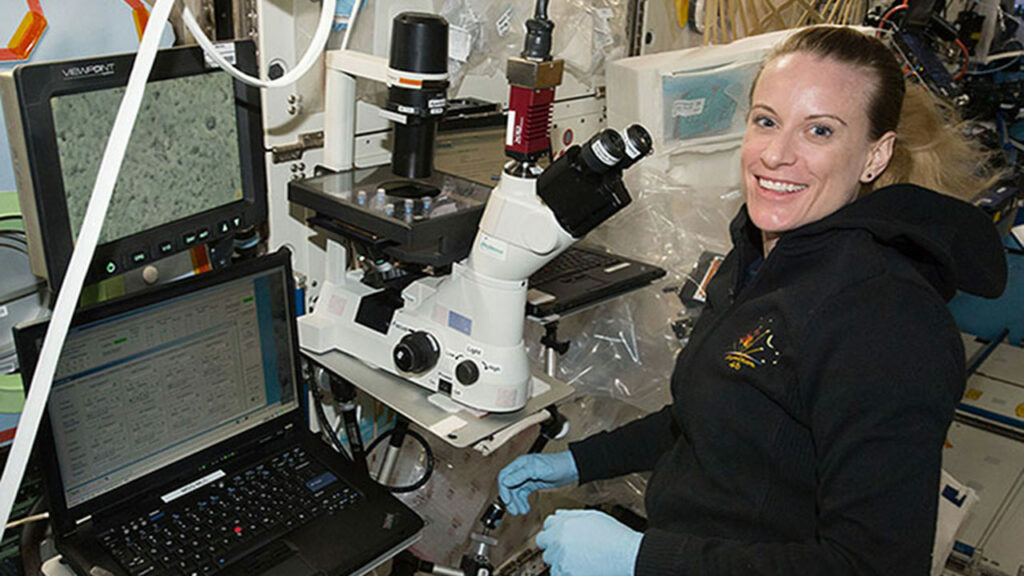
The story, which included ISS National Lab Chief Scientist Michael Roberts, highlighted several entities that have conducted research through the ISS National Lab, including Merck, LambdaVision, Aspera Biomedicines, and Cedars-Sinai. Read more.
Partner News
A Soyuz spacecraft carrying a NASA astronaut and two cosmonauts returned to Earth from the ISS. NASA astronaut Chris Williams and Roscosmos cosmonauts Sergey Kud-Sverchkov and Sergei Mikaev undocked from the ISS and landed safely in Kazakhstan.
ISS crew members conducted two spacewalks outside the ISS. During one, two NASA astronauts installed the final set of mounting hardware for the space station’s new solar arrays. During the other, two astronauts, one NASA and one ESA, removed a failed space-to-ground antenna but had to schedule a separate spacewalk to install its replacement.
Kall Morris Inc. (KMI) was selected for SpaceWERX’s 2026.1 Strategic Funding Increase (STRATFI) program. SpaceWERX awarded a total of $562.5 million in funding to 11 startups. KMI first demonstrated its REACCH system, designed to safely capture and maneuver unprepared objects in space, through the ISS National Lab.
Lynk and Omnispace merged to form Elveo Mobile. Lynk previously leveraged the ISS National Lab to conduct early technology demonstrations using the SlingShot smallsat deployer, including sending the world’s first text message from an orbiting satellite to a standard mobile phone on Earth.
Redwire’s SpaceMD subsidiary signed a contract to fly its PIL-BOX crystallization mini-labs on SpaceX’s Starfall reentry capsule. Up to 32 mini-labs will fly on Starfall’s first dedicated mission in 2028. Since 2023, more than 50 PIL-BOX mini-labs have flown to the ISS to crystallize drug compounds in microgravity.
Starlab announced a strategic investment from Global Venture Management. The investment reinforces industry confidence in the company’s commercial space station and the growing opportunities of the post-ISS low Earth orbit economy.
AIAA announced a call for content for its ASCEND 2027 conference. The submission period is open for technical papers and sessions presenting original work, applied solutions, lessons learned, or thought leadership. The deadline for submissions is October 8.
Results
The latest issue of Upward, official magazine of the ISS National Lab, is online. Explore findings from space-based R&D—download the current and past issues here.
Surprising findings from Sanofi’s ISS research may help lead to more effective vaccines. Read the Upward feature, “Celestial Immunity,” to learn how unexpected results from space-based research could help the global pharmaceutical company improve vaccine responses in older adults.
A study found that spaceflight alters brain signaling pathways in mice linked to inflammation and dopamine regulation. The findings, published in a high-impact journal, may help researchers better understand the mechanisms involved in neurological conditions such as Parkinson’s and Alzheimer’s disease.
Rhodium Scientific and the University of Puerto Rico published a paper on a new system to grow stem cells in space. On the ISS, specially designed microscopic carriers supported the growth of stem cells that can develop into bone, muscle, cartilage, and fat cells. Results could advance space-based biomanufacturing and regenerative medicine.
A publication describes a large public dataset of environmental conditions on the ISS. During the Axiom-4 mission, special monitoring devices collected data on conditions, such as air quality, carbon dioxide, and pressure, that could support future research on spacecraft environments and astronaut health.
A study found that the AstroRad radiation shielding vest can substantially reduce astronaut radiation exposure during severe solar storms. The published results are from manikin testing on NASA’s Artemis I mission. An earlier version of AstroRad, developed by StemRad and Lockheed Martin, was tested on the space station through the ISS National Lab.