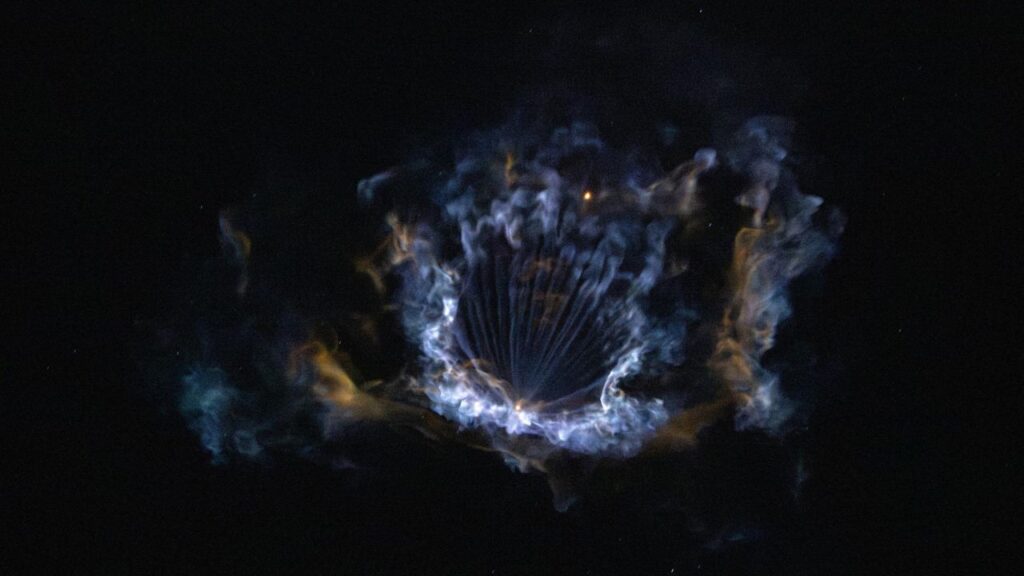
NASA’s SpaceX Crew-12 Returns After Supporting Hundreds of Scientific Investigations on the International Space Station
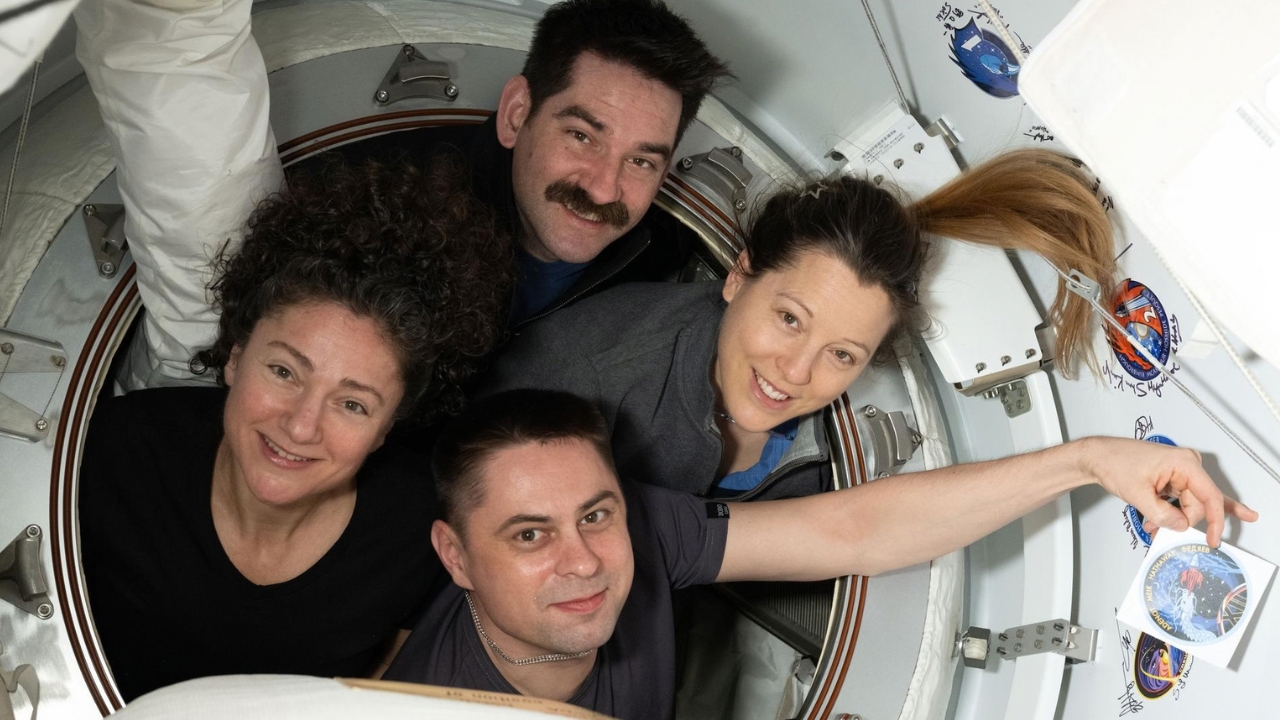
Crew-12 Astronauts Onboard the International Space Station.
Media Credit: NASA
Crew-12 astronauts supported ISS National Lab-sponsored projects to improve human health, enable next-generation space platforms, and prepare the future workforce
October 8, 2026
KENNEDY SPACE CENTER (FL), October 8, 2026 – NASA’s SpaceX Crew-12 mission safely returned to Earth, splashing down off the coast of California after nearly eight months onboard the International Space Station (ISSInternational Space Station). During their expedition, NASANational Aeronautics and Space Administration astronauts Jessica Meir and Jack Hathaway, European Space Agency astronaut Sophie Adenot, and Roscosmos cosmonaut Andrey Fedyaev supported hundreds of investigations, many of which were sponsored by the ISS National Laboratory®. These studies focused on improving life on Earth while advancing technologies and knowledge for future space exploration.
Below highlights some of the ISS National Lab-sponsored investigations Crew-12 astronauts supported during their mission, including projects to improve human health, enable next-generation space-based research infrastructure, and prepare the future workforce.
Advancing Human Health on Earth Through Space-Based Research
- In a project funded by the S. National Science Foundation (NSF), researchers at the University of Alabama at Birmingham used a tissue chipA tissue chip, or organ-on-a-chip or microphysiological system, is a small engineered device containing human cells and growth media to model the structure and function of human tissues and/or organs. Using tissue chips in microgravity, researchers can study the mechanisms behind disease and test new treatments for patients on Earth. The National Institutes of Health (NIH) has a multiyear partnership with the ISS National Laboratory® to fund tissue chip research on the space station. model of the human heart to study cardiovascular damage caused by Streptococcus pneumoniae (Spn) infection. Previous studies have shown bacterial infections are more severe in space than on Earth. By studying Spn infections in space, the researchers hope to identify factors that contribute to severe infection and cardiovascular damage.
- Researchers from Eascra Biotech, in collaboration with ISS National Lab Commercial Service ProviderImplementation Partners that own and operate commercial facilities for the support of research on the ISS or are developing future facilities. Axiom Space, sought to advance research on the production of Janus base nanoparticles in microgravityThe condition of perceived weightlessness created when an object is in free fall, for example when an object is in orbital motion. Microgravity alters many observable phenomena within the physical and life sciences, allowing scientists to study things in ways not possible on Earth. The International Space Station provides access to a persistent microgravity environment.. These novel nanoparticles are designed to deliver cancer therapies directly to difficult-to-treat solid tumors, potentially improving therapeutic effectiveness while reducing side effects. This project, awarded through the Igniting Innovation collaboration with NASA’s Biological and Physical Sciences Division, builds on prior ISS National Lab-sponsored investigations and could lead to new treatments for cancer.
- Bristol Myers Squibb, in collaboration with ISS National Lab Commercial Service Provider Redwire Space, conducted protein crystallization research using Redwire’s Pharmaceutical In-Space Laboratory. The project examined how crystal growth in microgravity may provide insights into the structure, properties, and function of large molecule compounds that are therapeutic candidates. Results could support the development of improved protein-based therapeutics for a range of conditions.
Building the Next Generation of Space-Based Research Platforms
- Crew-12 astronauts assisted with the decommissioning of Voyager Technologies’ Nanoracks External Platform(Abbreviation: NREP) A platform that on the exterior of the ISS that provides power and a data connection and enables payloads to operate in the harsh space environment. This ISS National Lab commercial facility is owned and operated by Nanoracks., which operated on the exterior of the space station for more than a decade. The platform provided researchers access to the harsh environment of space, including atomic oxygen, temperature extremes, radiation exposure, and vacuum conditions, enabling a wide range of materials testing and technology demonstration projects. The retirement of the platform marks the transition toward next-generation external research infrastructure, including the future launch of Voyager’s Nanoracks External Laboratory, which will provide new opportunities for materials and component testing in the extreme space environment.
Preparing the Workforce of Tomorrow
- Crew-12 also supported investigations designed to inspire the next generation of researchers, innovators, and explorers. Among these projects was the fourth installment of the Swinburne Youth Space Innovation Challenge, a program developed by ISS National Lab Commercial Service Provider Rhodium Scientific that allows students to design and conduct spaceflight experiments. For this mission, students developed an investigation examining the germination of microgreens in space. Understanding how plants germinate and develop in microgravity is an important step toward creating sustainable food systems for astronauts traveling to the Moon, Mars, and beyond. The project also provided students with a unique opportunity to participate directly in space-based research.
To learn more about valuable results from research on the orbiting laboratory, subscribe to Upward, the official magazine of the ISS National Lab.
Download a high-resolution image for this release: Crew-12 Astronauts on Station