By the Numbers: The ISS National Lab’s Impact on the LEO Economy
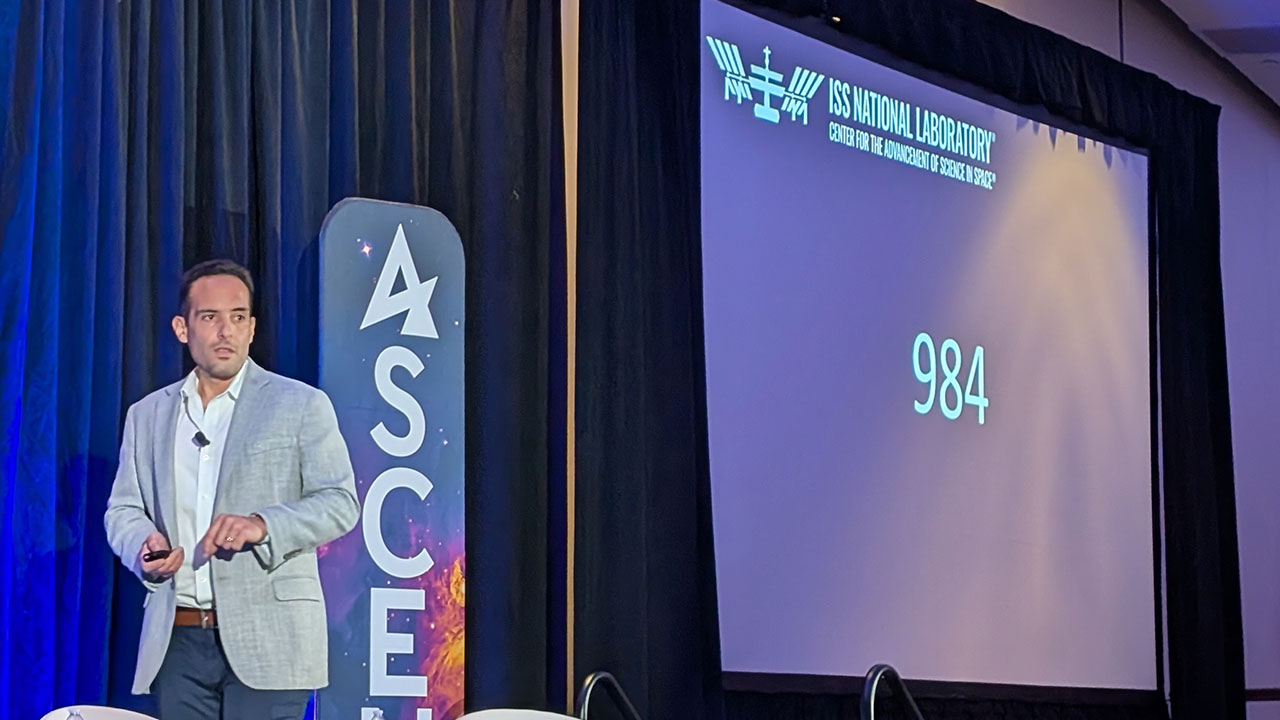
ISS National Lab COO Francisco Córdova gives a talk about the orbiting laboratory’s impact “By the Numbers” at the 2026 ASCEND conference.
June 17, 2026 • By Amelia Williamson Smith, Sr. Manager, Scientific Communications & Content
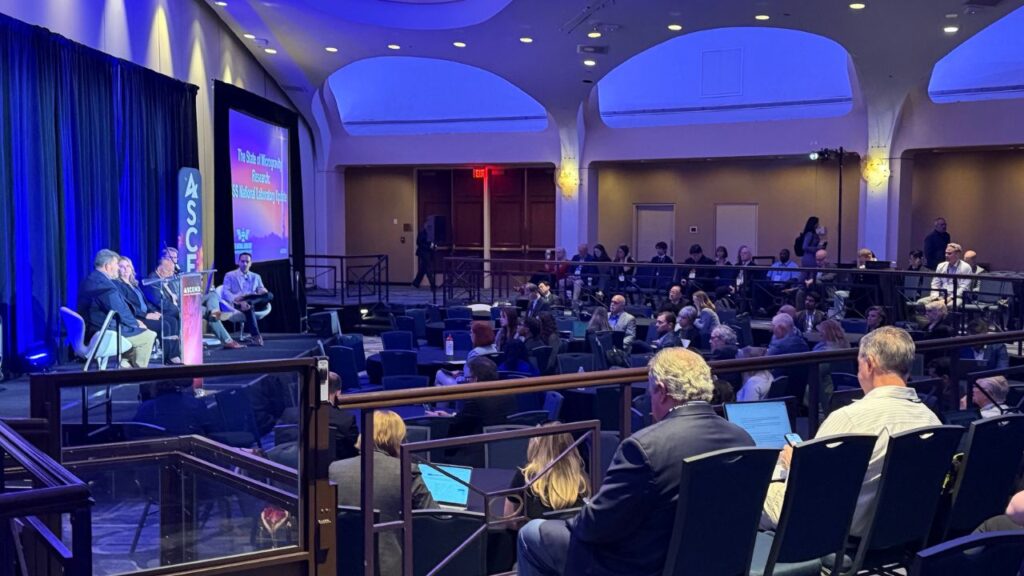
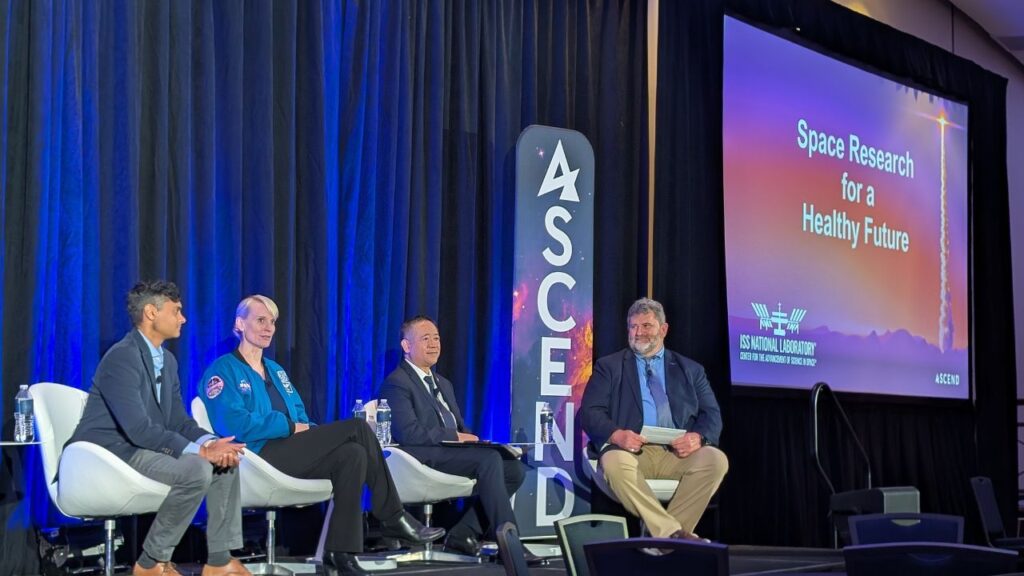
This article is part of a series highlighting sessions from the ISSInternational Space Station National Lab track at the 2026 ASCEND conference in Washington, D.C. The ISS National Lab hosted a full day of programming highlighting advances in space-based R&D, how the ISS National Lab enables innovation in orbit, and the growing low Earth orbit(Abbreviation: LEO) The orbit around the Earth that extends up to an altitude of 2,000 km (1,200 miles) from Earth’s surface. The International Space Station’s orbit is in LEO, at an altitude of approximately 250 miles. economy.
Established by Congress in 2005, the International Space Station (ISS) National Laboratory was created to do something no national lab had done before—enable research and technology development in space that benefits life on Earth while laying the foundation for a strong economy in low Earth orbit (LEO). In 2011, the Center for the Advancement of Science in Space® (CASIS®) was selected to manage this unique national lab.
Over the past 15 years, the ISS National Lab has made significant progress in advancing its mission. At the 2026 ASCEND conference, ISS National Lab Chief Operating Officer Francisco Cordova delivered a talk highlighting the impact of the orbiting laboratory through a series of key metrics:
- 2011: The year CASIS(Abbreviation: CASIS™) The nonprofit organization that manages the ISS National Lab, which receives at least 50 percent of the U.S. research allocation on the International Space Station to facilitate research that benefits humanity (NASA manages the other 50% and focuses on research for space exploration purposes). began managing the ISS National Lab
- 984: Number of ISS National Lab-sponsored payloads launched to date
- 75%: Portion of these payloads representing commercial R&D
- 160: Payloads currently in the ISS National Lab backlog to fly to station
- $145 million: Funding committed by the National Institutes of Health (NIH) and the U.S. National Science Foundation (NSF) to support ISS National Lab-sponsored projects
- $2.50: Additional funding contributed to support R&D for every $1 of ISS National Lab grant funding
- 630: Peer-reviewed journal articles related to ISS National Lab-sponsored research
- 22%: Portion of these articles published in top-tier journals
- 40: Patents related to ISS National Lab-sponsored research
- $2.7 billion: Non-NASA funding raised by startups after completing ISS National Lab-sponsored projects
- 10,000: Subscribers to Upward, the ISS National Lab’s official magazine showcasing results from space-based research
- 4: Years remaining to utilize the ISS before its planned retirement in 2030
Together, these numbers illustrate how far the ISS National Lab has come over the past 15 years and underscore its success in laying the foundation for a robust and sustainable LEO economy. In the years remaining before ISS retirement, the ISS National Lab will continue to maximize use of this invaluable national asset to advance R&D that benefits humanity and paves the way for the next generation of commercial space stations.