Orbital Edge Accelerator Helps Startups Turn Space R&D Into Commercial Reality
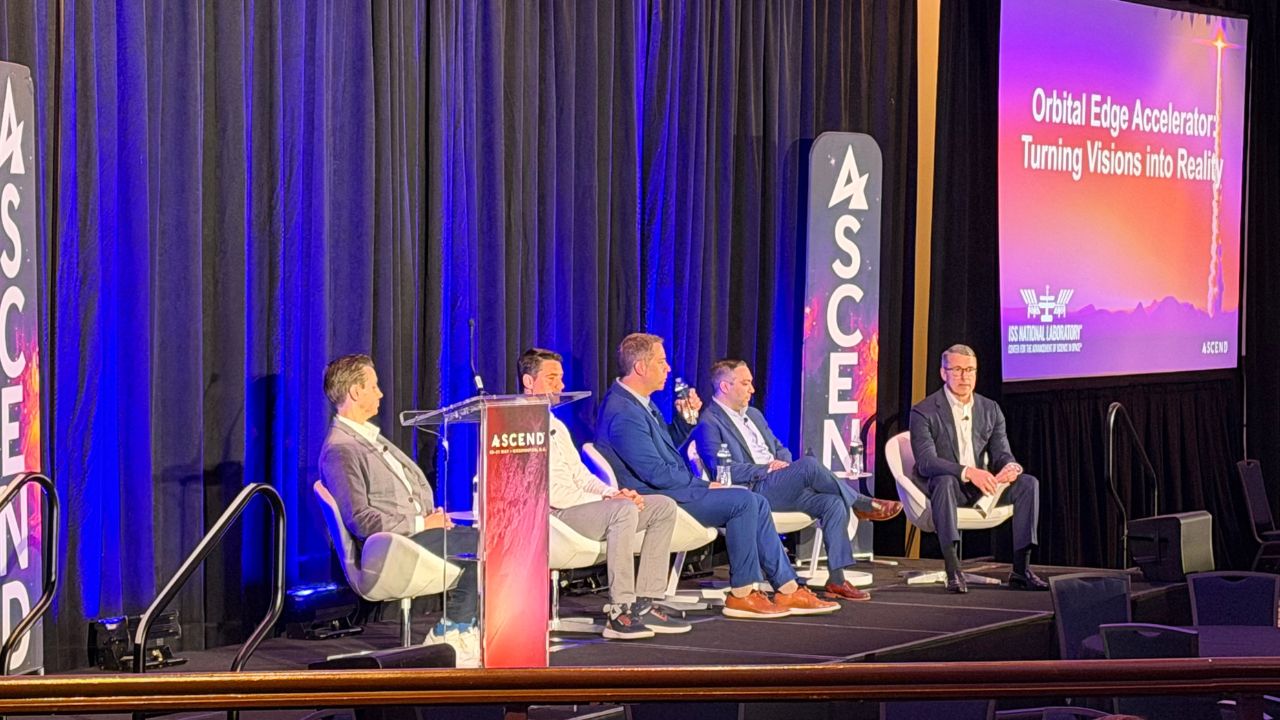
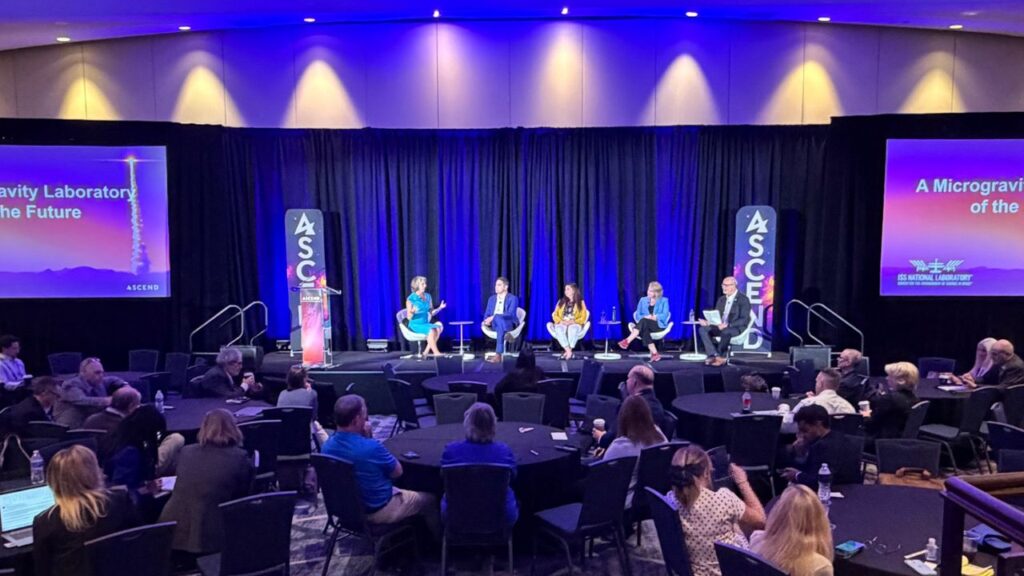
Orbital Edge Accelerator panel discussion at ASCEND 2026 in Washington, D.C.
June 15, 2026 • By Amelia Williamson Smith, Sr. Manager, Scientific Communications & Content
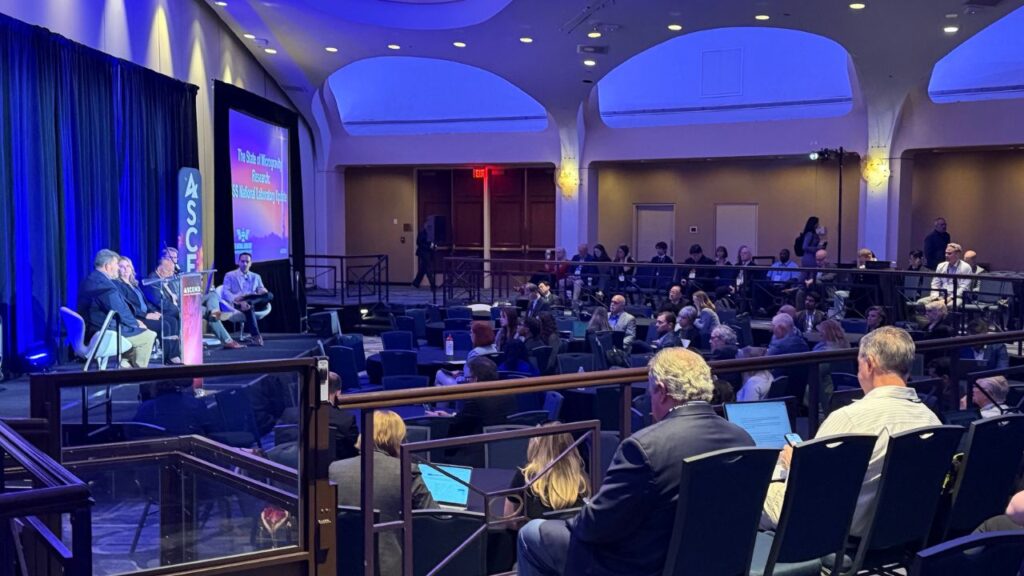
This article is part of a series highlighting sessions from the ISSInternational Space Station National Lab track at the 2026 ASCEND conference in Washington, D.C. The ISS National Lab hosted a full day of programming highlighting advances in space-based R&D, how the ISS National Lab enables innovation in orbit, and the growing low Earth orbit(Abbreviation: LEO) The orbit around the Earth that extends up to an altitude of 2,000 km (1,200 miles) from Earth’s surface. The International Space Station’s orbit is in LEO, at an altitude of approximately 250 miles. economy.
Building a successful startup takes more than just promising research and technology development. It requires funding, strategic partnerships, industry expertise, and—for space-focused companies—flight opportunities. A session at the 2026 ASCEND conference discussed how the ISS National Lab’s Orbital Edge Accelerator, now in its second year, is helping startups turn space-based R&D into commercial success.
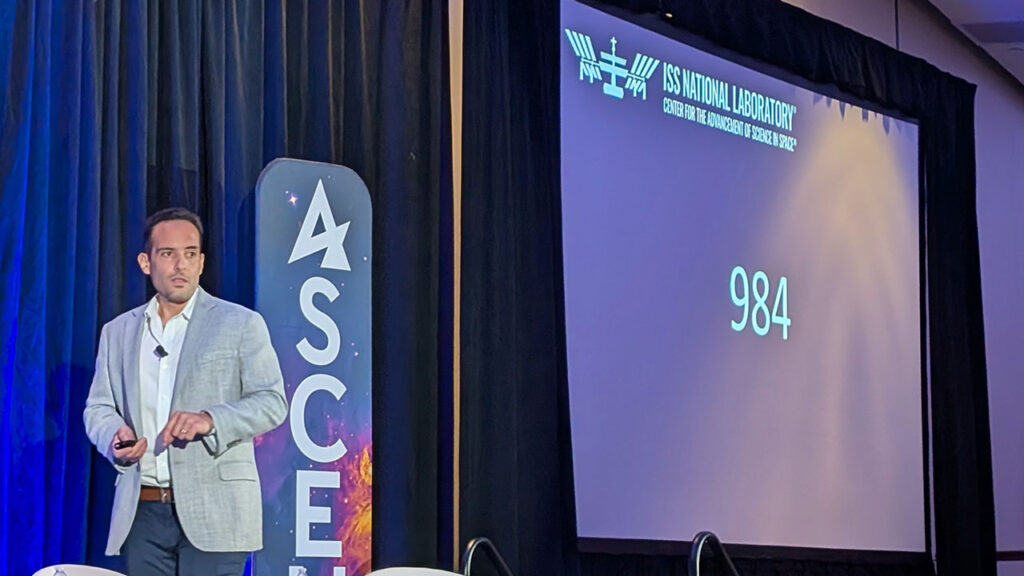
ISS National Lab Chief Economist Sven Eenmaa led the panel, which featured global investors and startup founders from the accelerator’s inaugural cohort. Together, they discussed how the program combines venture capital investment, mentorship, and access to space to accelerate commercialization.
Brandon Kortokrax, principal at E2MC Ventures, one of the founding investors in Orbital Edge, said the accelerator aims to reduce barriers and help startups “take something from the science and technology space and start to translate it into the commercial market.” He explained, “We are just really chipping away at each layer of friction that an early-stage startup faces. […] A good accelerator should compress a company’s roadmap and hopefully take something they’re planning across the next one to two years and accelerate that down into months.”
In addition to working closely with companies to get their R&D to space, the program provides mentors who share expertise and experience and help founders establish partnerships to move their businesses forward. Lasting guidance is important, said Hyder Alabed, vice president of M&A and ventures at Cook Inlet Region, Inc. (CIRI), also a founding investor in the Orbital Edge Accelerator. “A good mentor is a longer-term, less transactional relationship that is ongoing, and that’s one thing we try to really optimize for in the program.”
Alessandro Stabile, founder and CEO of MagmaSpace and a member of last year’s Orbital Edge cohort, underscored the value of mentorship. “[A mentor] asks tough questions that make you realize that maybe the business model you have in mind is not the best, and you still have time to readjust.”
Stabile explained how Orbital Edge was instrumental in getting his company to the next phase in its journey. “At the end of the day, as a space startup in hardware, you need to show space heritage, and we had that opportunity from the ISS National Lab.” He also talked about the importance of working with space-focused investors who understand the cycle of building hardware for space.
Raptor Dynamix CEO and president Joel Nelson, another member of last year’s cohort, called the accelerator “a real game changer.” He explained, “What Orbital Edge really did for us was accelerate us to get our payload on orbit and get to that minimum viable product. […] Now we have a commercial path.” Nelson also highlighted the value of investors who can help forge strategic partnerships. “Having an investor that has those connections and can help us figure out who to pull in to help us manufacture and grow, that’s very valuable to us as well.”
Eenmaa explained that it’s not just a flight project or funding that makes startups successful—it’s the bridging of the two, which the ISS National Lab has done for more than a decade. “We spent several years working with MassChallenge and Boeing on the Technology in Space PrizeA prize that provides grant funding for business startups participating in the MassChallenge startup accelerator program to conduct innovative research and technology development utilizing the ISS National Lab. The prize is funded by the Center for the Advancement of Science in Space, which manages the ISS National Lab, and Boeing., which has been tremendously useful,” he said. “Many great bio startups have come from that, so there’s a clear track record there.” To date, he said, the ISS National Lab has supported more than 100 startups that have collectively raised $2.7 billion after completing their flight projects.
To get the most out of the Orbital Edge Accelerator, Kortokrax said startups should leverage the program’s mentors and experts to refine their pitch and develop a commercial value proposition. “There are a lot of generalist investors who are starting to enter space, so [you will need to] tailor your pitch to different audiences because you’re starting at very different places [for each].
An important thing to note is that Orbital Edge is not only for space startups, Alabed said. “Just because you’re not a space company today doesn’t mean you can’t be a space company tomorrow.” Space may unlock a different business line for startups or help them overcome the challenges of manufacturing on Earth. “That’s why the ISS National Lab is there,” he said, “and that’s why our experts are part of the Orbital Edge Accelerator—to help you think about space.”
Overall, the discussion highlighted how the Orbital Edge Accelerator is lowering barriers for companies seeking to leverage the space environment for innovation. By pairing access to space with investment, mentorship, and industry expertise, the program is helping startups accelerate their science and technology toward commercially viable businesses that strengthen the growing LEO economy.