Beyond the ISS: Leaders Look to the Future of Commercial LEO Platforms
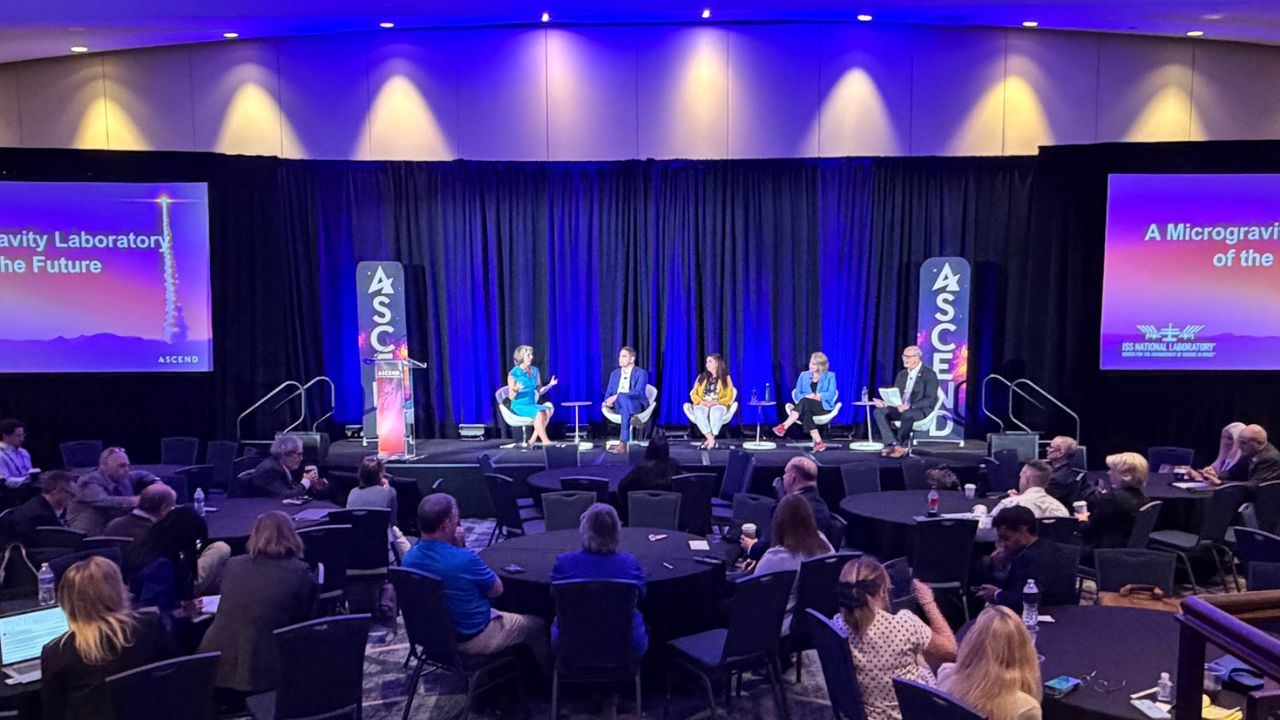
Discussing a microgravity Lab of the future at ASCEND 2026 in Washington, D.C.
June 16, 2026 • By Amelia Williamson Smith, Sr. Manager, Scientific Communications & Content
This article is part of a series highlighting sessions from the ISSInternational Space Station National Lab track at the 2026 ASCEND conference in Washington, D.C. The ISS National Lab hosted a full day of programming highlighting advances in space-based R&D, how the ISS National Lab enables innovation in orbit, and the growing low Earth orbit(Abbreviation: LEO) The orbit around the Earth that extends up to an altitude of 2,000 km (1,200 miles) from Earth’s surface. The International Space Station’s orbit is in LEO, at an altitude of approximately 250 miles. economy.
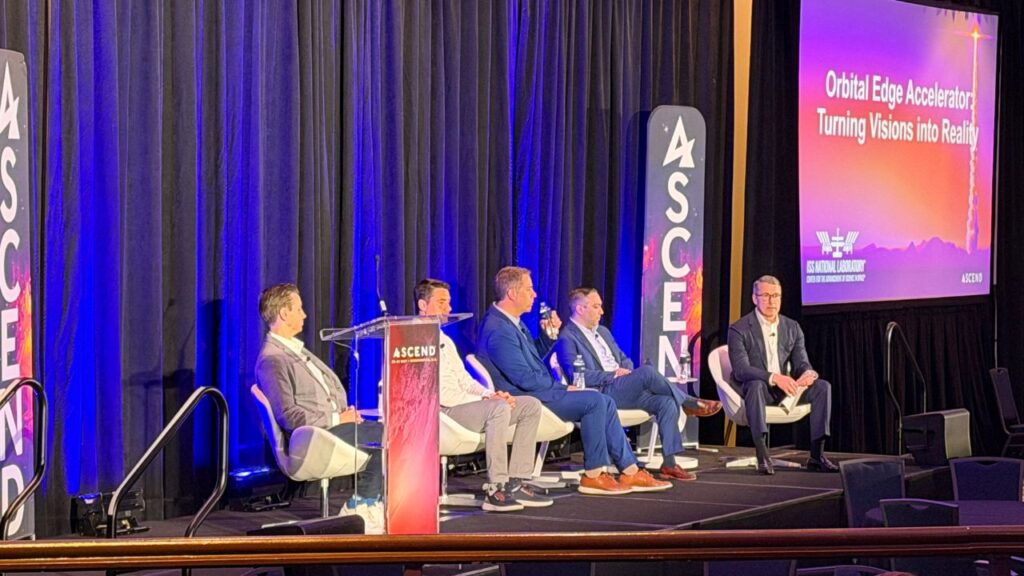
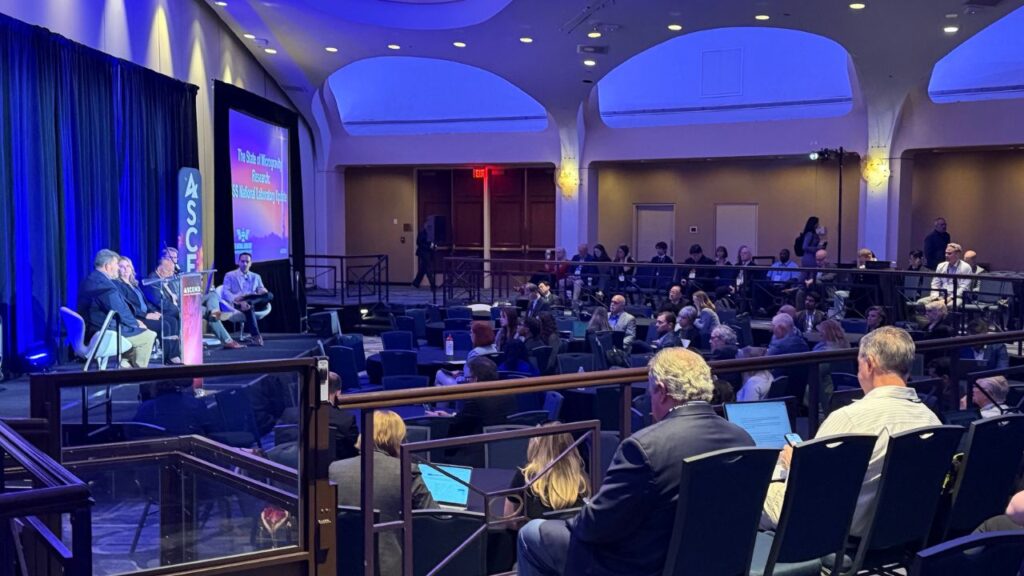
As the retirement of the International Space Station (ISS) approaches, attention is turning to the future of research and technology development in low Earth orbit (LEO). A session at the 2026 ASCEND conference gathered leaders from across the space industry to discuss how the ISS National Laboratory® has helped lay the groundwork for commercial space stations and what is needed to ensure a robust LEO economy in the post-ISS era.
“We all recognize there are tremendous opportunities for new avenues of commercialization that we’ve barely scratched the surface of to date on the ISS,” said Lucie Low, chief science officer at Axiom Space, which is developing a commercial space station. “Through the ISS National Lab, we’ve had this incredible opportunity to do proof-of-concept studies to start getting data.”
Research on the ISS has driven strong demand for access to space, but the current ecosystem remains nascent. “It’s a brittle environment,” said Marchel Holle, director of civil space at Varda Space Industries, which is developing autonomous free-flying spacecraft for microgravityThe condition of perceived weightlessness created when an object is in free fall, for example when an object is in orbital motion. Microgravity alters many observable phenomena within the physical and life sciences, allowing scientists to study things in ways not possible on Earth. The International Space Station provides access to a persistent microgravity environment. R&D and manufacturing. “We would not be where we are without the foundational science, the legacy of the ISS, but we’re now seeing a kind of winnowing of microgravity opportunities.” When that happens, scientists leave the field, grants are not funded, and companies lose runway, he explained. “Without having a ready access to both crewed and uncrewed facilities, a diversity of platforms, we’re not going to see the space economy that I think we all really desperately want.”
LambdaVision CEO Nicole Wagner—who has conducted nine ISS investigations over the last decade to improve the company’s artificial retinas—agrees that sustained access to space is critical. “If we don’t keep funding things in space or [keep] underfunding it, you’re not maturing the technologies enough to see what’s really there, and they’re sort of dying on the vine.”
Addressing recent questions about whether the LEO economy has emerged, Holle emphasized that a strong market exists and the business case closes. He pointed to Varda’s recent partnership with United Therapeutics, a $25 billion NASDAQ-listed pharmaceutical company, to manufacture pharmaceuticals in space and noted this is just the beginning.
“The key is really bridging into the pharmaceutical industry and having the cadence and the repeat shots on goal needed to speak their language,” he said. “We think there are subsets of molecules that have large addressable markets that would really improve the clinical benefit to people here on Earth and that people would be willing to pay for.”
The panel also discussed the role of an entity like the ISS National Lab after the space station is retired. Michelle Lucas, founder and CEO of Higher Orbits, a nonprofit that enables students to send real experiments to space, stressed that such a role remains “absolutely critical.” Without it, researchers, organizations, and small businesses risk losing access to space, she said. “We need a broker…who looks out for the little guys to help aid companies that could develop the next big thing…and organizations developing the workforce pipeline.”
Ensuring students have continued access to space is essential to building a strong and capable workforce for the future LEO economy, Lucas explained. “You have to invest in your workforce right now, and one of the ways to do that is to give them experiences that inspire them to want to continue.” She noted, “Their science may not change the world, but it changes their world, and there’s a ripple effect…and it’s going to inspire them to go on and do better research.”
Looking beyond the ISS, panelists see a place for both crewed and uncrewed platforms in LEO. Automation will be important, but humans need to stay in the loop, Low said. “From an R&D perspective, continuous human presence in space is going to be really critical for continuing to build on the science that can be done.”
Holle agreed there’s a strong rationale for maintaining humans in orbit but added that automated platforms offer a more cost-effective solution for certain types of research. The key is incorporating both, he said. “By turning to these diversified models with complementary crewed and free flyers working together, I think you create a dissimilar partnership that’s greater than the sum of both components.”
As the ISS era winds down, one message from the panel was clear: maintaining momentum will require continuity in access, sustained funding, and a diversity of platforms. By building on the strong foundation established over the past two decades, we can help ensure a robust and sustainable future for the LEO economy.