June 2026
Welcome to Space Station Spotlight, the monthly newsletter of the ISS National Laboratory®.

What’s new at the ISS National Lab?
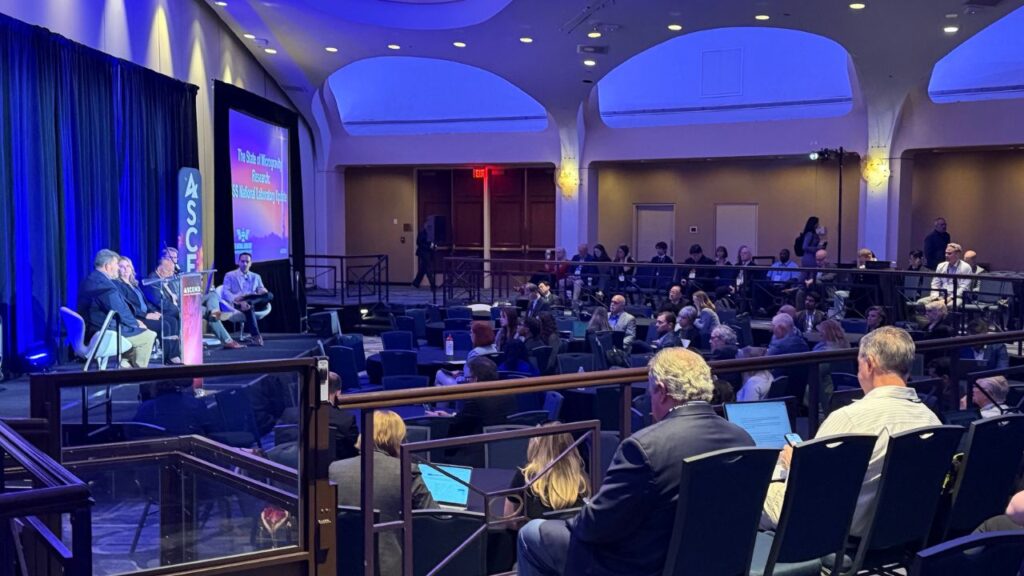
ISS National Lab and NASA leaders discussed how ISS studies are driving progress in biomedical science, technology development, and materials science, while laying the foundation for a growing commercial marketplace in orbit. Read more.
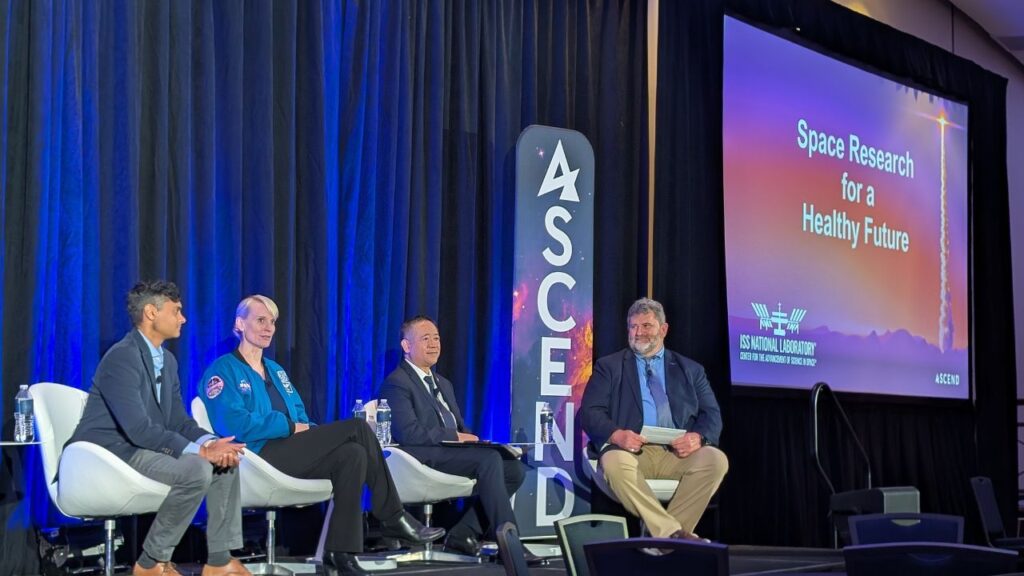
During ASCEND, leaders from Cleveland Clinic’s Space Health Center, UPitt’s Trivedi Institute for Space and Global Biomedicine, and Cedars-Sinai’s Center for Space Medicine Research discussed how ISS studies are shaping the field of space medicine. Learn more.
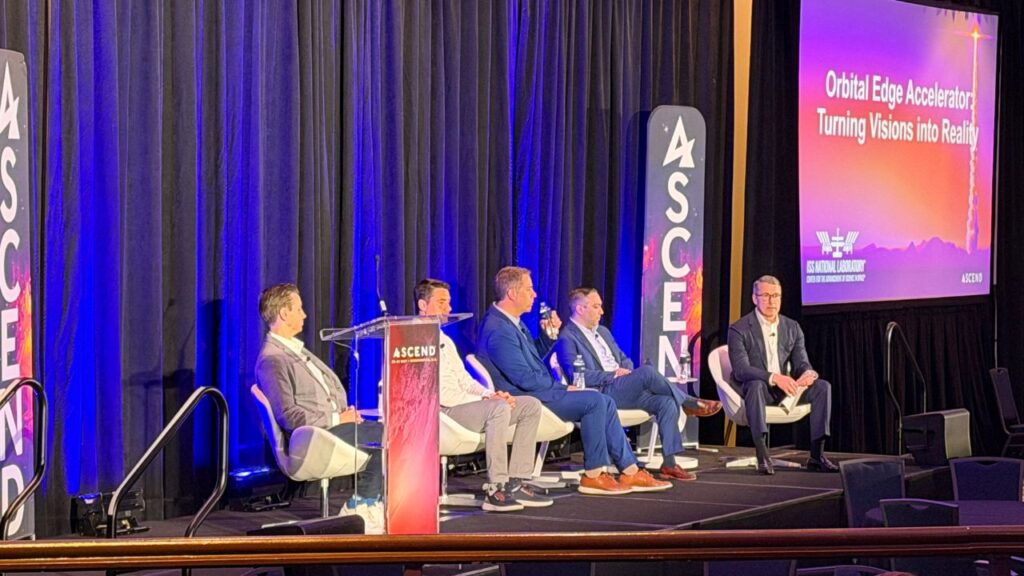
An ASCEND panel of global investors and startup founders from Orbital Edge’s inaugural cohort discussed how the program combines venture capital investment, mentorship, and access to space to accelerate commercialization. Read more.
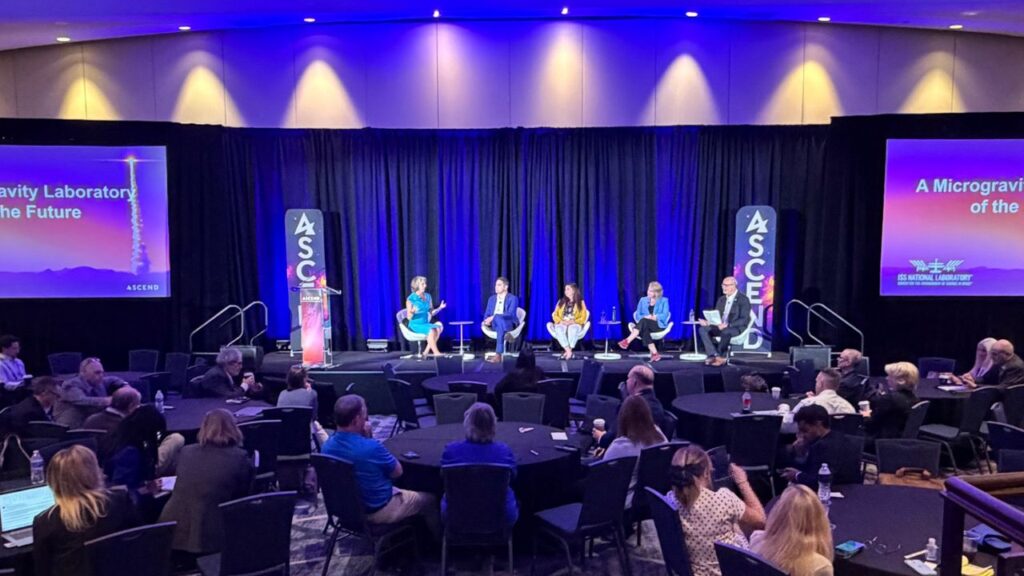
The discussion focused on how the ISS National Lab has helped lay the groundwork for commercial space stations and what is needed to ensure a robust LEO economy in the post-ISS era. Learn more.
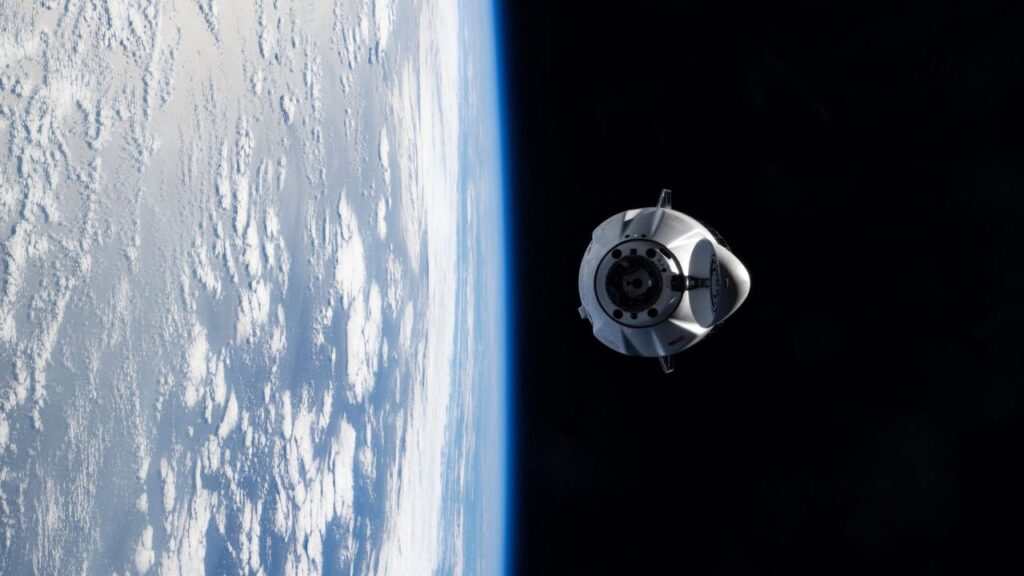
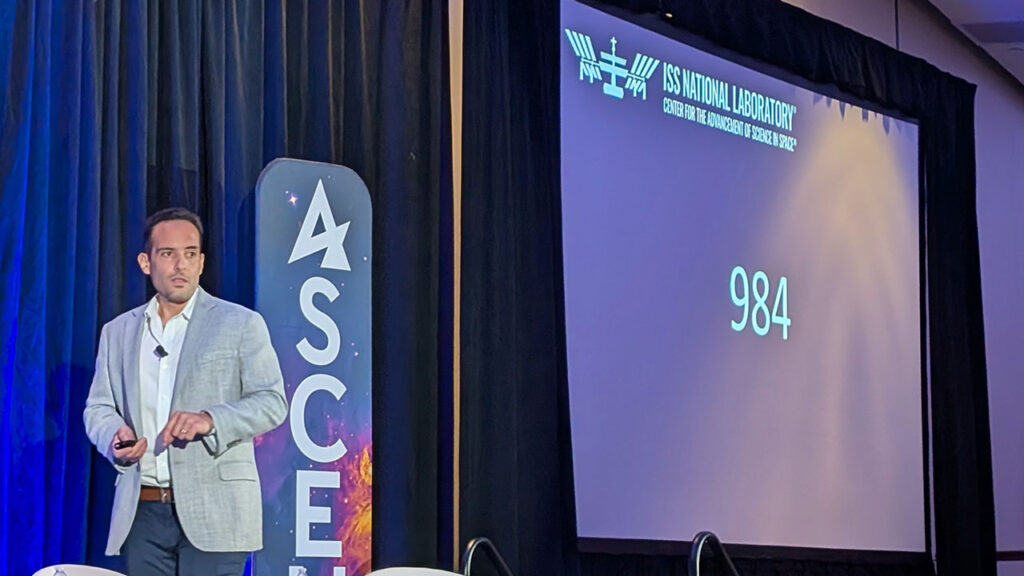
ISS National Lab COO Francisco Cordova highlighted a series of key metrics that illustrate how far the ISS National Lab has come over the past 15 years and underscore its success in laying the foundation for a robust and sustainable LEO economy. Read more.
Among the payloads returned was ISS National Lab-sponsored research from Sanford Stem Cell Institute using patient-derived metastatic breast cancer and glioblastoma multiforme tumor organoids to study how cancer grows and spreads.
Partner News
NASA reverted to its original CLD procurement plan supporting free-flying commercial platforms. After receiving feedback from industry, NASA decided to abandon the idea of adding a core module to the ISS that commercial stations could attach to.
Astronauts installed an upgraded version of NASA’s Cold Atom Lab on the ISS. Researchers can use the quantum lab to study matter at the smallest scales. This is the fourth upgrade since Cold Atom Lab first arrived on the ISS in 2018.
Axiom Space closed an oversubscribed financing round at more than $525 million. The funding, which reflects growing investor demand, will allow the company to accelerate its key programs, including Axiom Station. Axiom also advanced the design of the lunar spacesuit it is developing with Prada for use by astronauts starting with Artemis 4.
Blue Origin plans to complete repairs and launch New Glenn before the year’s end. Late last month, the rocketexploded on the launchpad at Cape Canaveral Space Force Station ahead of its fourth launch, creating a fireball visible for more than 100 miles.
Redwire was awarded a contract from Astrobiome Space to conduct agricultural research on the ISS. Astrobiome will use Redwire’s Greenhouse system on station to grow strawberries and test a proprietary soil enhancement product. This marks the inaugural flight for Greenhouse.
SpaceX went public with a $1.77 trillion valuation—the largest IPO in history. The transition to a publicly traded company made Elon Musk the world’s first trillionaire. The historic offering is expected to accelerate investment across the commercial space sector.
Vast expanded its network of microgravity research and manufacturing partners. The company recently signed agreements with UC San Diego’s Sanford Stem Cell Institute, Auxilium Biotechnologies, LambdaVision, and BioOrbit. Vast also signed an agreement with France for two missions involving French astronauts, one on the ISS and the other on Haven-1.
Voyager Technologies acquired lunar lander developer Astrobotic Technology. The acquisition, for $162 million in cash and stock and the assumption of $9 million in debt, will enable Astrobotic to scale up its programs to meet the needs of NASA’s lunar base plans.
Results
The most recent issue of Upward, official magazine of the ISS National Lab, is online. Explore valuable findings from space-based R&D—download the current and past issues here.
Researchers from the University of Alabama at Birmingham published three papers in a top-tier journal. The findings, published in Advanced Composites and Hybrid Materials, provide insights on a new class of advanced materials that could help design stronger, more efficient materials for use in extreme environments such as space.
Case Western Reserve University published results in the International Journal of Heat and Mass Transfer. The findings helped improve computer models of condensation in microgravity, providing insights that could help create better cooling systems for spacecraft and other space technologies.
Published findings demonstrate that a new bone adhesive promotes bone regeneration in microgravity. The successful results suggest that Rev Bio’s Tetranite® bone adhesive could support improved treatments for bone injuries in space and lead to new regenerative medicine applications on Earth.
Researchers used the free-flying Astrobee robots on the ISS to successfully test a new scanning system. Published results showed that the system can create highly detailed 3D maps and support autonomous navigation inside spacecraft, capabilities that could help future robotic systems inspect and maintain space habitats and vehicles.
Studies on the ISS laid the foundation for pharmaceutical companies taking drug development to space. ISS National Lab-sponsored research from Merck and others set the stage for in-orbit drug manufacturing, and now companies like SpaceMD, United Therapeutics, and BioOrbit are looking to leverage microgravity to improve therapeutics.